

Dialectical Behavior Therapy (DBT) in Powerful Clinical Practice
By We Level Up | Author Alex Evans, PharmD, MBA | Editorial Policy | Research Policy What Is Dialectical Behavior Therapy (DBT)? Dialectical behavioral therapy (DBT) is an acceptance-based counseling approach used to treat a number of substance use and mental health issues. DBT is a type of therapy that Dr. Marsha Linehan developed in the 1980s. It was originally […]
Clinically Reviewed by Lauren Barry, LMFT, MCAP, QS
Medically Reviewed by Ali Nikbakht, PsyD
Updated on September 21, 2025 — Editorial Policy | Research Policy | Privacy Policy
Dialectical Behavior Therapy (DBT) in Powerful Clinical Practice
Clinically Reviewed by Lauren Barry, LMFT, MCAP, QS
Medically Reviewed by Ali Nikbakht, PsyD
Reviewed / Updated: September 21, 2025 — Editorial Policy | Research Policy | Privacy Policy
By We Level Up | Author Alex Evans, PharmD, MBA | Editorial Policy | Research Policy
What Is Dialectical Behavior Therapy (DBT)?
Dialectical behavioral therapy (DBT) is an acceptance-based counseling approach used to treat a number of substance use and mental health issues. DBT is a type of therapy that Dr. Marsha Linehan developed in the 1980s. It was originally developed for borderline personality disorder (BPD) treatment. It draws inspiration from CBT, or cognitive behavioral therapy. This therapy is also used to treat drug and alcohol addiction. It adds a focus on teaching acceptance skills.
Now, both individual and group treatments often use dialectical behavioral therapy (DBT). This therapy helps with issues like depression, anxiety disorders, and substance use disorders (SUD). SUD is a medical condition where people cannot control their use of substances, even when it causes harm. Many studies show that a new method called DBT-SUD can help reduce drug use. This method is for people with borderline personality disorder. This mental disorder is marked by unstable relationships, a distorted self-image, and impulsive behavior.
Dialectical Behavior Therapy Key Takeaways
- DBT is a behavioral therapy designed to help people with intense emotions and self-destructive behaviors
- DBT combines individual therapy, group skills training, and phone coaching to provide comprehensive support
- The therapy has proven effective in treating borderline personality disorder, addiction, depression, anxiety, and bipolar disorder
What Happens During DBT?
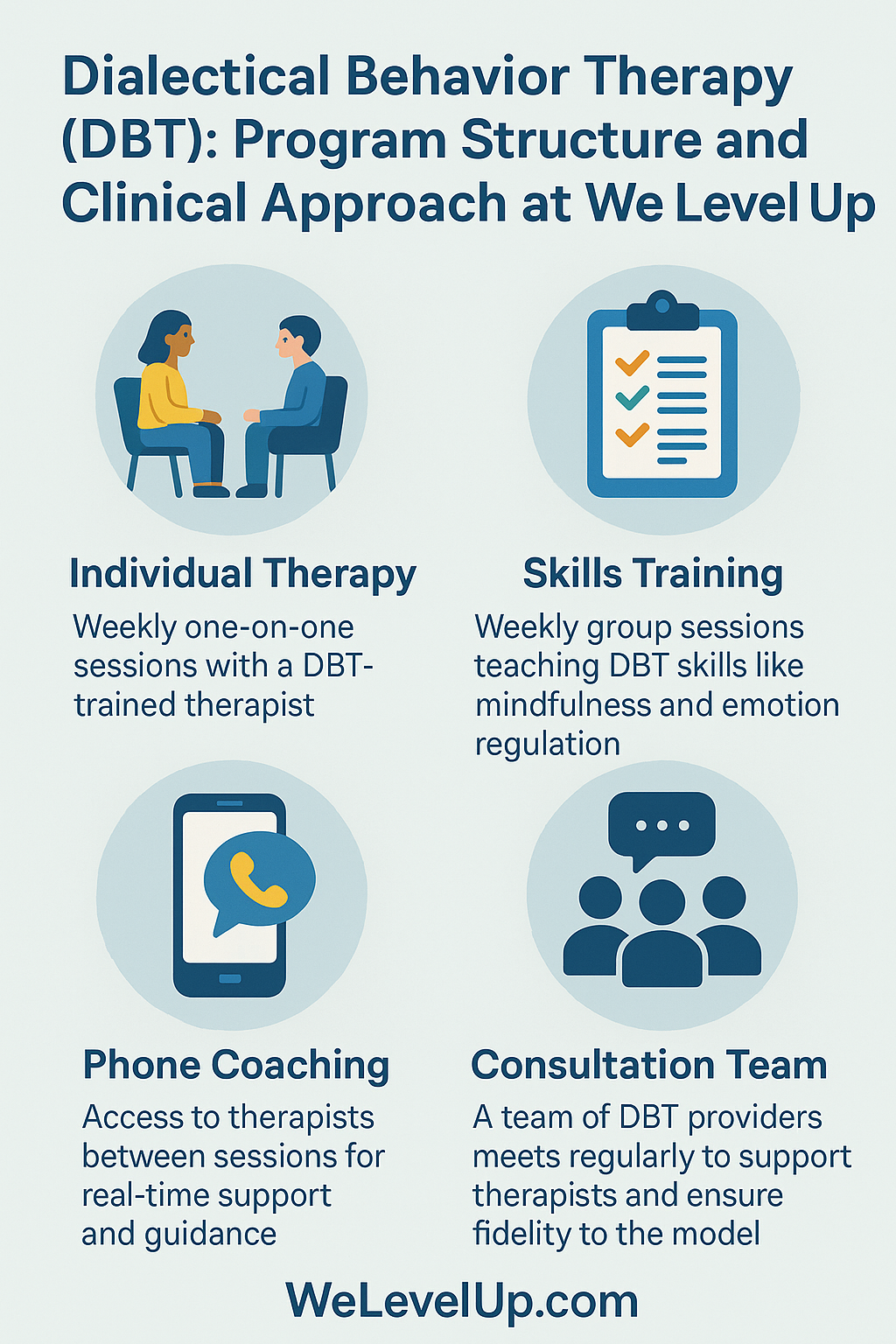
DBT combines individual therapy, group skills training, and phone coaching. Let’s look more closely at each one.
Individual Therapy
During individual therapy, your therapist helps you identify and change negative thought patterns and behaviors. You’ll learn to recognize triggers, develop coping strategies, and practice problem-solving skills.
These sessions also provide a safe space to process emotions and experiences. Your therapist will assign assignments to reinforce skills learned in therapy.
Group Skills Training
Group skills training is a critical component of DBT. These weekly sessions help you remember what you learn in individual sessions. They also let you connect with others on a similar journey.
Phone Coaching
Many therapists also offer phone coaching. Between sessions, you can contact your therapist for guidance when facing difficult situations. Phone coaching helps you apply DBT skills in the moment, preventing crises and promoting effective coping. This support reinforces the skills learned in therapy and group sessions.
Benefits of Dialectical Behavior Therapy
DBT empowers you to develop essential life skills, leading to improved emotional regulation, distress tolerance, and interpersonal relationships.
Mindfulness will help you cultivate a greater awareness of your thoughts, feelings, and surroundings. This heightened self-awareness allows you to respond more effectively to challenging situations.
You’ll also learn practical strategies for managing distress without resorting to harmful behaviors. You’ll learn to tolerate discomfort, ride out intense emotions, and maintain a balanced perspective. These skills enable you to navigate crises with greater resilience and adaptability.
Interpersonal effectiveness skills are a key component of DBT. You’ll learn to communicate assertively, set healthy boundaries, and nurture fulfilling relationships. These skills enhance your ability to express your needs, resolve conflicts, and build stronger connections with others.
Other Dialectical Behavior Therapy Benefits Include the Following:
- Replaces unhealthy behavior patterns with healthier, recovery-supportive habits.
- Helps you recognize your strengths and apply them across all areas of life.
- Improves communication skills so you can set boundaries and resolve conflicts.
- Helps you feel more in control of emotions, relationships, and daily choices.
- Teaches you to change negative thought processes to reduce impulsive reactions.
- Guides you to set priorities, say no, and clearly ask for your needs.
- Builds mindfulness for better self-care and emotional regulation, promoting reasoned decisions over impulse.
- Helps you handle distress better. It teaches you to focus on facts, accept what you can’t change, and get through crises safely.

Get Your Life Back
Find Hope & Recovery. Get Safe Comfortable Detox, Addiction Rehab & Dual Diagnosis Trused Care.
7/365 Line (844) 597-1011Dialectical Behavior Therapy Benefits in Addiction Treatment
DBT is beneficial in addiction treatment because it addresses harmful behaviors that hinder people from improving their lives. In addiction treatment programs, DBT looks at substance use and its impact on life quality. It also encourages key behaviors needed to overcome addiction.
These behavioral targets include:
- Alleviating physical discomfort associated with withdrawal
- Avoiding triggers and cues related to substance use
- Community reinforcement of positive behaviors
- Decreasing substance use
- Reducing behaviors that lead to drug use is important. This includes temporarily giving up the goal of stopping drugs or alcohol. Instead, some people act as if they cannot avoid using drugs
- Reducing cravings and urges to use substances
What Can DBT Help Treat?
DBT has proven effective in treating a wide range of mental health conditions. It’s particularly helpful for people struggling with intense emotions, self-destructive behaviors, and interpersonal challenges.
Borderline Personality Disorder
DBT was initially developed to treat borderline personality disorder (BPD). It’s considered the gold standard treatment for BPD. DBT helps people with BPD regulate their emotions, reduce impulsive behaviors, and improve interpersonal relationships.
Addiction
DBT has shown promise in treating substance use disorders. It can help you develop coping strategies to manage cravings, avoid triggers, and prevent relapse.
DBT’s mindfulness skills help you increase awareness of your thoughts and emotions related to substance use. You’ll learn distress tolerance techniques to navigate difficult situations without turning to drugs or alcohol. Emotion regulation skills can help you manage the underlying emotions that contribute to addiction.
Depression
DBT may also be an effective treatment for depression. It helps you develop a more balanced perspective and learn skills to manage depressive symptoms.
Studies have shown that DBT may help everyone from teenagers to older adults living with depression.
Anxiety
DBT can help you manage anxiety symptoms and reduce the effects of anxiety on your life. This should not be a surprise. It focuses on mindfulness, distress tolerance, and emotional regulation. These skills can help you handle triggers and times of high anxiety.
Bipolar Disorder
DBT can be a valuable adjunctive treatment for bipolar disorder. One study found that group skills sessions alone offered benefits to people living with bipolar disorder.
Get Help. Get Better. Get Your Life Back.
Searching for Accredited Drug and Alcohol Rehab Centers Near You?
Even if you have failed previously and relapsed, or are in the middle of a difficult crisis, we stand ready to support you. Our trusted behavioral health specialists will not give up on you. When you feel ready or just want someone to speak to about therapy alternatives to change your life call us. Even if we cannot assist you, we will lead you to wherever you can get support. There is no obligation. Call our hotline today.
(844) 597-1011Core DBT Skill
DBT incorporates four skills to help people overcome their unhealthy behaviors and distressing thoughts.
Mindfulness
Mindfulness is a mental state where we are aware of and accept the present moment. This includes our feelings, thoughts, and surroundings. Mindful individuals focus on the moment without judgment.
Mindfulness is a skill that teaches you to control your thoughts and avoid letting your mind take control. You can use this skill and knowledge to better understand your emotions. It helps you keep a positive mind. You can also accept stress instead of pushing it away.
Interpersonal Effectiveness
Interpersonal effectiveness teaches you to deal with others in effective and healthy ways. People understand how to ask for something and say no when necessary. In doing so, you learn how to handle difficult situations and improve communication and relationships.
Emotion Regulation
Emotion regulation helps you understand and regulate your emotions. This set of skills teaches people to better understand and express their feelings to alleviate psychological pain. The approach allows you to avoid feeling overwhelmed by your thoughts.
Distress Tolerance
People who control or regulate their feelings and thoughts during tough times often make wise decisions. Others react to highly stressful situations in a hostile manner, which may lead to regrettable choices. Distress tolerance teaches you to make sound decisions in stressful moments.
Through this module, therapists teach crisis survival skills to clients. This information helps distressed people avoid showing antagonistic behaviors that could worsen their problems. They learn to tolerate stress rather than change it.

Dialectical Behavior Therapy vs Cognitive Behavioral Therapy
DBT and cognitive behavioral therapy (CBT) share similarities. But there are key differences between these two therapies.
DBT was created to treat borderline personality disorder (BPD). In contrast, CBT is used for many other mental health issues. DBT places a strong emphasis on validation and acceptance, teaching people to accept their thoughts and feelings without judgment. In contrast, CBT focuses more on challenging and changing negative thought patterns and behaviors.
Another distinction lies in the structure of the therapies. DBT follows a comprehensive, stage-based approach that includes individual therapy, group skills training, and phone coaching. CBT is typically characterized by individual therapy sessions and may incorporate assignments. DBT also incorporates mindfulness techniques as a core component, whereas CBT does not necessarily focus on mindfulness.
The duration of treatment can also vary between DBT and CBT. DBT is usually a long-term therapy. It can last several months to a year or more, based on the person’s needs. CBT is generally shorter-term, with treatment lasting several weeks to a few months.
Both therapies help people build coping skills and improve their well-being. However, DBT focuses more on emotional control and effective relationships.
Your therapist will work with you to determine the best treatment approach for you.
First-class Facilities & Amenities
Trusted Integrated Addiction & Mental Health Rehabilitation Treatment
Rehab Centers TourEstablished Addiction Centers. Serene Private Facilities. Inpatient rehab programs vary.
Addiction Helpline (844) 597-1011Comprehensive recovery success experience, backed by a Team w/ History of:
15+
Years of Unified Experience
100s
5-Star Reviews Across Our Centers
10K
Recovery Success Stories Across Our Network
- Low Patient to Therapist Ratio
- Onsite Medical Detox Center
- Comprehensive Dual-Diagnosis Treatment
- Complimentary Family & Alumni Programs
- Alumni Coaching, Recovery & Personal Development Events
We Level Up Addiction Treatment and Mental Health Treatment Centers receive prestigious provider verifications and partnerships!
- We Level Up is a Psychology Today Verified Provider.
- We Level Up Joint Commission Accreditation.
- We Level Up FL Mental Health program is also CARF Accredited.
DBT Stages
DBT is a structured therapy that progresses through four distinct stages. Each stage builds upon the skills and insights gained in the previous one.
In the first stage, you’ll focus on developing basic skills to manage your emotions and behaviors. You’ll learn techniques to tolerate distress, regulate intense feelings, and practice mindfulness.
This stage aims to help you move from feeling out of control to achieving behavioral stability. Your therapist will work closely with you to identify and address any self-destructive or life-threatening behaviors.
Once you’ve gained a foundation of stability, you’ll move on to the second stage. Here, you’ll work on processing and resolving traumatic experiences and emotions from your past. You’ll learn to identify and change thought patterns that contribute to emotional pain.
With exposure therapy and cognitive restructuring, you will gain a new view of past events. You will also learn to handle the related emotions in healthier ways.
In stage three, you’ll focus on building self-esteem and addressing any lingering feelings of emptiness or dissatisfaction. You’ll set goals for a more fulfilling life and work on developing a stronger sense of identity.
This stage is about learning to trust yourself, make decisions aligned with your values, and cultivate healthier relationships. You’ll practice assertiveness, boundary-setting, and effective communication skills.
The final stage is about maintaining the progress you’ve made and applying your skills to create a life worth living. You’ll continue to set goals, build relationships, and pursue personal growth.
This stage may involve exploring spirituality, finding meaning and purpose, and contributing to your community. You’ll develop a relapse prevention plan and strategies for coping with future challenges. The goal is to build a resilient, fulfilling life using the skills you’ve learned in DBT.
Effectiveness of Dialectical Behavior Therapy
Dialectical Behavioral Therapy has mainly studied borderline personality disorder for years. However, it is also a good treatment for other mental health issues, like addiction. This therapy is effective for all ages, sexes, orientations, and races.
Everyone is different, and the therapist will adapt any treatment to fit the patient’s needs. To find out if DBT works for you, call one of our treatment specialists today. They will look at symptoms, treatment history, and therapy goals. This will help them decide if Dialectical Behavioral Therapy is the right choice for you or your loved one.
Dialectical Behavior Therapy Cost

The cost for dialectical behavior therapy varies depending on the dual diagnosis treatment facility and whether you have insurance. Some inpatient treatment centers offer DBT as part of their program. Others may ask for a payment at the start of each session. In addition, some fees are nonrefundable once they have been paid, even if you discontinue the program.
Use your insurance plan. Most private insurance plans also offer at least partial—if not full—coverage for this type of care. Depending on your insurance coverage, you might be able to offset a significant portion of the costs.
It’s recommended to call your health insurance provider to get an estimate for how much of the inpatient treatment they’ll pay for. We understand that going through your insurance policy can be challenging, time-consuming, and frustrating. Fortunately, you don’t have to do it alone. At We Level Up our admissions staff works with many private insurance customers during the admissions process. Learn more about your coverage by clicking on your insurance provider below:
Specialized, Accredited, 5-Star Reviewed, Evidence-based Addiction & Mental Health Programs. Complete Behavioral Health Inpatient Rehab, Detox plus Co-occuring Disorders Therapy.
CALL(844) 597-1011End the Addiction Pain. End the Emotional Rollercoaster. Get Your Life Back. Start Drug, Alcohol & Dual Diagnosis Mental Health Treatment Now. Get Free, No-obligation Guidance by Substance Abuse Specialists Who Understand Addiction & Mental Health Recovery & Know How to Help.
How Dialectical Behavior Therapy (DBT) Supports Klonopin Detox
Dialectical Behavior Therapy helps people move through Klonopin withdrawal with practical skills for cravings, anxiety, and mood swings. During medical detox and early rehab, doctors use DBT. This helps reduce harm, stabilize emotions, and prevent relapse while your body clears benzodiazepines.
The 4 Components of Dialectical Behavior Therapy
DBT teaches four core skills you can start using even in early detox:
- Mindfulness – noticing urges, body sensations, and thoughts without judgment so you can choose a safer response during acute anxiety.
- Distress Tolerance – These are crisis survival strategies. They include ice water dives, paced breathing, and TIP skills. These techniques help you manage Klonopin cravings without giving in to them.
- Emotion Regulation – Name your emotions and track what triggers them. These triggers can be sleep loss, caffeine, or conflict. Build habits that help steady your mood. This includes eating balanced meals, staying active, and taking medications as prescribed.
- Interpersonal Effectiveness – assertive communication and boundary setting to prevent withdrawal irritability from damaging relationships or treatment progress.
DBT Programs You May Encounter in Treatment
- Inpatient/Residential DBT-informed care: daily skills groups, coaching, and safety planning alongside medical oversight for benzodiazepine withdrawal.
- Day/Night or IOP (Intensive Outpatient): This program provides support. You will practice skills and make plans to prevent relapse. This happens while you return home.
- 1:1 Therapy + Skills Group: individualized DBT aligned with your psychiatry plan, sleep schedule, and triggers.
At We Level Up, our clinicians use methods based on Dialectical Behavior Therapy (DBT). They follow a complete and evidence-based plan for detox and rehab from Klonopin. (Ask about insurance-covered options.)
CBT vs DBT: What’s the Difference?
Both are evidence-based and can work together:
- CBT (Cognitive Behavioral Therapy) focuses on how thoughts influence feelings and behaviors. It’s great for challenging anxious thinking that fuels benzo misuse.
- DBT (Dialectical Behavior Therapy) includes focused skills training and a dialectical approach. This means that “two things can be true” at the same time. It highlights the importance of managing emotions and handling crises.
CBT vs DBT isn’t either/or—most Klonopin detox plans blend both.
“Free” Dialectical Behavior Therapy—What That Really Means
“Free dialectical behavior therapy” usually refers to no-cost resources (skills handouts, videos, community groups) or insurance-covered DBT in accredited programs. We can verify benefits and discuss scholarships, so cost doesn’t block care.
Training & Certification (For Transparency)
Our clinicians pursue dialectical behavior therapy certification and ongoing dialectical behavior therapy certification training so you receive consistent, skills-based care. If you are looking for “dialectical behavior therapy training near me,” find accredited programs. Make sure they offer supervised training and formal skills groups.
Workbooks & Books You Can Use Alongside Treatment
Books like The Dialectical Behavior Therapy Workbook and other dialectical behavior therapy books help you practice skills. They focus on mindfulness, distress tolerance, emotion regulation, and interpersonal effectiveness. You can use these skills between sessions. We’ll recommend pages that match your stage of detox and recovery.
Dialectical Behavior Therapy Residential Treatment Centers
Dialectical behavior therapy (DBT) can be very helpful in residential treatment. It supports people who want to adjust to new feelings of sobriety. Those who use addictive substances usually mask their emotions. Someone who doesn’t know how to deal with these emotions will likely turn to drugs or alcohol to cope.
The purpose of residential treatment is to help someone who has used drugs for a long time. By using these methods, they can leave treatment with a fresh start. They will have a new outlook that allows them to cope with the emotions and hardships they were running from before treatment.
DBT is very successful in residential addiction treatment. Clients learn to express, pursue, and maintain goals that fit their personal history. This includes dealing with issues like alcohol or drug abuse. They also learn to handle everyday life problems. DBT emphasizes building a life worth living.
DBT is just one form of therapy; however, it is used to recover from drug or alcohol addiction. It should not be the only therapy that treats addiction. An established treatment provider will use various techniques and evidence-based therapies, including CBT, 12-step programs, and more. DBT is an important part of treating addiction. It will keep helping as more people face addiction.
DBT in Dual Diagnosis Treatment Programs
If you struggle with both a mental health disorder and substance abuse, you’re not alone. Many people face this dual diagnosis. DBT is a strong tool for treating both conditions. Its structured approach significantly aids in dual diagnosis treatment.
There is research to support DBT for dual diagnosis. But you’ll likely need other treatments as well, like medication-assisted treatment to help with substance use disorder. Your healthcare team can work with you to determine the best combination of treatments for you.
Interested in learning more about how DBT can help you or your loved one? We Level Up offers DBT. Contact us today to learn more.
Top 5 Dialectical Behavior Therapy Studies with Insights
Here’s a patient-friendly chart of the top dialectical behavior therapy studies/guidelines.
Here is a helpful list of trusted dialectical behavior studies and guidance. You can use these in clinical documents, program pages, or treatment guides. Each row distills the evidence’s implications for treatment into actionable tips for care teams and admissions scripts. Sources were chosen for recency, rigor, and relevance to integrated treatment.
| Study | Treatment Implications | Insights for Patients |
|---|---|---|
| Dialectical Behavior Therapy for Depression in People with Chronic Depression View Study | Chronic Depression: DBT has shown effectiveness for patients with chronic depression, helping to manage ongoing emotional dysregulation. | – Daily Coping Tools: DBT teaches mindfulness techniques that can be used daily to reduce depressive symptoms. – Long-Term Skills: DBT focuses on lasting emotional regulation skills to break the cycle of depression. |
| The Effectiveness of DBT in Treating Eating Disorders View Resource | – Eating Disorders: DBT has shown success in treating bulimia, binge eating, and anorexia through emotional regulation and mindfulness. –Reduction in Disordered Eating: Participants report less binge eating and purging. They also feel better emotionally. | – Body and Mind: DBT helps individuals with eating disorders recognize how emotions influence eating habits. – Mindfulness: Techniques like mindfulness are key in reducing urges and promoting healthy eating. |
| DBT for Post-Traumatic Stress Disorder (PTSD) in Veterans Read Article | Effective for PTSD: DBT is successful in reducing symptoms of PTSD, especially when combined with BPD. | Healing Takes Time: DBT helps with accepting the past while managing present emotions. |
| Effectiveness of Dialectical Behavior Therapy for Borderline Personality Disorder in an Uninsured Population Read Study | Access to Care: DBT has proven effective for uninsured populations with BPD, suggesting it can be adapted for different settings. | – Hopeful Outcomes: DBT can be highly effective, even in resource-limited settings. – Consistency: The skills learned are effective in both high-stress and low-resource environments. |
| A Randomized Controlled Trial of Dialectical Behavior Therapy for Borderline Personality Disorder Read Review | Effective for BPD: DBT significantly reduces self-harm, suicidal behavior, and emotional dysregulation in patients with Borderline Personality Disorder (BPD). | – Emotions Are Valid: DBT helps you accept your feelings and learn to manage them healthily. – Skill Development: Learning DBT skills takes time—be patient with yourself. – Therapy Is Collaborative: DBT is a team effort. Your therapist helps, but your active participation is crucial. |
Frequently Asked Questions
What is Dialectical Behavior Therapy (DBT)?
DBT is a type of cognitive-behavioral therapy designed to help people manage intense emotions, reduce self-destructive behaviors, and improve relationships. It focuses on balancing acceptance and change through skill-building in mindfulness, distress tolerance, emotion regulation, and interpersonal effectiveness.
Who can benefit from DBT?
DBT was originally developed for people with Borderline Personality Disorder (BPD), but it is also effective for individuals with depression, anxiety, PTSD, substance use disorders, eating disorders, and emotion regulation difficulties.
What can I expect during DBT sessions?
You will engage in individual therapy to address personal challenges and group sessions to learn and practice DBT skills. Phone coaching is often available for real-time support when you need help applying skills.
Experience Transformative Recovery at We Level Up Treatment Centers.
See our authentic success stories. Get inspired. Get the help you deserve.
Start a New Life
Begin with a free call to an addiction & behavioral health treatment advisor. Learn more about our dual-diagnosis programs. The We Level Up Treatment Center Network delivers recovery programs that vary by each treatment facility. Call to learn more.
- Personalized Care
- Caring Accountable Staff
- World-class Amenities
- Licensed & Accredited
- Renowned w/ 100s 5-Star Reviews
We’ll Call You
Resources
Cognitive Behavioral Therapy: How CBT Works (CBT vs DBT) — Explains CBT’s thought-behavior change model so readers can see how DBT evolved and differs in practice emphasis.
Group Therapy: Skills Practice & Support (group therapy) — Outlines how group sessions reinforce DBT skills through rehearsal and feedback.
Family Therapy for Addiction & Mental Health (family therapy) — Shows how families learn validation and boundaries to reduce escalation.
Borderline Personality Disorder Treatment (borderline personality disorder treatment) — Reviews symptoms and care pathways where standard DBT has the strongest evidence.
Trauma Therapy & Recovery (trauma treatment) — Frames trauma-informed approaches that complement DBT’s emotion regulation focus.
PTSD Treatment Options (PTSD treatment) — Lists evidence-based PTSD treatments when DBT requires adjunctive care.
Sources
[1] NCBI – https://www.ncbi.nlm.nih.gov/pmc/articles/PMC2797106/
[2] NIAAA – https://pubs.niaaa.nih.gov/publications/ProjectMatch/match03.pdf
[3] NCBI – https://www.ncbi.nlm.nih.gov/pmc/articles/PMC2963469/
[4]DBT Drug Addiction – We Level Up NJ
DBT Therapy WA DBT Therapy Washington