

Schizophrenia Treatment, Diagnosis, & Effective Treatments
The goals in treating schizophrenia include targeting symptoms, preventing relapse, and increasing adaptive functioning so that the patient can be integrated back into the community. Since patients rarely return to their baseline level of adaptive functioning, both nonpharmacological and pharmacological treatments must be used to optimize long-term outcomes. Continue to read more about schizophrenia therapies and options.
Clinically Reviewed by Lauren Barry, LMFT, MCAP, QS
Medically Reviewed by Ali Nikbakht, PsyD
Updated on October 2, 2025 — Editorial Policy | Research Policy | Privacy Policy
Schizophrenia Treatment, Diagnosis, & Effective Treatments
The goals in treating schizophrenia include targeting symptoms, preventing relapse, and increasing adaptive functioning so that the patient can be integrated back into the community. Since patients rarely return to their baseline level of adaptive functioning, both nonpharmacological and pharmacological treatments must be used to optimize long-term outcomes. Continue to read more about schizophrenia therapies and options.
Clinically Reviewed by Lauren Barry, LMFT, MCAP, QS
Medically Reviewed by Ali Nikbakht, PsyD
Reviewed / Updated: October 2, 2025 — Editorial Policy | Research Policy | Privacy Policy
By We Level Up | Author Alex Evans, PharmD, MBA | Editorial Policy | Research Policy
What is Schizophrenia?
Schizophrenia is a complex mental health condition characterized by both positive and negative symptoms. Treatment is personalized, and ongoing care by trained healthcare professionals is critical for success. A diagnosis of schizophrenia is based on standardized criteria from the DSM-5 and includes an evaluation of symptoms. There are three main categories of symptoms: psychotic symptoms, negative symptoms, and cognitive symptoms.
Effective Treatment Options for Schizophrenia
Medication is a cornerstone of schizophrenia treatment, but psychotherapy can also help many people cope. Psychosocial interventions can also play an important role.
Psychotherapy and Psychosocial Interventions
Psychotherapy approaches sometimes used for schizophrenia include:
1. Cognitive Behavioral Therapy (CBT)
Cognitive behavioral therapy for schizophrenia aims to identify and change patterns of thinking and behavior contributing to distressing symptoms and difficulties associated with schizophrenia. It helps you challenge and change irrational beliefs. It also helps you manage stress, improve problem-solving skills, and enhance coping strategies.
2. Family Therapy
Schizophrenia affects both the person living with it and their family members. Family therapy involves the participation of family members to improve communication, resolve conflicts, and develop strategies for supporting the person with schizophrenia. It can help reduce relapse rates and improve family relationships.
3. Supportive Therapy
This therapy focuses on establishing a supportive relationship between the therapist and the individual with schizophrenia. It provides a safe space to express their feelings, concerns, and experiences related to their illness. The therapist can offer guidance, validation, and assistance in managing symptoms and daily challenges.
4. Social Skills Training
Social skills training aims to improve social interactions, communication, and adaptive functioning in individuals with schizophrenia. It involves teaching specific skills such as assertiveness, problem-solving, emotion regulation, and social cues interpretation. The goal is to enhance interpersonal relationships and promote community integration.
Cognitive remediation programs focus on improving cognitive functioning, including attention, memory, and problem-solving abilities, which can be impaired in schizophrenia. These programs use different exercises and techniques. They help people with schizophrenia improve their thinking skills and make up for weaknesses.
6. Supported Employment
This approach focuses on helping people living with schizophrenia find and maintain competitive employment.
7. Assertive Community Treatment (ACT)
ACT is a team-based approach. It gives strong and ongoing support to people with schizophrenia in the community. A team of experts, including mental health workers, case managers, nurses, and social workers, offers many services. These services include medication management, crisis help, housing support, job training, and social skills training.
The type of psychotherapy that works best for people with schizophrenia can vary. It depends on their symptoms, needs, and preferences.
Subtypes of Schizophrenia
Schizophrenia used to be categorized into five subtypes, including the paranoid, disorganized, residual, undifferentiated, and catatonic types. This is no longer the case, and the DSM-5 recognized this by removing subtypes from the diagnostic criteria. Schizophrenia is now seen as being on a spectrum. People can have different symptoms at different times.
Skip To:
Learn More:
- Mental Health Treatment Rehab
- What Is A Mental Health Hospital?
- What Is Cognitive Behavioral Therapy (CBT)?
- What Is Dialectical Behavior Therapy (DBT)?
- Dialectical Behavior Therapy vs Cognitive Behavioral Therapy
- Psychiatric Disorder Treatment, Diagnosis, & Types
- Co-Occurring Disorders Treatment Options
- Neuropsychopharmacology
- Top-Rated Mental Health Treatment Center
- Different Types of Mental Health Treatment, Diagnosis & Care
Psychosocial Intervention Treatments for Schizophrenia
Do I Need Schizophrenia Treatment? Take a Quiz Now
Take a free Schizophrenia treatment quiz and learn more about the impact of Schizophrenia and how it affects you.
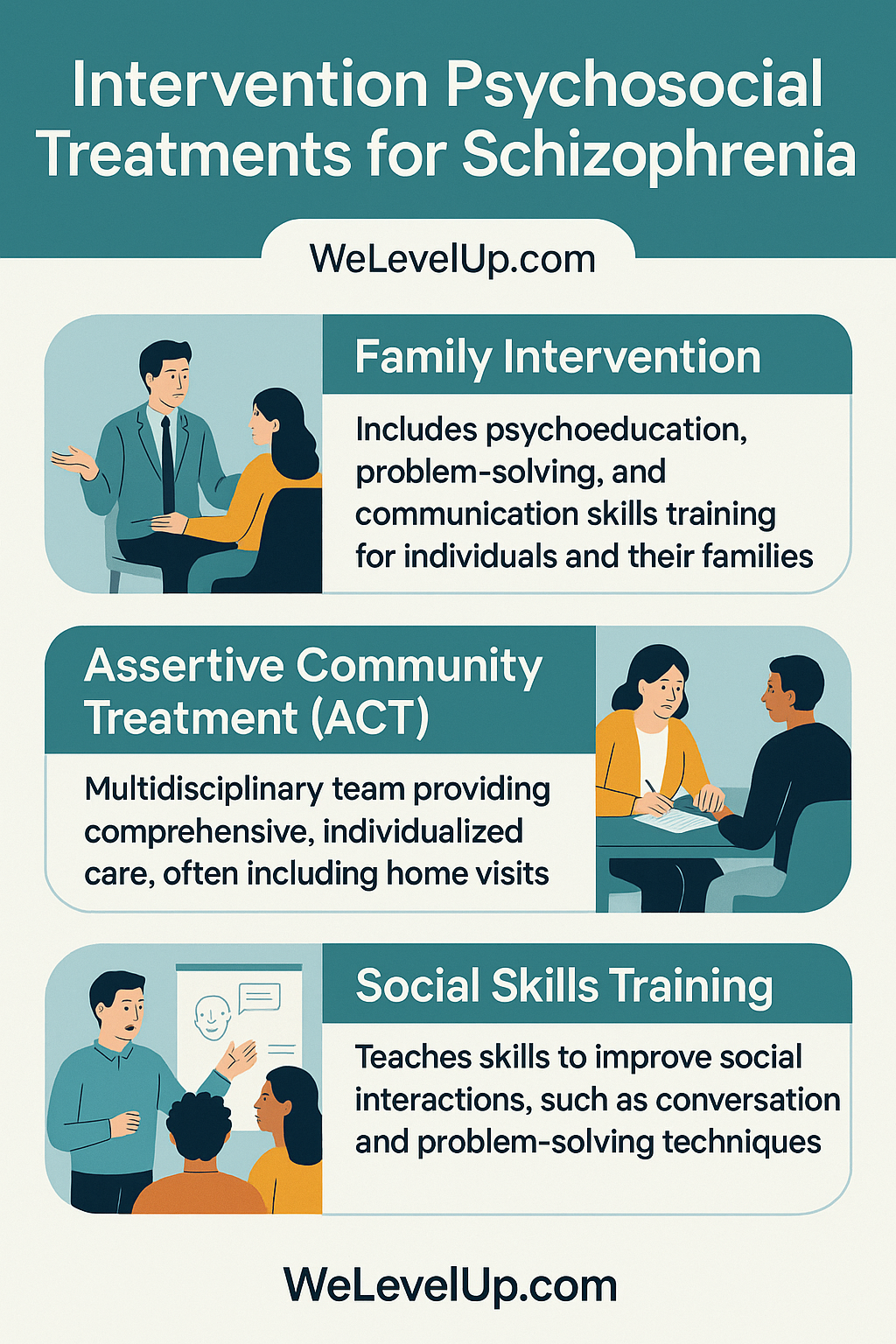
Psychosocial interventions can be used individually or in combination based on the needs and preferences of the individual with schizophrenia.
Here are some intervention-based psychosocial treatments for schizophrenia:
1. Assertive Community Treatment (ACT)
ACT is a team-based approach. It gives strong and ongoing support to people with schizophrenia in the community. A team of experts, including mental health workers, case managers, nurses, and social workers, offers many services. These services include medication management, crisis help, housing support, job training, and social skills training.
2. Supported Employment
This approach focuses on helping individuals with schizophrenia find and maintain competitive employment.
3. Social Skills Training
Social skills training programs aim to improve social interactions, communication, and adaptive functioning in individuals with schizophrenia.
4. Cognitive Enhancement Therapy (CET)
The CET program aims to improve cognitive skills. These skills include attention, memory, and problem-solving. It also focuses on social skills like understanding others’ perspectives and recognizing emotions.
5. Family-Based Interventions
Involving family members in the treatment process can be crucial for individuals with schizophrenia. Family interventions aim to improve communication, reduce stress, enhance problem-solving skills, and support individuals with schizophrenia and their family members.
How Can I Help Someone With Schizophrenia Who Refuses Treatment?
Adherence to treatment starts with a trusting and supportive relationship with family and friends. You can start by showing empathy, being a good listener, and validating their feelings. Having a close family member or friend go with them to their appointments can really help. They can also assist in making treatment decisions. By being there for them, you can be a positive influence on their decision to continue treatment.
In some cases, a court may order treatment for schizophrenia. This is important if refusing treatment puts the person or others at risk. In that case, seeking help from mental health professionals or crisis intervention services is crucial.
The family-based therapy we discussed can give you the tools to support your loved one during treatment.

Get Your Life Back
Find Hope & Recovery. Get Safe Comfortable Detox, Addiction Rehab & Dual Diagnosis Trused Care.
7/365 Line (844) 597-1011Schizophrenia Treatment Statistics
The prognosis of individuals undergoing schizophrenia treatment is generally unpredictable. Based on a study, around 20% of patients report favorable schizophrenia treatment outcomes. The remaining ones experience numerous psychotic episodes and poorly respond to antipsychotic medications. Moreover, there is a treatment gap in managing schizophrenia, with many individuals not receiving adequate care or experiencing delays in accessing appropriate treatment.
45-55
Schizophrenia typically emerges in late adolescence or early adulthood. However, it can occur at any age, and there may be a second onset peak in individuals aged 45-55.
Source: NCBI
2.4 Million
About 1% of the US population (approximately 2.4 million adults) is estimated to have schizophrenia.
Source: NCBI
50%
About 50% of individuals diagnosed with schizophrenia experience significant improvement, allowing them to attain independence and engage in work. Another 25% show improvement but still require support from a solid network to navigate daily life.
Source: NCBI
Dealing With Treatment-Resistant Schizophrenia
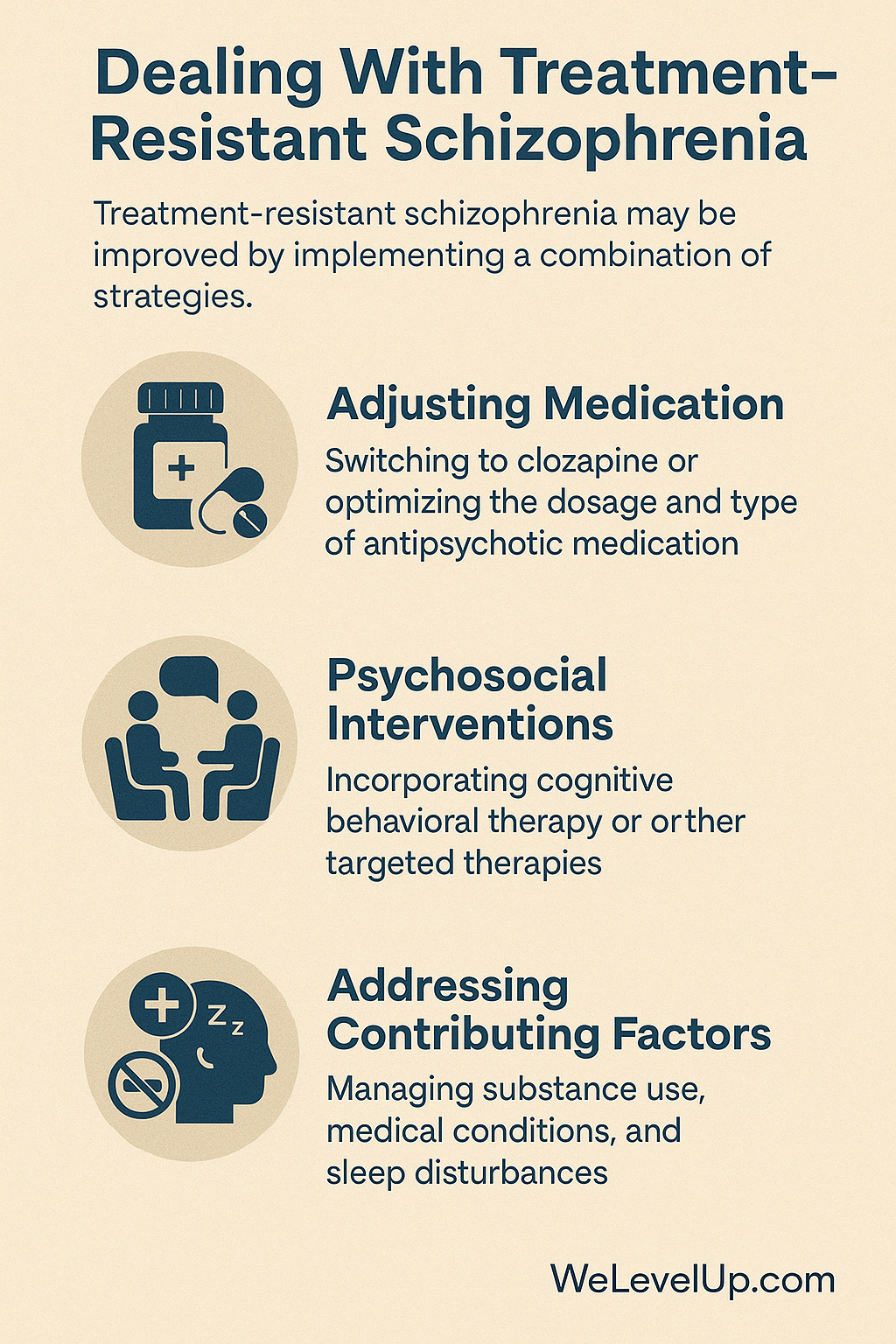
While medications play a significant role, psychosocial interventions can also be valuable in managing treatment-resistant schizophrenia. Psychotherapy, such as schizophrenia cognitive therapy for schizophrenia, can help individuals develop coping strategies, address distorted thinking patterns, and enhance overall functioning.
Psychosocial rehabilitation programs can help people improve their quality of life. These programs include vocational training, social skills development, and supported employment. They also boost self-esteem and help with community integration.
Given the complexity of treatment-resistant schizophrenia, it is essential to consult specialists with expertise in managing such cases.
Getting a second opinion from a psychiatrist or mental health expert can be helpful. They can provide new ideas. They can suggest different treatment options. They can share information about the latest research and clinical trials for treatment-resistant schizophrenia.
Collaborating with a knowledgeable treatment team can help explore all available options and address the individual’s needs.
Dealing with treatment-resistant schizophrenia requires persistence, patience, and a comprehensive approach. It is important to keep open communication with healthcare providers. Involve your support networks and stay informed about new treatment options.
The journey can be hard. However, new research and ongoing efforts in mental health offer hope. This is especially true for people with treatment-resistant schizophrenia.
Get Help. Get Better. Get Your Life Back.
Searching for Accredited Drug and Alcohol Rehab Centers Near You?
Even if you have failed previously and relapsed, or are in the middle of a difficult crisis, we stand ready to support you. Our trusted behavioral health specialists will not give up on you. When you feel ready or just want someone to speak to about therapy alternatives to change your life call us. Even if we cannot assist you, we will lead you to wherever you can get support. There is no obligation. Call our hotline today.
(844) 597-1011Understanding The Negative Symptoms of Schizophrenia Treatment
Negative symptoms are symptoms that lead to a lack of mental function you would expect in a healthy person.
Negative symptoms can be managed in ways similar to other symptoms, and may include:
- Medication Adjustment: Talking to a psychiatrist about your current medications can help. They can determine if any drugs or therapies for schizophrenia improve or worsen negative symptoms.
- Psychosocial Interventions: Psychosocial rehabilitation programs focused on vocational training, social integration, and meaningful activities can also improve functioning and overall well-being.
- Family Education and Support: Involving family members or caregivers in the treatment process can provide crucial support and understanding. Education about negative symptoms can help them better recognize and respond to the individual’s needs. Family support groups can also offer a space for sharing experiences and learning from others facing similar challenges.
- Physical Health and Lifestyle: Attention to physical and overall well-being can positively impact negative symptoms. Regular exercise, a healthy diet, and enough sleep can boost energy levels, improve mood, and enhance overall functioning.
- Collaborative Treatment Planning: Collaborating with healthcare professionals to develop an individualized treatment plan is essential. This involves ongoing communication, regular monitoring of symptoms, and adjustments as needed. Talking openly with the treatment team can help. This way, they can focus on both positive and negative symptoms. It also helps improve the overall quality of life.
Understanding and addressing the negative symptoms of schizophrenia requires a holistic approach that combines medication management, psychosocial interventions, and support from loved ones.
Top 5 Schizophrenia Treatment Studies with Insights
Schizophrenia is a severe and frequently misinterpreted mental illness that alters how an individual perceives reality. It usually begins during late teenage years or early adulthood and affects roughly 1% of people worldwide.
How We Level Up Turns Research Into Real Recovery
At We Level Up Treatment Centers, we turn proven research into personalized care. Using evidence-based therapies like CBT for schizophrenia, customized medication management, and family involvement, our programs bring the best science into everyday treatment. We combine medical knowledge with caring support. This helps clients go from managing symptoms to achieving lasting recovery and a better life.
| Study | Treatment Implications | Insights for Patients |
|---|---|---|
| The Effectiveness of Cognitive Behavioral Therapy for Schizophrenia View Study | CBT should be integrated early to reduce symptom severity and prevent relapse. | Engage actively in CBT to improve symptom management and quality of life. |
| A Meta-Analysis of Antipsychotic Treatment in Schizophrenia View Resource | Medication management needs careful monitoring for side effects and effectiveness. | Communicate openly with your healthcare provider about the effects and side effects of your medication. |
| Family Therapy for Schizophrenia: A Review Read Article | Incorporate family therapy as a standard part of schizophrenia care. | Involve family members in therapy to build a strong support network. |
| Cognitive Remediation Therapy for Schizophrenia Read Study | Include cognitive remediation to address cognitive deficits in conjunction with medication. | Commit to cognitive exercises to enhance everyday functioning. |
| Integrated Treatment for Schizophrenia and Substance Use Disorders Read Review | Treat dual diagnoses simultaneously for the best outcomes. | Seek programs that address both schizophrenia and substance use together. |
What This Means for Your Care at We Level Up Treatment Centers
These studies deliver a powerful statement. It personalized medication management, evidence-based therapies like CBT, family involvement, and holistic support. By using the best research, we help clients go beyond symptoms. This helps them regain stability, confidence, and a better quality of life. Ready to turn evidence into action? Contact We Level Up Treatment Centers for a free, private assessment. We will create a personalized plan just for you, based on research.
First-class Facilities & Amenities
Trusted Integrated Addiction & Mental Health Rehabilitation Treatment
Rehab Centers TourEstablished Addiction Centers. Serene Private Facilities. Inpatient rehab programs vary.
Addiction Helpline (844) 597-1011Comprehensive recovery success experience, backed by a Team w/ History of:
15+
Years of Unified Experience
100s
5-Star Reviews Across Our Centers
10K
Recovery Success Stories Across Our Network
- Low Patient to Therapist Ratio
- Onsite Medical Detox Center
- Comprehensive Dual-Diagnosis Treatment
- Complimentary Family & Alumni Programs
- Alumni Coaching, Recovery & Personal Development Events
How To Find Schizophrenia Treatment Centers Near Me?
Are you searching for schizophrenia treatment centers in Los Angeles, Florida, or near you? Remember, when searching for treatment centers, consider factors such as location, specialized programs, treatment approaches, and the availability of comprehensive services. It’s important to research and collect information to choose the best treatment center for you.
To find treatment options for schizophrenia and “treatment centers for schizophrenia near me,” follow these steps:
- Consult with Healthcare Providers: Contact your primary care physician or psychiatrist. They can give suggestions or referrals to treatment centers or mental health experts who know how to treat schizophrenia. They may have a network of resources or be familiar with local treatment centers that can meet your specific needs.
- Utilize Online Directories: Online directories or databases can be helpful tools in locating treatment centers near your location. Websites such as the Substance Abuse and Mental Health Services Administration (SAMHSA) Treatment Locator (https://findtreatment.samhsa.gov/).
- Contact Mental Health Helplines or Hotlines: Mental health helplines or hotlines offer information and support. They can help you find treatment centers. They often have resources and databases readily available and can connect you to appropriate treatment options in your area. Helplines can be very useful. You can contact the National Alliance on Mental Illness (NAMI) helpline at 1-800-950-NAMI. You can also reach the SAMHSA National Helpline at 1-800-662-HELP.
- Contact Local Mental Health Groups: Local mental health groups may have information about treatment centers for schizophrenia. They can also guide you on where to find help. They often have regional resources or directories that can assist in finding suitable treatment options.
- Talk to Your Insurance Provider: If you have health insurance, reach out to your provider. They can help you find treatment centers that your plan covers. They can list in-network providers or “schizophrenia treatment near me” specializing in schizophrenia treatment.
We Level Up Residential Treatment for Schizophrenia
Inpatient rehabilitation programs for schizophrenia treatment provide intensive care and support within a structured and supervised environment. These programs address acute symptoms, stabilize individuals, and facilitate their transition back to community living.
At We Level Up mental health treatment center, we provide 24/7 monitoring and support. Our team includes psychiatrists, nurses, therapists, and support staff. This constant presence ensures immediate intervention and response to emergent or worsening symptoms.
Residential treatment centers for schizophrenia focus on optimizing medication regimens, often through close collaboration with psychiatrists. This includes medication evaluation, adjustment, and monitoring to control symptoms and minimize side effects. Medication adherence is closely monitored and supported during the inpatient stay.
Living with schizophrenia can be challenging. However, people can have fulfilling lives with the right treatment, support, and self-care. People with schizophrenia should speak up for themselves. They need to learn about their condition. It is important to work closely with healthcare professionals. Together, they can create personal plans to manage treatment and symptoms. This will help them reach their goals.
If you are unsure where to begin or need treatment options, contact We Level Up mental health center for help.
Specialized, Accredited, 5-Star Reviewed, Evidence-based Addiction & Mental Health Programs. Complete Behavioral Health Inpatient Rehab, Detox plus Co-occuring Disorders Therapy.
CALL(844) 597-1011End the Addiction Pain. End the Emotional Rollercoaster. Get Your Life Back. Start Drug, Alcohol & Dual Diagnosis Mental Health Treatment Now. Get Free, No-obligation Guidance by Substance Abuse Specialists Who Understand Addiction & Mental Health Recovery & Know How to Help.
Frequently Asked Questions
How is schizophrenia treated?
Antipsychotic medication is the first-line treatment for schizophrenia. Examples include quetiapine (Seroquel), aripiprazole (Abilify), and ziprasidone (Geodon). Psychotherapy and social interventions are also an important part of schizophrenia treatment.
Is there treatment for schizophrenia?
Yes, treatment is available for schizophrenia. There is no cure for schizophrenia. But with medication, psychotherapy, and social support, it is possible to lead a full, fulfilling life.
What is the best natural treatment for schizophrenia?
Natural treatments alone cannot effectively treat schizophrenia. Some lifestyle changes can help improve your health. Regular exercise, a healthy diet, and managing stress are important. Getting enough sleep and having supportive friends also matter. These changes can work well with traditional treatments and boost your overall well-being.
What are the new treatments for schizophrenia?
Antipsychotics are the treatment of choice for schizophrenia. New treatments, including new types of medications, are being researched. There are also other promising procedures being researched, like transcranial magnetic stimulation.
What is the best therapy for schizophrenia?
Therapy alone is not sufficient to treat schizophrenia. However, cognitive-behavioral therapy (CBT) may help people living with schizophrenia manage symptoms and improve functioning. CBT identifies and challenges distorted thoughts and beliefs, develops coping strategies, and enhances problem-solving skills. Other therapies can also help. Family therapy, social skills training, and supportive therapy address specific issues. They provide extra support.
You’re born for a purpose!!” Motivational Mental Health Quotes. Best Quotes about Mental Health.
Schizophrenia is a complex mental health condition; seeking assistance is essential for managing symptoms and improving overall well-being.
By seeking help, you demonstrate strength and resilience. It shows that you are ready to face the challenges of schizophrenia. You are taking charge of your mental health. Treatment options, including schizophrenia therapy, medication, support groups, and lifestyle changes, can significantly enhance your quality of life.
Get a FREE mental health treatment insurance check – https://welevelup.com/rehab-insurance/
If you or a loved one is struggling with schizophrenia or other mental health disorder(s), call for a FREE consultation 24/7 at (561) 678-0917.
Search We Level Up Schizophrenia Treatment, Mental Health Topics & Resources
Resources
Dual Diagnosis Treatment For Mental Health And Addiction — relevant for schizophrenia plus substance abuse or other comorbid disorders.
Mental Health Treatment – a broad resource hub for exploring other conditions linked with schizophrenia.
Co-Occurring Disorders Treatment Options – Covers how schizophrenia often coexists with other disorders (like substance abuse, mood disorders), what challenges this poses, and how treatment approaches change when disorders co-occur.
Sources
[1] Schizophrenia – NIMH Available from: https://www.nimh.nih.gov/health/topics/schizophrenia
[2] Hany M, Rehman B, Azhar Y, et al. Schizophrenia. [Updated 2023 Mar 20]. In: StatPearls [Internet]. Treasure Island (FL): StatPearls Publishing; 2023 Jan-. Available from: https://www.ncbi.nlm.nih.gov/books/NBK539864/
[3] Patel KR, Cherian J, Gohil K, Atkinson D. Schizophrenia: overview and treatment options. P T. 2014 Sep;39(9):638-45. PMID: 25210417; PMCID: PMC4159061.
[4] What is Schizophrenia? – Substance Abuse and Mental Health Services Administration (SAMHSA)
[5] Schizophrenia WHO Available from: https://www.who.int/news-room/fact-sheets/detail/schizophrenia
[6] Schizophrenia: Overview – Healthy People 2030 Available from: https://health.gov/healthypeople/tools-action/browse-evidence-based-resources/schizophrenia-overview
[7] Schizophrenia – VA Mental Health – Veterans Affairs (.gov)
[8] Inpatient Evaluation of Adults With Schizophrenia – Clinical Trials (.gov)
[9] Definition of psychosis – NCI Dictionary of Cancer Terms
[10] Schizophrenia and the Law – Office of Justice Programs (.gov)
[11] Caqueo-Urízar A, Rus-Calafell M, Urzúa A, Escudero J, Gutiérrez-Maldonado J. The role of family therapy in the management of schizophrenia: challenges and solutions. Neuropsychiatr Dis Treat. 2015;11:145-151. Published 2015 Jan 14. https://doi.org/10.2147/NDT.S51331
[12] Buckley LA, Maayan N, Soares-Weiser K, Adams CE. Supportive therapy for schizophrenia. Cochrane Database Syst Rev. 2015;2015(4):CD004716. Published 2015 Apr 14. https://www.cochranelibrary.com/cdsr/doi/10.1002/14651858.CD004716.pub4/full
[13] Almerie MQ, Okba Al Marhi M, Jawoosh M, et al. Social skills programmes for schizophrenia. Cochrane Database Syst Rev. 2015;2015(6):CD009006. Published 2015 Jun 9. https://www.cochranelibrary.com/cdsr/doi/10.1002/14651858.CD009006.pub2/full
[14] Ahmed AO. Cognitive Remediation for Schizophrenia. Focus (Am Psychiatr Publ). 2020;18(4):436-439. https://psychiatryonline.org/doi/10.1176/appi.focus.20200035
[15] Cuthbert BN, Morris SE. Evolving Concepts of the Schizophrenia Spectrum: A Research Domain Criteria Perspective. Front Psychiatry. 2021;12:641319. Published 2021 Feb 25. https://doi.org/10.3389/fpsyt.2021.641319
[16] Mosolov SN, Yaltonskaya PA. Primary and Secondary Negative Symptoms in Schizophrenia. Front Psychiatry. 2022;12:766692. Published 2022 Jan 3. https://doi.org/10.3389/fpsyt.2021.766692