

Bipolar Disorder Treatment: Proven Ways to Balance Your Mood
Discover effective bipolar disorder treatment options, including medication, therapy, and lifestyle adjustments. Learn how psychotherapy techniques, such as Cognitive-Behavioral Therapy (CBT) and Interpersonal Therapy, can help manage mood swings and enhance coping skills. Explore the role of mood stabilizers, antipsychotics, and antidepressants in stabilizing mood fluctuations.
Clinically Reviewed by Lauren Barry, LMFT, MCAP, QS
Medically Reviewed by Ali Nikbakht, PsyD
Updated on January 25, 2026 — Editorial Policy | Research Policy | Privacy Policy
By We Level Up | Editor Yamilla Francese | Clinically Reviewed By Lauren Barry, LMFT, MCAP, QS, Director of Quality Assurance | Editorial Policy | Research Policy
What is Bipolar Disorder Treatment?
Bipolar disorder is a severe mental illness characterized by alternating periods of euphoria and depression. Medical treatment, therapy, and behavioral changes all play a role in managing this condition. Mood-stabilizing medications and psychotherapeutic methods are discussed in detail as two of the best treatments for bipolar disorder. We also talk about the common signs of bipolar disorder. These include manic episodes, depressive episodes, and rapid cycling. This way, people can better recognize the symptoms and get help when they need it. People with bipolar disorder can find stability and feel better by learning about treatments and symptoms to watch for.
Bipolar Disorder Symptoms
Bipolar disorder is a mental health condition that causes significant shifts in mood and energy levels. With the right bipolar disorder treatments and medications, individuals can better manage these changes and lead more balanced lives. Bipolar symptoms usually include manic and depressive episodes. However, each person experiences this condition in their own way. Not everyone goes through both phases. These are the most common signs:
Manic Episode Symptoms:
- Elevated mood means feeling too happy, euphoric, or irritable for a long time.
- Increased Energy: Having more energy than usual and doing more than usual.
- Less need for sleep: feeling rested after a few days of getting very little sleep.
- Racing Thoughts: Ideas come quickly, it’s hard to focus, and you get distracted more easily.
- Impulsivity means doing risky things, like spending too much money, driving too fast, or using drugs.
- Grandiose beliefs mean having a very high opinion of yourself. You might feel invincible or think you are more important than you really are.
- Agitation is a state of restlessness and increased anger.
Rapid cycling is a feature of bipolar disorder. People with this condition have four or more episodes of mania, depression, or both in a year. Bipolar disorder can significantly impact daily life, relationships, and overall well-being. A proper diagnosis, ongoing treatment, and support are key to managing symptoms. They help improve the quality of life for people with bipolar disorder.
Skip To;
Learn More:
Signs of a Depressive Episode
- Feeling very sad or hopeless for a long time is called persistent sadness.
- Fatigue is a constant feeling of being tired and having no energy.
- Sleep Disturbances: Either experiencing insomnia or oversleeping.
- Loss of Interest: Losing interest in activities once enjoyed, including social withdrawal.
- Trouble focusing: Trouble paying attention, making choices, or remembering things.
- Changes in Appetite: Significant weight loss or gain due to changes in eating patterns.
- Feelings of Guilt or Worthlessness: Feeling unworthy or guilty, even about minor issues.
- Suicidal Thoughts: Having thoughts of self-harm or suicide.

Get Your Life Back
Find Hope & Recovery. Get Safe Comfortable Detox, Addiction Rehab & Dual Diagnosis Trused Care.
7/365 Line (844) 597-1011Top 5 Bipolar Depression Studies with Insights
Bipolar disorder treatment combines medication, therapy, and lifestyle support to stabilize mood, prevent relapses, and improve daily functioning. Structured programs and evidence-based approaches empower individuals to manage symptoms, build coping skills, and achieve long-term wellness.
How We Level Up Turns Research Into Real Recovery
At our treatment centers, the latest scientific findings on bipolar disorder guide every aspect of care. Our inpatient programs use proven therapies, medication management, family support, and life skills training. This helps us create structured recovery plans that get results. By applying proven strategies from top studies, we help clients stabilize mood, reduce relapse risk, and build lasting wellness.
| Study | Treatment Implications | Insights for Patients |
|---|---|---|
| Bipolar depression: a review of treatment options View Study | Reviews antipsychotics, mood stabilizers, ECT, and psychotherapy for bipolar depression. | Provides patients with an overview of treatment options and stresses adherence to therapy. |
| Bipolar depression: trial-based insights to guide patient care View Resource | Emphasizes mood stabilizers and antipsychotics; cautious use of antidepressants due to mood-switch risk. | Highlights the need for personalized treatment and monitoring for potential mood shifts. |
| Bipolar disorders: an update on critical aspects Read Article | Covers mood stabilizers, antipsychotics, cautious antidepressant use, and psychosocial interventions like CBT. | Encourages patients to engage in psychosocial interventions and follow prescribed treatments. |
| Bipolar depression: the clinical characteristics and unmet needs Read Study | Highlights diagnostic and treatment challenges; calls for improved tools and strategies. | Raises awareness about the complexities of bipolar depression and the importance of comprehensive care. |
| Bipolar major depression in adults: Choosing treatment Read Review | Guides the selection of appropriate treatments, including mood stabilizers and antipsychotics. | Helps patients understand treatment options and the rationale behind specific medications. |
What This Means for Your Care at We Level Up
These studies highlight an important truth: bipolar disorder responds best to comprehensive, evidence-based care. Structured therapy, medication management, and family support help stabilize mood, improve daily functioning, and reduce relapse risk.
Your plan may include medication, psychotherapy, psychoeducation, life skills support, mind-body therapies, and aftercare planning. Small, consistent steps in a guided inpatient program can lead to lasting progress. Ready to turn research into recovery? Ready to turn evidence into action? Contact We Level Up Treatment Centers for a private, free assessment. We will create a personalized plan tailored to your needs, informed by research.
Bipolar Disorder Treatments Statistics
The average age of onset for bipolar disorder is around 25 years old, affecting about 2.8% of adults worldwide. The average time to get an accurate diagnosis is nearly 10 years because of the high rate of misdiagnosis. The condition appears to be slightly more common in women. Those who suffer from bipolar disorder are more likely to struggle with anxiety and substance abuse. Not taking medication as prescribed is a common issue. Relapse rates are still high, even with effective treatments available. These treatments include medication and therapy, especially Cognitive Behavioral Therapy (CBT) and Interpersonal Therapy. About half of the people with severe episodes need to be hospitalized.
About 15% to 20% of people with bipolar disorder will make a suicide attempt at some point in their lives. Direct medical costs and lost productivity contribute significantly to the financial strain on individuals and society caused by bipolar disorder. The best way to manage bipolar disorder is through early diagnosis and treatment. Support also helps those who suffer from it live better.
2.8%
Bipolar disorder affects approximately 2.8% of adults in the United States.
Source: CDC
25 years
The average age of onset for bipolar disorder.
Source: CDC
60% of individuals
Experiencing a relapse within two years of their first episode after undergoing treatment.
Source: CDC
Bipolar 1 vs 2: What’s the Difference?
There are two main types of bipolar disorder: Bipolar 1 and Bipolar 2. Even though both involve mood swings, they are not the same. Bipolar 1 is marked by strong episodes of mania. These episodes can lead to hospitalization and often come with depression. On the other hand, Bipolar 2 is characterized by hypomania, a mild form of mania, and more severe depression.
The two subtypes differ in how strong and long mood swings are, affecting how they are treated. A professional in mental health must make a correct diagnosis to make a treatment plan that works for each person’s unique needs. Understanding the differences between Bipolar 1 and 2 can help people get help faster. This knowledge can also help them manage these complex mood disorders more effectively.
| Bipolar 1 | Bipolar 2 | |
| Manic Episodes | Severe and may require hospitalization | Milder, known as hypomania |
| Depressive Episodes | Commonly experienced alongside manic episodes | More prominent and longer-lasting |
| Mania Duration | Typically lasts at least one week | Usually lasts at least four days |
| Hypomania Duration | Not applicable (no hypomania in Bipolar 1) | Typically lasts at least four days |
| Risk of Psychosis | Higher risk during manic episodes | Less likely to experience psychosis |
| Diagnosis | Can be diagnosed with or without depressive episodes | Requires at least one major depressive episode |
| Impact on Daily Life | Severe impairment during manic and depressive episodes | Moderate impairment during depressive episodes |
| Treatment Approach | Often involves aggressive treatment to manage manic episodes | Focus on addressing depressive symptoms and preventing hypomania |
| Prognosis | May have a more severe course and higher risk of disability | Generally, a less severe course and better functional outcomes |
Get Help. Get Better. Get Your Life Back.
Searching for Accredited Drug and Alcohol Rehab Centers Near You?
Even if you have failed previously and relapsed, or are in the middle of a difficult crisis, we stand ready to support you. Our trusted behavioral health specialists will not give up on you. When you feel ready or just want someone to speak to about therapy alternatives to change your life call us. Even if we cannot assist you, we will lead you to wherever you can get support. There is no obligation. Call our hotline today.
(844) 597-1011Bipolar Disorder Treatment & Diagnosis
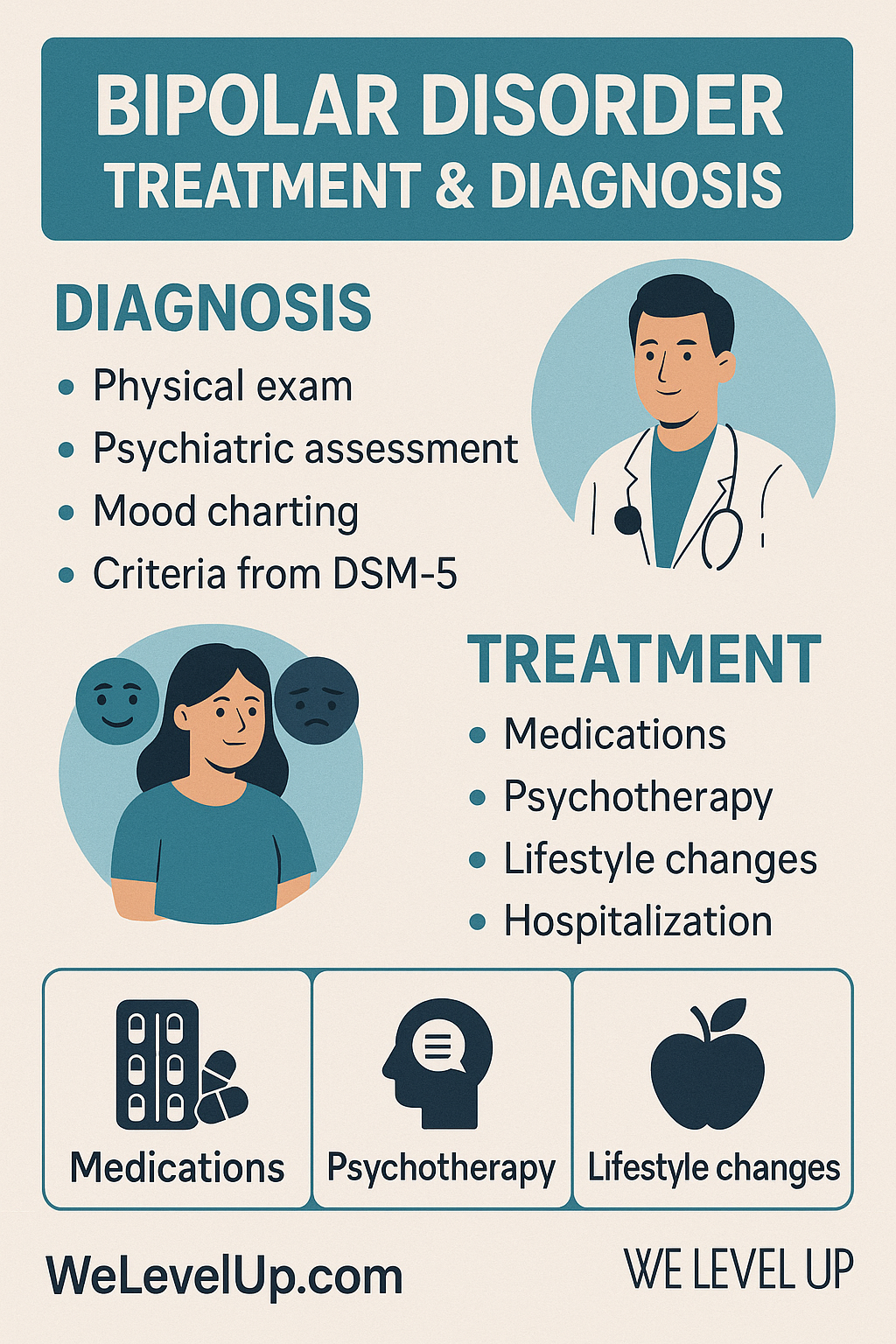
A qualified mental health professional, like a psychiatrist or psychologist, must do a full evaluation. This helps to see if someone has bipolar disorder. There are several steps to the process:
1. Clinical Interview
The mental health professional speaks with the person to understand their medical and mental health history. They also discuss any mental health issues in the person’s family. The interview also examines the person’s symptoms, how long they have been going on, and how they affect their daily life.
2. Evaluation of Mood
The professional checks the person’s mood patterns. They look for signs of mania, hypomania, or depression. Consideration is given to how long, how bad, and how often these mood swings happen.
3. Differential Diagnosis
The mental health professional distinguishes bipolar disorder from other medical and psychiatric conditions. These conditions may have similar symptoms, like major depressive disorder, borderline personality disorder, or other mood disorders.
4. Medical Evaluation
A physical exam and other tests may be done. This helps to check for any medical conditions that could be causing the symptoms.
5. Diagnostic Criteria
The diagnosis follows specific rules in the Diagnostic and Statistical Manual of Mental Disorders (DSM-5). This manual is published by the American Psychiatric Association. The DSM-5 criteria provide guidelines for identifying manic, hypomanic, and depressive episodes. These episodes are needed to diagnose bipolar disorder.
6. Observation and Additional Information
Family members, close friends, or caregivers can share their thoughts. They may talk about the person’s symptoms and behavior. This helps to get a better understanding of them.
7. Duration and Frequency of Episodes
To be diagnosed with bipolar disorder, symptoms must last for a while. They should also have occurred in the last few weeks. A manic episode usually lasts at least a week, and a depressive episode lasts at least two weeks.
Do I Need Bipolar Disorder Treatment? Take a Quiz Now
Take a free quiz about bipolar disorder treatment. Learn how bipolar disorder impacts you and your life.
- Am I Bipolar Quiz, Free, Quick, Confidential, & Easy
- The Difference Between BPD Vs Bipolar, Mental Health Rehab
First-class Facilities & Amenities
Trusted Integrated Addiction & Mental Health Rehabilitation Treatment
Rehab Centers TourEstablished Addiction Centers. Serene Private Facilities. Inpatient rehab programs vary.
Addiction Helpline (844) 597-1011Comprehensive recovery success experience, backed by a Team w/ History of:
15+
Years of Unified Experience
100s
5-Star Reviews Across Our Centers
10K
Recovery Success Stories Across Our Network
- Low Patient to Therapist Ratio
- Onsite Medical Detox Center
- Comprehensive Dual-Diagnosis Treatment
- Complimentary Family & Alumni Programs
- Alumni Coaching, Recovery & Personal Development Events
Bipolar Disorder Medication
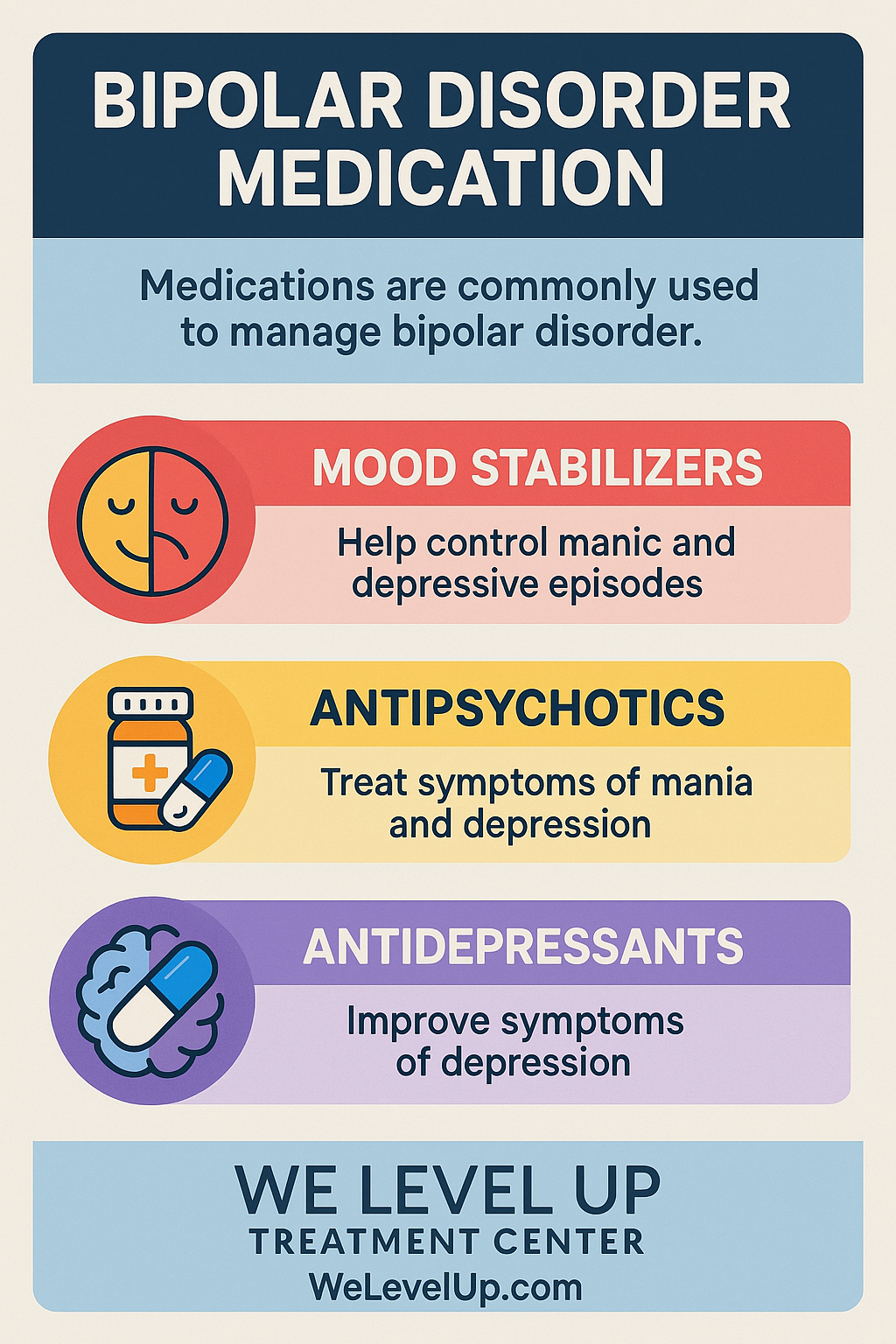
Medication is important for treating bipolar disorder. It helps stabilize mood swings, prevent episodes, and improve overall functioning. Bipolar disorder is treated with several different kinds of drugs:
1. Mood stabilizers
These are the primary medicines used to treat bipolar disorder. Lithium is a mood stabilizer often given to people to stop manic and depressive episodes. Valproate (Depakote) and lamotrigine (Lamictal) are other mood stabilizers.
2. Antipsychotics
Atypical antipsychotics are used to treat bipolar disorder episodes of mania or mixed mania. They can quickly eliminate manic symptoms and use mood stabilizers for long-term care. Examples include aripiprazole (Abilify), quetiapine (Seroquel), and olanzapine (Zyprexa).
3. Antidepressants
People with bipolar disorder may be given antidepressants to help ease the symptoms of depression. But they are usually used with care because they can cause manic episodes. Antidepressants are often taken with medicines that stabilize the mood to lower this risk.
4. Anxiolytics
Benzodiazepines and other drugs can be used to control anxiety and irritability during manic or depressive episodes. Due to the risk of becoming dependent on them, they are usually only given for a short time.
5. Adjunctive Medications
Some people may benefit from additional medications to help with certain side effects or symptoms. For instance, sleep aids can be used to deal with insomnia caused by mood swings.
Specialized, Accredited, 5-Star Reviewed, Evidence-based Addiction & Mental Health Programs. Complete Behavioral Health Inpatient Rehab, Detox plus Co-occuring Disorders Therapy.
CALL(844) 597-1011End the Addiction Pain. End the Emotional Rollercoaster. Get Your Life Back. Start Drug, Alcohol & Dual Diagnosis Mental Health Treatment Now. Get Free, No-obligation Guidance by Substance Abuse Specialists Who Understand Addiction & Mental Health Recovery & Know How to Help.
We Level Up Inpatient Bipolar Treatment: Bringing Stability Back and Giving People the Tools to Get Better
At We Level Up, we understand the unique challenges people with bipolar disorder face. Our team is dedicated to helping them improve through specialized inpatient treatment. Our inpatient bipolar treatment program offers a safe and structured place for people with severe mood swings. It helps those who need intensive therapy.
1. Personalized Treatment Plans
When a patient arrives, our skilled psychiatric team carefully assesses them. This helps us find the best treatment. We create unique treatment plans for each person. These plans consider their needs, symptoms, and goals. We understand that everyone’s recovery journey is different.
2. Support and care are available 24 hours a day, 7 days a week, at our inpatient facility
Our caring and trained staff are always there to help and care for our patients. This level of care creates a place where patients can heal and get better without being distracted.
3. Medication Management
Our board-certified psychiatrists watch medication schedules closely. They adjust doses as needed to control symptoms better. We use effective medications, like mood stabilizers and antipsychotics, to control mood swings and prevent them from happening again.
4. Therapeutic Interventions
Our inpatient program provides many effective therapies. These include Cognitive-Behavioral Therapy (CBT), Dialectical Behavior Therapy (DBT), and both individual and group counseling. These therapies help people understand their illness, learn how to deal with it, and get stronger to handle their symptoms better.
5. Wellness and Life Skills
Our treatment plan includes training in life skills and wellness programs taught by our team of experts from different fields. These are meant to give people the tools and skills to deal with life’s problems, start healthy habits, and improve their overall health.
6. Community and Peer Support
Our inpatient setting promotes peer support. It helps patients feel like they belong to a group. Patients can connect, relate, and grow together in a supportive environment made possible by group therapy and shared experiences.
7. Transition Planning
As a patient’s treatment goes on, we work to make the change from inpatient care to outpatient care as smooth as possible. Our team works closely with patients and their families to make detailed plans for aftercare. This ensures that patients get support and care even after leaving the hospital.
At We Level Up, we help people with bipolar disorder take control of their lives. Our goal is to help them reach their full potential. Our inpatient bipolar treatment program gives people a caring
Bipolar Disorder Treatment FAQs
-
What is bipolar disorder, and how is it treated?
Bipolar disorder is a mental health condition characterized by extreme mood swings, including episodes of mania and depression. Treatment usually involves a combination of medication, therapy, and lifestyle management to stabilize mood and improve daily functioning.
-
What medications are commonly used for bipolar disorder?
Common medications include mood stabilizers (like lithium), antipsychotics, and sometimes antidepressants. The choice of medication depends on the type and severity of symptoms.
-
How does therapy help in managing bipolar disorder?
Therapies such as cognitive-behavioral therapy (CBT), psychoeducation, and family-focused therapy help patients understand their condition, manage triggers, and improve coping strategies.
-
Can bipolar disorder be cured?
There is currently no cure, but with proper treatment, people with bipolar disorder can lead stable and fulfilling lives.
Experience Transformative Recovery at We Level Up Treatment Centers.
See our authentic success stories. Get inspired. Get the help you deserve.
Start a New Life
Begin with a free call to an addiction & behavioral health treatment advisor. Learn more about our dual-diagnosis programs. The We Level Up Treatment Center Network delivers recovery programs that vary by each treatment facility. Call to learn more.
- Personalized Care
- Caring Accountable Staff
- World-class Amenities
- Licensed & Accredited
- Renowned w/ 100s 5-Star Reviews
We’ll Call You
Search We Level Up Most Effective Bipolar Disorder Treatment and Symptoms, Mental Health Topics & Resources
Resources
World Bipolar Day: Eliminating The Stigma, Treatment, and Support – This article discusses the importance of eliminating stigma associated with bipolar disorder and highlights effective treatment options and support systems available.
Dialectical Behavior Therapy (DBT) – Discusses DBT as an effective treatment for various mental health issues, including bipolar disorder, focusing on emotional regulation and interpersonal effectiveness.
Dual Diagnosis Treatment – Addresses the complexities of treating individuals with both mental health disorders and substance use issues, emphasizing integrated care.
The Difference Between BPD vs Bipolar Disorder – Clarifies the distinctions between Borderline Personality Disorder (BPD) and Bipolar Disorder, aiding in accurate diagnosis and treatment planning.
Sources
- Reilly-Harrington NA et al. A tool to predict suicidal ideation and behavior in bipolar disorder: The Concise Health Risk Tracking Self-Report. Journal of Affective Disorders. 2016;192:212. Learn More: Bipolar Disorder Treatment
- Bipolar and related disorders. In: Diagnostic and Statistical Manual of Mental Disorders DSM-5. 5th ed. Arlington, Va.: American Psychiatric Association; 2013. http://www.psychiatryonline.org. Accessed Dec. 2, 2016. Learn More: Bipolar Disorder Treatment
- Bipolar disorder. National Institute of Mental Health. https://www.nimh.nih.gov/health/topics/bipolar-disorder/index.shtml. Accessed Dec. 2, 2016. Learn More: Bipolar Disorder Treatment
- Bipolar disorder. National Institute of Mental Health. https://www.nimh.nih.gov/health/publications/bipolar-disorder-tr-15-3679/index.shtml. Accessed Dec. 2, 2016. Learn More: Bipolar Disorder Treatment
- Bipolar disorder in children and teens. National Institute of Mental Health. https://www.nimh.nih.gov/health/publications/bipolar-disorder-in-children-and-teens-qf-15-6380/index.shtml. Accessed Dec. 2, 2016. Learn More: Bipolar Disorder Treatment
- Bipolar disorder. National Alliance on Mental Illness. https://www.nami.org/Learn-More/Mental-Health-Conditions/Bipolar-Disorder. Accessed Dec. 2, 2016. Learn More: Bipolar Disorder Treatment
- AskMayoExpert. Bipolar disorder. Rochester, Minn.: Mayo Foundation for Medical Education and Research; 2016. Accessed Dec. 2, 2016. Learn More: Bipolar Disorder Treatment
- Suppes T, et al. Bipolar disorder in adults: Clinical features. http://www.uptodate.com/home. Accessed Dec. 2, 2016. Learn More: Bipolar Disorder Treatment
- Axelson D, et al. Pediatric bipolar disorder: Overview of choosing treatment. http://www.uptodate.com/home. Accessed Dec. 2, 2016. Learn More: Bipolar Disorder Treatment
- Birmaher B. Pediatric bipolar disorder: Epidemiology, pathogenesis, clinical manifestations, and course. http://www.uptodate.com/home. Accessed Dec. 2, 2016. Learn More: Bipolar Disorder Treatment