By We Level Up | Author Alex Evans, PharmD, MBA | Editorial Policy | Research Policy
Welcome to our Alcohol and Breastfeeding Comprehensive Guide. We’ll examine Safety & Expert Guidelines, Risks, and Evidence-Based Recommendations options.
Breastfeeding mothers often wonder about the safety of consuming alcohol. Understanding the implications and guidelines is crucial for both maternal health and infant well-being. This guide provides expert-backed information on the effects of alcohol during breastfeeding, offering practical advice for nursing mothers.
Alcohol passes easily into breast milk, which means even small amounts can reach a nursing infant. While occasional light drinking may be compatible with breastfeeding, timing and moderation are crucial for infant safety. This guide explains how alcohol affects breast milk, safe drinking practices, timing guidelines, and when to seek professional help.
What is Alcohol and Breastfeeding?
Alcohol and breastfeeding can pose serious risks to both the baby and the mother. Breastfeeding gives important nutrients and antibodies. These help a baby grow and develop well, whether from the breast or pumped milk. Most mothers can safely breastfeed with help from healthcare professionals, family, and society. However, drinking alcohol while nursing can harm the baby’s development and the mother’s health. It may also increase challenges related to alcohol use disorder and safe infant care.
What is Breastfeeding?
Breastfeeding is the best way of providing young infants with the nutrients they need for healthy growth and development. Most mothers can breastfeed if they have the right information and support from their family, healthcare, and society.
The WHO recommends exclusive breastfeeding for the first six months of life. After that, continue breastfeeding with suitable complementary foods for up to 2 years or more. The WHO recommends early and continuous skin-to-skin contact, rooming-in, and kangaroo mother care. These practices greatly improve newborn survival and lower health issues.
In the Western Pacific, 12 countries have created laws. These laws follow the International Code of Marketing for Breastmilk Substitutes. These laws aim to protect, promote, and support breastfeeding.
What is Alcohol?
It is a depressant that slows down important body functions. This can cause slurred speech, unsteady movement, and trouble with perception. It also makes it hard to react quickly.
It affects the mind by acting as a drug. It lowers a person’s ability to think clearly and distorts their judgment. Although classified as a depressant, the amount of alcohol consumed determines the type of effect. Most people drink for the stimulant effect, such as a beer or a glass of wine taken to “loosen up.” But if a person consumes more than the body can handle, they then experience alcohol’s depressant effect.
Alcohol and Breastfeeding Key Takeaways
- The substance passes into breast milk at levels similar to what’s in the parent’s bloodstream.
- It can interfere with the milk ejection let-down reflex, reducing milk flow at times when levels are high.
- Avoid co-sleeping or bedsharing after consuming because reflexes and responsiveness may be impaired.
- The timing of intake relative to nursing matters, spacing consumption, and feedings can reduce exposure.
Risks, Timelines, and Safer Treatment Options
The substance that the parent consumes can quickly enter their body fluids. This may affect milk ejection, lower supply, and change milk quality. It has the potential to affect the baby’s sleep patterns, feeding behavior, growth, and developmental milestones. Peak levels in breast milk typically occur around 30 to 60 minutes after consumption. After that, the substance decreases over a few hours. This depends on how much was taken and how well the parent’s body processes it.
Alcohol transfer: Alcohol levels in breast milk mirror blood alcohol levels—there’s no “pump and dump” shortcut.
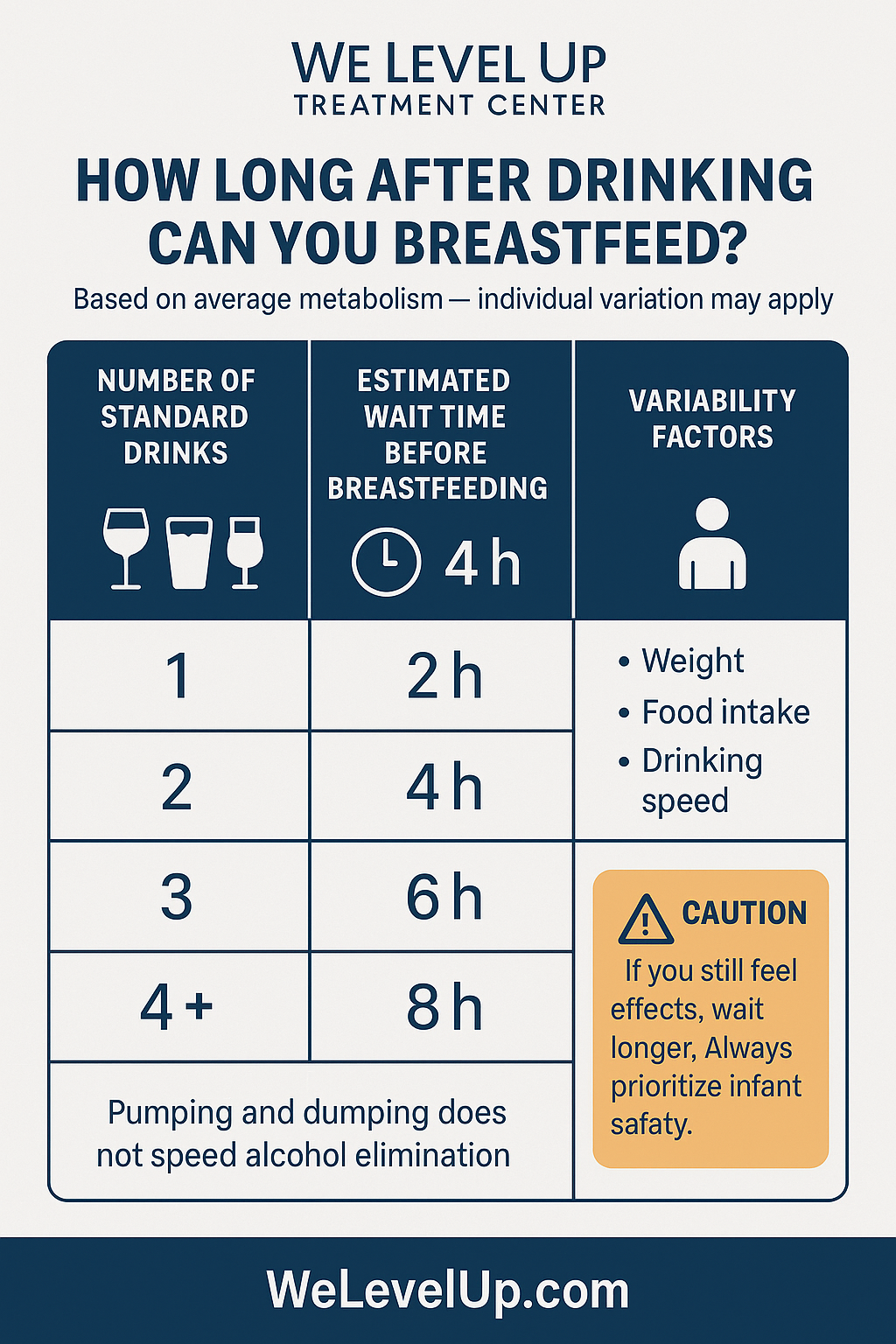
Timing matters: Wait at least 2–3 hours per standard drink before breastfeeding.
Health impact: Regular or heavy drinking can impair infant development and reduce milk supply.
Safe approach: Plan feeds ahead, hydrate, and avoid nursing while intoxicated.
When in doubt: Seek medical or lactation support; for alcohol misuse, reach out to a licensed treatment provider.
This information is intended for educational purposes and should not replace professional medical advice. If an infant appears excessively drowsy, has trouble breathing, or becomes unresponsive, seek emergency medical attention immediately.
Understanding Alcohol’s Impact on Breast Milk
Breastfeeding mothers often have questions about the safety of consuming alcohol. Understanding how alcohol affects both maternal health and infant well-being is essential. In this article, we explore evidence-based guidelines, potential risks, and practical tips for nursing mothers who may consider drinking alcohol. Our goal is to provide expert-backed, trustworthy information to help you make informed decisions.
Understanding Alcohol’s Impact on Breast Milk
When a breastfeeding mother consumes alcohol, it passes into breast milk in similar concentrations to the bloodstream. While occasional drinking in moderation is generally considered low-risk, alcohol can affect a baby’s sleep patterns, feeding behavior, and development if consumed in excess. The timing of breastfeeding after drinking is important, as alcohol levels in milk peak roughly 30–60 minutes after consumption and gradually decrease over time.
Guidelines for Alcohol Consumption While Breastfeeding
Healthcare experts generally recommend the following guidelines for breastfeeding mothers who consume alcohol:
- Limit intake to one standard drink per occasion.
- Wait at least 2 hours after consuming alcohol before breastfeeding to allow your body to metabolize it.
- Consider expressing breast milk in advance if you plan to drink, so your baby has alcohol-free milk available.
- Never binge drink while breastfeeding, as high alcohol levels in breast milk can pose serious risks to infants.
According to the Centers for Disease Control and Prevention (CDC), occasional alcohol consumption is generally safe if you follow these precautions, but regular or heavy drinking is strongly discouraged.
Risks of Alcohol Consumption During Breastfeeding (New Section)
Even small amounts of alcohol can impact infants differently depending on age and weight. Some risks include:
- Reduced milk intake, as babies may feed less effectively if the milk tastes different or if the mother is drowsy.
- Impaired motor development and delayed growth with frequent or high alcohol consumption.
- Sleep disturbances, as alcohol can reduce the total sleep time and alter sleep patterns for the infant.
- Potential long-term behavioral and cognitive effects if exposure is chronic.
While rare, severe alcohol exposure can have lasting consequences. Therefore, moderation and timing are key.
Expert Recommendations and Practical Tips
To minimize risks and maintain healthy breastfeeding habits, experts suggest:
- Plan ahead: Drink right after breastfeeding or before a long sleep period to maximize alcohol-free feeding times.
- Use “pumping and storing” strategies: Pump milk before drinking to have it available for your baby.
- Stay hydrated and eat while drinking: This can help reduce blood alcohol levels.
- Track consumption: Keep a log of drinks and timing relative to nursing to stay safe.
Consulting a lactation consultant or healthcare provider is recommended if you have concerns about alcohol and breastfeeding.
.
Skip To:
Skip To
Moderate, infrequent alcohol consumption while breastfeeding may be generally safe if precautions are followed. However, understanding timing, risks, and expert guidelines is essential for the well-being of both mother and child. Always prioritize your baby’s safety and seek professional guidance when in doubt.
COVID-19 Alcohol Use Among New Mothers
How the COVID-19 Pandemic Affected Alcohol Use Among New Mothers
The COVID-19 pandemic has created unique conditions with the potential to increase risks associated with alcohol misuse markedly. For example, stress from social isolation, fear of infection, money problems, and losing loved ones can change behaviors. These changes can lead to increased drinking. Drinking can lower inhibitions. This can happen in certain situations. It may increase the risk of exposure to the SARS-CoV-2 virus.
During the pandemic, many individuals turned to alcohol as a way to cope with uncertainty, boredom, and heightened anxiety. The disruption of daily routines and limited access to social support networks also contributed to changes in drinking patterns. Surveys conducted during this time revealed that some individuals drank more frequently or in larger quantities. They usually did this because of emotional pain or loneliness.
More people drank alcohol during the COVID-19 pandemic. This increase is linked to more mental health problems [2]. These problems include depression, anxiety, and trouble sleeping.
Heavy or prolonged drinking can weaken the immune system, making the body more vulnerable to infections, including COVID-19. Additionally, alcohol misuse can complicate recovery for those infected with the virus by interfering with medication effectiveness and slowing down the healing process.
For breastfeeding mothers, the rise in alcohol use during the pandemic has particular significance. Alcohol moves quickly into breast milk. Even small amounts can change an infant’s sleep, feeding habits, and growth. When stress and feeling alone lead to more drinking, the chances of alcohol in breast milk also go up.
Limited access to healthcare during lockdowns meant many new mothers had fewer chances to talk about safe drinking habits. They also had less guidance on expressing milk and timing feeds after drinking alcohol. These challenges show how important it is to talk openly with healthcare providers and support networks. This helps manage stress and keep healthy habits while breastfeeding.
Overview of Alcohol and Breastfeeding Risks
Depending on how much you drink and when you nurse, there may be more serious effects on your baby. As a result, the guidance on drinking and nursing is changing. The (see CDC) alcohol and breastfeeding study [1] defines moderate alcohol consumption. For women, it means up to 1 drink per day. For men, it means up to 2 drinks per day. We go into more detail below.
- High REM sleep in the period from 3.5 hours to 24 hours after exposure to alcohol
- Decreased milk intake by the baby
- Decreased weight gain
An alcoholic drink is a drink that has ethanol. Ethanol is a type of alcohol made by fermenting grains, fruits, or other sugary sources. It acts like a drug. The consumption of alcohol plays an essential social role in many cultures. As a result, most countries have laws regulating the production, sale, and consumption of alcoholic beverages.
Breastfeeding mothers and lactating parents often receive conflicting advice about whether alcohol consumption can affect their babies. There are many warnings about drinking alcohol during pregnancy. However, the risks of drinking alcohol while breastfeeding are not studied as much. Several studies have focused on the effects of alcohol on lactation and the infant, but long-term outcomes are still unknown.
Drinking a lot of alcohol can make a baby sleepy, weak, and gain weight in unusual ways. There is also a possibility of decreased milk-ejection reflex in the mother. No harmful effects to babies have been found when breastfeeding mothers drink no more than one drink a day. Depending on how much alcohol you drink before nursing, you may see several effects from the alcohol in your milk. Even a small to moderate amount of alcohol may impair milk production and the milk ejection reflex. Some of the adverse effects on the baby may be:
- Sleep disturbances
- Increased crying
- Increased startling
- Increased arousal
Dos & Don’ts: Alcohol Use During Breastfeeding Quick Guide
Breastfeeding gives important nutrients and immune support to your baby. Many mothers wonder if it is safe to drink alcohol while breastfeeding. Knowing the rules about drinking can help you make good choices for yourself and your baby.
Can You Drink Alcohol While Breastfeeding?
Yes, but with caution. Occasional, moderate drinking may be compatible with breastfeeding if sufficient time passes before nursing. Alcohol peaks in breast milk about 30–60 minutes after consumption and clears as blood alcohol levels drop. Timing, portion control, and individual metabolism all matter for safety
Dos: Safe Practices When Breastfeeding and Drinking Alcohol
Plan Before Drinking
If you plan to drink, express breast milk in advance so your baby has safe milk to feed on while alcohol clears from your system. This helps you avoid unintentional exposure.
Follow the “2-Hour Rule” Per Drink
Wait at least two hours per standard drink before breastfeeding. Timing allows your body to naturally metabolize alcohol before nursing.
Track Alcohol Intake and Stay Hydrated
Use a tracking app or note how much alcohol you’ve consumed. Drink plenty of water — hydration supports your body’s recovery and milk production.

Don’ts: Alcohol and Breastfeeding Safety Mistakes to Avoid
Don’t Breastfeed Immediately After Drinking
Alcohol levels peak in breast milk 30 to 60 minutes after drinking. Nursing too soon exposes your baby to alcohol and its effects.
Don’t Rely on “Pumping and Dumping”
Contrary to common myths, pumping and dumping doesn’t speed up alcohol elimination. Only time reduces alcohol concentration in breast milk.
Don’t Care for Your Baby While Intoxicated
Even if you are not breastfeeding, holding your baby while impaired can increase the risk of accidental injury. It can also lead to poor supervision of your child.
Consult Your Healthcare Provider
Always talk about alcohol use with your doctor or lactation consultant. This is important if you have health issues or take medications.
The Science-Based Evidence on Alcohol and Breastfeeding Studies
Drinking alcohol while breastfeeding can affect both you and your baby. Alcohol passes into breast milk and can impact your infant’s sleep, development, and feeding patterns. Even small amounts of alcohol can make your baby drowsy, fussy, or affect growth. Mixing alcohol and breastfeeding might seem okay, but it can be risky and unpredictable for your child.
How We Level Up Turns Research Into Real Recovery
At We Level Up, our mission goes beyond general guidance. We connect scientific research about alcohol and breastfeeding with practical care for new mothers. By learning how alcohol impacts breast milk and baby growth, we can make plans to keep you and your baby safe.
| Study | Treatment Implications | Insights for Patients |
|---|---|---|
| Alcohol — Drugs and Lactation Database (LactMed) View Study | Avoid regular drinking while breastfeeding. If you do drink, limit how much you have. Wait about 2 to 2.5 hours after each drink before nursing. Assess milk supply when alcohol use is reported because alcohol reduces milk ejection and can temporarily lower milk volume. | Alcohol passes into breastmilk at levels similar to maternal blood. If you decide to drink, plan for nursing. Pump and store milk before you drink. Wait 2–3 hours after each drink. Talk about your drinking habits with your doctor. |
| Haastrup MB et al., “Alcohol and breastfeeding” View Study | Screen breastfeeding mothers for alcohol use; explain physiologic effects (inhibits milk ejection reflex, reduces infant intake). For mothers who drink, advise timing strategies (nurse/pump before drinking; wait several hours after) | About half of lactating women in some Western populations report drinking while breastfeeding. Even small amounts of drinking can lower milk transfer when alcohol levels are highest. Planning and open talks can help improve safety. |
| May PA et al., “Breastfeeding and maternal alcohol use” Read Article | Advise against regular/heavy alcohol consumption during lactation due to associations with altered infant sleep and possible effects on psychomotor development. Monitor infant growth and development if maternal alcohol use is ongoing. | Drinking a little alcohol now and then may have small effects. However, drinking a lot or often can disrupt sleep. It can also lower milk intake and lead to possible developmental issues. Always tell your pediatrician if you drink. |
What This Means for Your Care at We Level Up
Research shows a clear message: drinking alcohol while breastfeeding can affect your baby. It can cause disrupted sleep and delayed development. This does not mean you are alone in navigating these challenges. At We Level Up, care is not guesswork. We offer personalized advice on alcohol use and breastfeeding. We provide safe tips for timing feeds with alcohol. We also support long-term recovery and maternal health. Our approach makes sure that every recommendation is based on research. We promote honest communication with your healthcare provider. We also focus on careful monitoring and structured guidance. This helps protect your baby and supports your well-being.
First-class Facilities & Amenities
Trusted Integrated Addiction & Mental Health Rehabilitation Treatment
Rehab Centers TourEstablished Addiction Centers. Serene Private Facilities. Inpatient rehab programs vary.
Addiction Helpline (844) 597-1011Comprehensive recovery success experience, backed by a Team w/ History of:
15+
Years of Unified Experience
100s
5-Star Reviews Across Our Centers
10K
Recovery Success Stories Across Our Network
- Low Patient to Therapist Ratio
- Onsite Medical Detox Center
- Comprehensive Dual-Diagnosis Treatment
- Complimentary Family & Alumni Programs
- Alumni Coaching, Recovery & Personal Development Events
Blood alcohol levels in breast milk after drinking alcohol and breastfeeding
Understanding how certain substances affect nursing and infant health is important for new parents. Some things that a parent eats or drinks can change the quality of their milk. This may affect the baby’s growth. This can result in sleep disturbances, delayed motor skills, and other health concerns. Experts recommend exercising caution or avoiding such substances altogether to ensure the baby’s safety and well-being. Staying informed empowers parents to make responsible choices that promote healthy growth and bonding.
Understanding the effects of drinking alcohol and breastfeeding is essential for new parents. Alcohol can pass into breast milk, potentially affecting a baby’s sleep, feeding patterns, and overall development. Even small amounts may impair an infant’s motor skills or coordination over time. Health professionals advise nursing parents to carefully time alcohol consumption or avoid it altogether to minimize risks. Knowing the effects of drinking alcohol while breastfeeding helps parents make choices that keep their baby healthy and safe.
What effect does alcohol have on breastfeeding and an infant?
A breastfeeding mother can drink alcohol in moderation. Up to 1 standard drink per day is considered safe for the baby. It is best if the mother waits at least 2 hours before nursing. However, drinking more alcohol can affect the milk ejection reflex (letdown) when a mother’s alcohol levels are high. Over time, excessive alcohol consumption could lead to shortened breastfeeding duration due to decreased milk production. It is important to understand how breastfeeding and alcohol are connected. Drinking too much alcohol can affect the baby’s sleep and early development.
Can expressing/pumping breast milk after consuming alcohol reduce the alcohol in the mother’s milk?
If a mother decides to pump or feed milk within two hours after drinking alcohol, she may choose to throw away the milk. Suppose a mother has consumed more than a moderate amount of alcohol. In that case, she might choose to wait 2 hours after each drink to breastfeed. Alternatively, she can feed her baby with milk that she expressed earlier when she was not drinking. This helps reduce her baby’s exposure to alcohol. Breast milk continues to contain alcohol as long as alcohol is still in the mother’s bloodstream.
The Academy of Breastfeeding Medicine’s Clinical Protocol #21 explains that certain substances consumed by a nursing parent can affect both their body and their baby. The impact can range from mild to severe, depending on the amount taken and how quickly the body processes it. Because the substance is both water- and fat-soluble, it enters the bloodstream and breast milk rapidly. After a standard serving, the concentration in breast milk can reach about 95% of what is found in the parent’s blood.
Patient Stories
These examples reflect illustrative patient experiences. Names and details have been altered for privacy purposes.
- “M., 29 — Realizing the Risks While Breastfeeding”
M. occasionally drank wine to unwind after giving birth, believing small amounts wouldn’t affect her baby. When her infant became unusually irritable and had trouble sleeping, M. consulted her pediatrician. Learning about how alcohol passes into breast milk prompted her to seek professional help. Through education and counseling, she developed healthier stress-relief habits.
“I thought one drink couldn’t hurt, but understanding how it affected my baby changed everything,” M. shared. - “R., 34 — Balancing Recovery and Motherhood”
R. struggled with postpartum depression and used alcohol to cope. Over time, her drinking increased, and she felt guilty about breastfeeding while under the influence. Entering a treatment program, she received therapy, medication support, and parenting guidance. Today, she continues her recovery while nurturing a healthy relationship with her child.
“Getting help saved not just me, but my bond with my baby,” R. said. - “T., 26 — Overcoming Social Pressure to Drink”
During family gatherings, T. often faced pressure to drink despite breastfeeding. Initially, she gave in to avoid judgment but felt anxious afterward. Through a support group, she learned how to set boundaries and communicate her commitment to her baby’s health.
“It took strength to say no, but now I’m proud of putting my baby first,” she reflected.
Illustrative Clinician Perspectives (quotes)
“Many new mothers underestimate how even moderate drinking can impact breastfeeding infants. Education and empathy are key in guiding them toward safe choices.” — Addiction Medicine Specialist“Integrating mental health and maternal support in treatment helps mothers maintain recovery while caring for their babies.” Licensed Clinical Therapist
Specialized, Accredited, 5-Star Reviewed, Evidence-based Addiction & Mental Health Programs. Complete Behavioral Health Inpatient Rehab, Detox plus Co-occuring Disorders Therapy.
CALL(844) 597-1011End the Addiction Pain. End the Emotional Rollercoaster. Get Your Life Back. Start Drug, Alcohol & Dual Diagnosis Mental Health Treatment Now. Get Free, No-obligation Guidance by Substance Abuse Specialists Who Understand Addiction & Mental Health Recovery & Know How to Help.
Myths vs Facts: Alcohol and Breastfeeding
Many myths exist about drinking alcohol while breastfeeding. This can confuse new mothers about what is safe. Separating fact from fiction is essential for protecting both the mother and the baby. Understanding how alcohol in breast milk affects babies is important. Clearing up common myths can help mothers make smart choices about drinking while nursing.
In this section, we discuss common myths and share the facts. This will help mothers understand the real risks of alcohol in breast milk. Each myth is paired with a fact. This gives clear guidance for safe breastfeeding while using alcohol occasionally.
| Myths | Facts |
| A small drink doesn’t affect milk. | Alcohol concentration in milk closely follows maternal blood levels. Even one drink can be detected for hours. |
| Pumping and dumping breast milk removes alcohol. | Alcohol leaves breast milk only as it leaves the bloodstream. Pumping doesn’t speed elimination. |
| Breastfeeding immediately after drinking is safe because the alcohol will be “used up.” | Alcohol levels in breast milk peak about 30–60 minutes after consumption. Breastfeeding right after drinking can still expose the baby to alcohol. This is especially true if the mother drank on an empty stomach. |
| It’s safe to drink as long as the baby is asleep. | Caring for an infant while intoxicated is dangerous. Alcohol can impair reflexes, judgment, and responsiveness, increasing the risk of accidents or unsafe handling. |
What other Effects Should I Consider When Deciding Whether and when to Drink Alcohol and breastfeeding?
Depending on how much you drink, you may notice effects on your milk production and ejection reflex. You can also expect some other effects on yourself.
Alcohol produces sedative effects as well as some stimulant effects. Some evidence shows that people who are breastfeeding may process alcohol faster than those who are not. There is clear evidence that eating food while consuming alcohol also reduces blood alcohol levels after consumption. Drinking alcohol on an empty stomach increases the effects of alcohol on prolactin and oxytocin and your body. You should not sleep with your baby if you drink alcohol, as your natural reflexes have been impaired.
The We Level Up treatment centers offer top-quality care. Medical professionals are available 24/7 to help you. We work as an integrated team providing information about alcohol and breastfeeding and other aspects of treatment. Make this your opportunity to reclaim your life. Call today to speak with one of our treatment specialists. Our specialists know what you are going through and will answer any of your questions.
Your call is private and confidential, and there is never any obligation.
Top 5 Frequently Asked Questions (FAQ) on Alcohol and Breastfeeding
Is it safe to drink alcohol while breastfeeding?
Moderate alcohol consumption, defined as up to one standard drink per day, is generally considered safe for breastfeeding mothers. The CDC suggests waiting at least 2 hours after drinking before breastfeeding. This helps reduce alcohol exposure to the baby.
How does alcohol affect breast milk?
Alcohol passes into breast milk in concentrations similar to those in the mother’s bloodstream. Peak alcohol levels in breast milk happen 30 to 60 minutes after drinking. It usually takes 2 to 3 hours for alcohol to leave breast milk after one drink.
Does alcohol impact milk production?
Yes, alcohol can interfere with the milk ejection reflex (let-down) and may reduce milk production over time. Drinking five or more drinks in a short time can lower milk let-down. This can disrupt nursing until the mother’s alcohol levels go down.
Should I pump and dump after drinking alcohol?
Pumping and dumping does not eliminate alcohol from breast milk. Alcohol remains in breast milk as long as it remains in the mother’s bloodstream. The only way to clear alcohol from breast milk is for the mother’s body to metabolize it over time
Can alcohol affect my baby’s sleep or behavior?
Yes, even small amounts of alcohol in breast milk have been shown to disrupt and shorten the total duration of infant sleep. Infants may experience more fragmented sleep and increased crying if breastfed shortly after the mother consumes alcohol.
Resources
Alcohol In Breastmilk Dangers, Chart & Safety Guidelines – Discusses how alcohol affects breast milk quality and production, and provides safety guidelines for breastfeeding mothers.
Signs of Alcohol In Breastfed Baby, Alcohol Breastmilk Chart – Explores the signs that may indicate alcohol presence in a breastfed baby and includes a chart for reference.
Can You Drink Alcohol While Breastfeeding?– Addresses whether it’s safe to consume alcohol while breastfeeding and provides guidelines on moderate consumption.
Alcohol And Breastfeeding: Safety & Guidelines– Offers safety guidelines and recommendations for breastfeeding mothers regarding alcohol consumption.
Free “When Can I Breastfeed After Drinking Calculator”– Provides a tool to help determine when it’s safe to breastfeed after consuming alcohol.
Drug Detox While Breastfeeding– Discusses the effects of various substances, including alcohol, on breastfeeding and provides detox information.
How Long Does Alcohol Stay In Your Blood?– Explores how long alcohol remains detectable in the blood and its implications for breastfeeding.
What Does Alcohol Do To Your Body? 1 Month Without …– Discusses the effects of alcohol on the body and the benefits of abstaining from alcohol.
Addiction Category Archives– Contains various articles related to addiction, including topics on alcohol use and its impact on breastfeeding.
Sources
[1] Alcohol and breastfeeding study. See Vaccines, Drugs, Alcohol, and Breastfeeding
[2] This increase is linked to more mental health problems. See Mental Health and Mental Disorders
[3] The Academy of Breastfeeding Medicine. (2015). ABM Clinical Protocol #21: Guidelines for breastfeeding and substance use or substance use disorder, Revised 2015. Breastfeeding Medicine 10(3) pp. 135-141. doi: 10.1089/bfm.2015.9992
[4] CDC – https://www.cdc.gov/breastfeeding-special-circumstances/hcp/vaccine-medication-drugs/alcohol.html?CDC_AAref_Val=https://www.cdc.gov/breastfeeding/breastfeeding-special-circumstances/vaccinations-medications-drugs/alcohol.html
[5] Haastrup, M. B., Pottegård, A., & Damkier, P. (2013). Alcohol and breastfeeding. Basic & Clinical Pharmacology & Toxicology 114 pp. 168-173. doi: 10.1111/bcpt.12149