...

The Dangers & Health Risks Of Drug Abuse & Addiction

By We Level Up | Author Alex Evans, PharmD, MBA | Editorial Policy | Research Policy What are the Dangerous Impacts of Drug Abuse? Drug abuse is a significant problem in the United States.  One of the most critical issues concerning drug abuse is the high risk of developing an addiction.  Using drugs can seriously harm a person’s physical health, […]


The Dangers & Health Risks Of Drug Abuse & Addiction

By We Level Up | Author Alex Evans, PharmD, MBA | Editorial Policy | Research Policy

What are the Dangerous Impacts of Drug Abuse?

Drug abuse is a significant problem in the United States.  One of the most critical issues concerning drug abuse is the high risk of developing an addiction.  Using drugs can seriously harm a person’s physical health, mental health, and overall well-being.

Addiction is a condition that is diagnosed as a substance use disorder. It involves compulsively using a substance, even when it causes problems.  Drug abuse is using substances in the wrong way. This includes alcohol, prescription drugs, and illegal drugs. People may use these substances to feel pleasure, improve performance, or change how they see reality.

Substance Abuse Hotline

Using drugs changes how people act and how the brain functions. This is especially true for judgment and reward areas.  Continued abuse of drugs can be a warning sign. It shows that people may be losing control over their use. If you or someone you love is struggling with substance abuse, know that you are not alone. There are many resources available to support you during this challenging time. One of these resources is substance abuse hotlines.

What Are Substance Abuse Hotlines?

Substance abuse hotlines are private phone lines. They have trained counselors who offer support and resources for people with addiction. These hotlines are available 24/7, ensuring that someone is always available to talk to when you need it.

Who Will Answer My Call?

When you call a substance abuse hotline, you will talk to a counselor. This counselor is trained to help people like you. These counselors are kind and understanding. They will help you make a personal recovery plan.

What if I Don’t Want to Talk on the Phone?

If you are not ready to talk on the phone, there are other ways to contact substance abuse hotlines. Many of them also offer chat and text services, so you can communicate in the way that you feel most comfortable.

National Drug Abuse Hotlines You Can Call For Help

There are many national drug abuse hotlines that you can call for help. Some of these include:

The National Drug and Alcohol Treatment Referral Routing Service: 1-800-662-HELP (4357). The SAMHSA National Helpline: 1-800-662-HELP (4357). And the National Council on Alcoholism and Drug Dependence Hope Line: 1-800-622-2255.

If you are struggling with substance abuse, know that there is help available. Hotlines for drug abuse can provide you with the support and resources you need to begin your journey to recovery.

Get Help. Get Better. Get Your Life Back.

Searching for Accredited Drug and Alcohol Rehab Centers Near You?

Even if you have failed previously and relapsed, or are in the middle of a difficult crisis, we stand ready to support you. Our trusted behavioral health specialists will not give up on you. When you feel ready or just want someone to speak to about therapy alternatives to change your life call us. Even if we cannot assist you, we will lead you to wherever you can get support. There is no obligation. Call our hotline today.

(844) 597-1011

Symptoms Of Drug Abuse

The symptoms of addiction that need treatment can vary based on the drug you use.  In addition, different classes of drugs have other telltale signs that signify usage.

In general, however, there are several signs that drug abuse or alcohol abuse is a severe problem.  If you notice any of the following issues in someone you care about or in your own life, drug abuse could be a problem. It may need treatment

  • Isolating from family and friends who don’t use drugs
  • Spending time with new friends or friends who get high or drink
  • Never having money or often asking to borrow money, even for small items
  • Showing up late to work/school or not showing up at all
  • Losing a job
  • Doing little to find a job if out of work
  • Paying less attention to basic hygiene
  • Changes in sleeping habits
  • Extremely private about possessions, including their bag, room, or car
  • Lying about using or drinking
  • Sneaking away to get high or drunk

You may find hidden bottles of alcohol or drug paraphernalia among your loved one’s belongings.  Personality changes often occur with substance abuse and addiction.  You or your loved one may be more irritable or agitated and even blow off commitments or family events.

Does Drug Abuse Treatment Work?

Many options have been successful in treating drug addiction, including:

  • Behavioral counseling
  • Medication
  • Medical devices and applications used to treat withdrawal symptoms or deliver skills training
  • Evaluation and treatment for co-occurring mental health issues, such as depression and anxiety
  • Long-term follow-up to prevent relapse

Drug Abuse In Adults

The earlier in one’s life that drug abuse begins, the more likely an individual is to become addicted.  Substance use in adults can lead to unsafe behaviors. This includes having unsafe sex and driving while impaired.  Adults may be more likely to abuse dangerous “club drugs.” This is part of the overall use of alcohol and drugs in this group. It can lead to serious problems, including:

  • Lifelong legal problems.
  • Impaired memory.
  • Poor judgment.
  • Development of mental health issues.
  • Overdose or death.
  • Injury due to intoxication.
  • Addiction
  • Severe, irreversible physical health problems, such as HIV, Hepatitis C, or damage to major organs.
We Level Up is an accredited Treatment Center operating a national private drug abuse hotline.  Call 24/7 without any obligation.
We Level Up is an accredited Treatment Center operating a private national drug abuse hotline. Call 24/7 without any obligation.

A range of care, including a tailored treatment program and follow-up options, can be crucial to success. Treatment should include both medical and mental health services as needed. Follow-up care may include community- or family-based recovery support systems.


Top 5 Drug Abuse Studies with Insights

Drug abuse is a complex and chronic condition that affects the brain, behavior, and overall health. It can lead to physical and mental health challenges, strained relationships, and difficulties in work or school. Evidence-based treatment is important for recovery. It helps people take control of their lives with structured care, therapy, and support.

How We Level Up Turns Research Into Real Recovery

At We Level Up Treatment Centers, we don’t just follow best practices. We turn research into real, life-changing recovery for our patients. The insights from leading drug abuse studies guide every aspect of our inpatient programs.

We use evidence-based methods to ensure that each patient receives the appropriate treatment. This treatment helps reduce substance use, improve mental and physical health, and support long-term recovery.

StudyTreatment ImplicationsInsights for Patients
The Effectiveness of Drug Abuse Treatment: A Meta-Analysis of Comparison Group Studies
View Study
Emphasizes the need to join structured treatment programs to reduce substance use and improve overall functioning.Enroll in structured programs to see measurable progress and build recovery habits.
Overview of 5-Year Follow-Up Outcomes in the Drug Abuse Treatment Outcome Study (DATOS)
View Resource
Emphasizes the benefit of committing to longer-term treatment to sustain recovery and improve life stability.Be patient and commit to a longer treatment plan to strengthen recovery outcomes.
Global Burden of Disease Study: Drug Use Disorders
Read Article
Informs treatment providers and policymakers on substance use trends, helping improve outreach and care accessibility.You’re not alone—millions of people experience substance challenges, and help is evolving to meet your needs.
A Systematic Review and Meta-Analysis of the Efficacy of Long‑Term Treatment and Support of Substance Use Disorders
Read Study
Treatments and supports that last 18 months or more lead to better results than shorter ones. A longer duration increases the chances of staying sober or using moderately. Recovery is a long game. Committing to sustained care rather than expecting quick fixes improves chances that you’ll stay sober over time.
Efficacy and Acceptability of Interventions for Co‑occurring PTSD and Substance Use Disorder: A Meta‑analysis
Read Review
Trauma-focused treatments work better than many other options for reducing PTSD symptoms. Manualized SUD treatments often do just as well or even better for substance use outcomes. Integrated treatment of PTSD + SUD should be standard. If you have both trauma and addiction, treating them together can help reduce PTSD and substance misuse better than treating just one.

What This Means for Your Care at We Level Up Treatment Centers

These studies deliver a powerful statement. Effective addiction treatment must be comprehensive, personalized, and sustained. Research shows that treating both addiction and mental health together leads to better results than treating them separately.

At We Level Up Treatment Centers, we use research-backed insights in our treatment approach. This helps clients heal physically, mentally, and emotionally. Ready to turn evidence into action? Contact We Level Up Treatment Centers for a private and complimentary assessment. We will create a personalized plan tailored to your needs, informed by research.


Prescription Drug Abuse

Prescription drug abuse has become more common.  Even when used for real medical or mental health problems, prescription drugs should be taken as directed. They should not be shared with others.  For example, opioid painkillers can be prescribed to treat pain due to an injury or chronic condition.  The central nervous system depressants known as benzodiazepines are often prescribed for anxiety. People with attention-deficit disorder, narcolepsy, or obesity may get prescriptions for stimulant medications. These medications work in ways similar to cocaine and methamphetamine.

In some cases, the pleasurable effects of these drugs (the euphoria that drug abusers seek) are only temporary.  As the patient develops a tolerance to the drugs, the desired effects lessen, and the high goes away.  Some individuals may assume that the drugs are no longer working, increasing their dosage to feel the effects.

This development of tolerance is often the first in a series of steps that can lead to addiction.  The first time a person takes more than their prescribed dose or takes doses too close together, they start to abuse the medication.

States are beginning to monitor doctors who prescribe certain drugs more closely to ensure they are not being overprescribed.  This technique has led to reduced drug abuse in some communities, according to the FDA.  However, it has also increased the likelihood for some individuals to seek these drugs on the street.

Club drugs are prevalent in many venues where young people prefer to spend their time, such as parties, concerts, or raves.  In addition, older teens and adults can get access to these same drugs in clubs and bars regularly.

1. Gamma Hydroxybutyrate (GHB)

Gamma hydroxybutyric acid (GHB) has a high potential for abuse and no recognized medical use in the United States.  This drug is a central nervous system depressant.

GHB imitates the GABA neurotransmitter in the human brain.  GABA works by regulating consciousness, activity, sleep, improving mood, and promoting relaxation.  When GHB is taken, it can create feelings of euphoria, drowsiness, reduced anxiety, confusion, and memory impairment.  These effects can lead to GHB being used as a “date rape” drug since the individual may not recollect the event.  Combining GHB with other drugs or alcohol can lead to breathing difficulties and overdose.  Continued abuse of GHB can result in coma, seizures, and even death.

2. Rohypnol

A second central nervous system depressant popular among young people is a benzodiazepine called Rohypnol.  Like GHB, Rohypnol can decrease inhibitions, impair memory and coordination, and create a feeling of euphoria.  Rohypnol is often used to sedate and disable a victim during a sexual attack. This leaves them with no memory of what happened.  Continued abuse of Rohypnol can lead to addiction.

3. Ketamine

Ketamine is an anesthetic with dissociative properties, which some users find enjoyable.  However, ketamine can lead to euphoria, hallucinations, distorted perception of sight and sound, disconnection, and loss of control.

Taking even small amounts of ketamine can result in significantly dangerous symptoms, including difficulties with cognition and focus, and becoming unresponsive to stimuli.  Moderate use generally produces hallucinations and a dreamy euphoria.  Higher doses may cause the individual to suffer from amnesia or become delirious.

Effect of drug abuse
The effect of drug abuse on a person’s mind, health, and relationships.

Unseen Dangers of Drug Abuse

Drug abuse can lead to health problems involving the liver and other major organs.  However, other dangers can come from the misuse of drugs or alcohol that many individuals do not consider.  For example, drug abuse can cause a person to make risky choices. These choices can put them and others in danger.  These decisions can have lasting effects on various conditions.

A person who injects drugs into their muscles or veins greatly raises their risk of infection.  Sharing needles can easily transmit HIV/AIDS and chronic hepatitis viruses.  In addition, substances often impair judgment and decision-making, leading users to make unsafe choices.

When a person uses drugs or alcohol, they might not realize how it affects their reaction time and judgment. This can lead them to drive while impaired.  In the United States, 29.1 million people were arrested for driving under the influence of alcohol in 2012.  In the last year, 10 million Americans over 12 were allowed to drive under the influence of illegal drugs.

Drug Abuse and Brain Damage

Brain damage is a significant risk of drug abuse.  Cocaine can cause small strokes that often go unnoticed. These strokes can lead to brain tissue death and a slow buildup of nerve problems.  MDMA (Ecstasy) can affect the brain’s ability to make serotonin. Serotonin plays a crucial role in regulating mood, aggression, and other emotional states.  This can lead users to be unable to control or experience normal emotions without using the drug.

Some drug users will engage in reckless activities such as binge use of certain drugs or alcohol.  When this happens, a person may not meet the criteria for a substance use disorder. However, the activity can still cause lasting brain damage. For example, this can happen from serious head injuries. This damage can result in the person being permanently disabled.

Damage to the brain can also manifest as psychological.  For example, drug abuse can lead to anxiety and depression, which can worsen pre-existing psychotic symptoms.  Also, changes in the brain can make users feel they cannot enjoy life without drugs and their high feelings.

When individuals begin to abuse drugs, they may find that their lives outside of their drug use are affected.  They may be unable to perform as well at their jobs, which can lead to financial struggles.  They may relate differently to their families, leading to strained relationships and the destruction of existing families.  Factors such as these, or legal troubles, can contribute to anxiety, depression, and other mental health conditions.  These conditions may often contribute to more drug abuse, which can culminate in serious addiction.

Drug Abuse Hotline

Cravings can happen anytime.  They don’t always occur at convenient times, such as during a therapy appointment or a 12-step meeting.  This is when a drug abuse hotline can be most helpful.

Benefits of a Drug Abuse Hotline

When you are fighting off the urge to relapse, immediate help is essential.  You may not have the luxury of waiting for a therapist, sponsor, close friend, or family member to call you back.  There may be no self-help meetings nearby at that specific time.  You need help immediately – and there’s nothing more immediate than a phone call to a drug abuse hotline.

In addition to the immediate gratification, you get:

  • Staff at drug abuse hotlines know a lot about the different types of addiction treatment options.  If you have relapsed or worry that you might, call the drug abuse hotline. The counselor there can help you find the right treatment. This can help you avoid going back to active addiction.
  • You pay nothing to call a toll-free drug abuse hotline. You can talk for as long as you need about your cravings or what made you want to relapse.
  • Anonymity.  What you say on the phone to your drug abuse hotline operator is private. It stays between you and the operator.

Getting Help for Drug Abuse. We Level Up Hotline for Drug Abuse.

At We Level Up Treatment Center, our clinical team offers top-notch care. Our medical professionals are available 24/7 to assist you in coping.  Our drug abuse treatment team works together to give you the best drug abuse treatment during your stay.  Make this your opportunity to reclaim your life.  Call today to speak with one of our drug abuse treatment specialists.  Our specialists know what you are going through and will answer any of your questions.

Your call is private and confidential, and there is never any obligation.

Drug Abuse

We Level Up Tamarac FL

Premier Behavioral Health Treatment Center

Licensed & Accredited w/ 5-star reviews.
  • Inpatient mental health treatment center
  • Therapy for depression, anxiety, trauma, bipolar disorder, PTSD, and more.
  • Dual diagnosis rehab programs available
We Level Up Tamarac FL
Drug Abuse

We Level Up West Palm Beach

Premier Behavioral Health Treatment Center

Licensed & Accredited.
  • Inpatient mental health treatment center
  • Therapy for depression, anxiety, trauma, bipolar disorder, PTSD, and more.
  • Dual diagnosis rehab programs available
We Level Up West Palm Beach
Drug Abuse

We Level Up Lake Worth

Drug & Alcohol Addiction Treatment Center w/Detox

Licensed & Accredited w/ 5-star reviews.
  • Inpatient addiction rehab center w/medical detox
  • Addiction treatment and detox for alcohol, benzo, heroin, opioid, and more.
  • Secondary mental health treatment available as part of our dual diagnosis programs.
We Level Up Lake Worth FL

The Dangers & Health Risks Of Drug Abuse & Addiction

What is Drug Addiction?

Drug addiction is a long-term disease. It makes people seek and use drugs in a way that is hard to control. This happens even when it causes harm. Drug use can also change the brain, and these changes can last a long time. These changes in the brain can lead to unhealthy behaviors seen in people who use drugs. Drug addiction is also a relapsing disease. Relapse is the return to drug use after an attempt to stop.

The path to drug addiction begins with the voluntary act of taking drugs. But over time, a person’s ability to choose not to do so becomes compromised. Seeking and taking the drug becomes compulsive. This is primarily due to the effects of long-term drug exposure on brain function. Addiction affects parts of the brain involved in reward and motivation, learning and memory, and control over behavior. Thus, addiction is a disease that affects both the brain and behavior. Fortunately, there’s a lot of drug abuse treatment available for all kinds of addiction.

Get Help. Get Better. Get Your Life Back.

Searching for Accredited Drug and Alcohol Rehab Centers Near You?

Even if you have failed previously and relapsed, or are in the middle of a difficult crisis, we stand ready to support you. Our trusted behavioral health specialists will not give up on you. When you feel ready or just want someone to speak to about therapy alternatives to change your life call us. Even if we cannot assist you, we will lead you to wherever you can get support. There is no obligation. Call our hotline today.

(844) 597-1011

Top Treatment Options for Drug Abuse

There is no one treatment for drug abuse. This fact highlights the complexity of the condition and its varied manifestations. It highlights the importance of the assessment process. This process is crucial in determining the most effective treatment for each individual. Drug abuse treatment can happen in different places. It can involve various levels of assistance, including self-help groups and professional support. There are also various types of professional services, including individual therapy, group therapy, family therapy, and medication management.

Substance Misuse treatment may be characterized as specialized treatment with one main goal: to stop using the substance. Treatment primarily involves talking therapies, such as counseling and psychotherapy. Medications may also be used to help with detox from certain drugs. They can also treat other psychological or medical conditions.

However, talk therapy will still occur, regardless of where the treatment takes place. It doesn’t matter what the therapy schedule is or which addiction counselor is involved. At the start of treatment, the focus is on behaviors linked to Substance Misuse and stopping drug use.
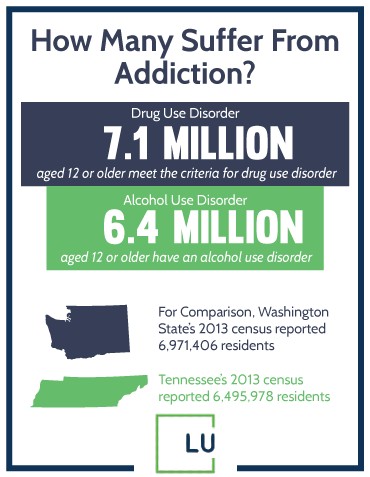
Drug abuse treatment may be characterized as specialized treatment with one main goal: to stop the use of the substance.

Most programs and professionals recommend complete abstinence from drugs. Some people aim for harm reduction. This lets users continue while trying to lower drug use to safer levels. However, they are in the minority.

Does Drug Abuse Treatment Work?

Yes, but it’s not simple. Because addiction is a chronic disease, people can’t simply stop using drugs for a few days and be cured. Instead, most patients need long-term or repeated care to stop using completely and recover their lives.

Addiction treatment must help the person do the following:

  • Stop Using Drugs
  • Stay Drug-free
  • Be productive in the family, at work, and in society 
Ryan Zofay forming a circle and hugging friends.

Get Your Life Back

Find Hope & Recovery. Get Safe Comfortable Detox, Addiction Rehab & Dual Diagnosis Trused Care.

7/365 Line (844) 597-1011

General Principles Of Treatment

Some considerations specific to offenders include the following:

  • Treatment should focus on building specific skills. These skills help offenders change attitudes and beliefs that lead to Substance Misuse and crime. For example, they may feel entitled to have things their way. They might also not understand the consequences of their actions. This includes skills related to thinking, understanding, learning, and remembering.
  • Treatment planning should include tailored services within the correctional facility and transition to community-based treatment after release.
  • Treatment providers, courts, and parole officers need to collaborate effectively. This helps meet the complex needs of offenders as they return to society.

The We Level Up treatment center network offers top care. Medical professionals are available 24/7 to help you cope. We work as an integrated team providing information about Substance Misuse treatment and other aspects of recovery. Make this your opportunity to reclaim your life. Call today to speak with one of our treatment specialists. Our advisors know what you are going through and will answer any of your questions.

Treatment is sometimes intensive at first, where patients attend multiple outpatient sessions each week. After finishing intensive treatment, patients move to regular outpatient care. This type of care is met less often and for fewer hours each week. It helps support their recovery. 
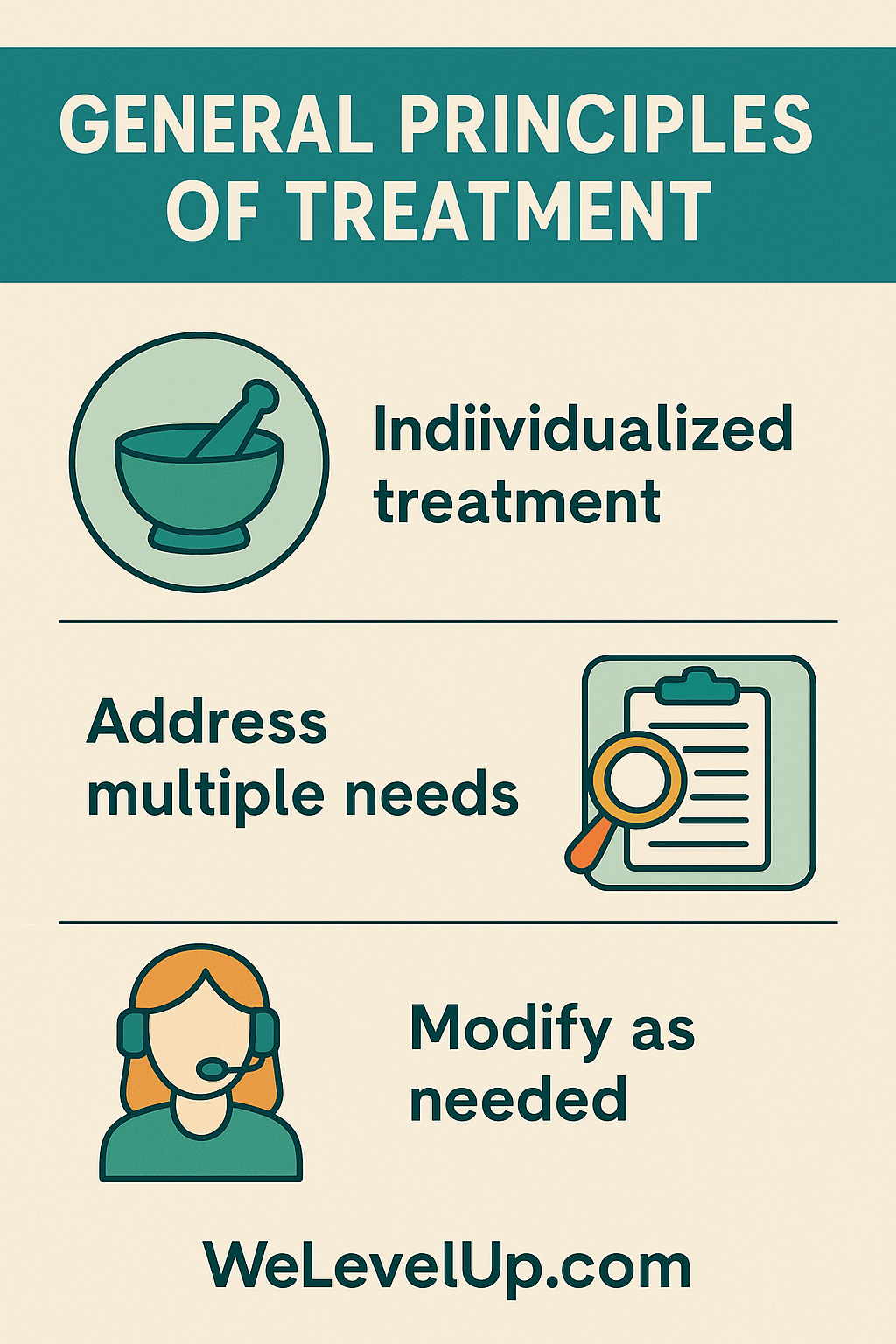
This infographic shows the general principles of treatment for drug abuse.

Principles of Effective Drug Abuse Treatment

Based on research since the mid-1970s, the following key principles should guide any good treatment program:

  • Addiction is a complex but treatable disease that affects brain function and behavior.
  • No single treatment is suitable for everyone.
  • People need to have quick access to treatment.
  • Effective treatment addresses all of the patient’s needs, not just their drug use.
  • Staying in treatment for an extended period is critical.
  • Counseling and other behavioral therapies are the most commonly used forms of treatment.
  • Medications are often an essential part of treatment, especially when combined with behavioral therapies.
  • Treatment plans must be regularly reviewed and modified to accommodate the patient’s changing needs.
  • Treatment should address other possible mental disorders.
  • Medically assisted detoxification is only the first stage of treatment.
  • Treatment doesn’t need to be voluntary to be effective.
  • Drug use during treatment must be monitored continuously.
  • Treatment programs should test patients for HIV/AIDS, hepatitis B and C, tuberculosis, and other infections. They should also teach patients how to reduce their risk of these diseases.
The best drug abuse treatment programs help patients stop using addictive drugs. They aim to help people become productive members of society again.

Medications and Devices Used In Drug Abuse Treatment

Medications and devices can be used to manage withdrawal symptoms, prevent relapse, and treat co-occurring conditions.

1. Withdrawal

Medications and devices can help suppress withdrawal symptoms during detoxification. Detoxification is not in itself “treatment,” but only the first step in the process. Patients who do not receive any further treatment after detoxification usually resume their drug use. One study of treatment facilities found that medications were used in almost 80 percent of detoxifications (SAMHSA, 2014). 

2. Relapse prevention

Patients can use medications to help re-establish normal brain function and decrease cravings. Medications are available to treat opioids (heroin, prescription pain relievers), tobacco (nicotine), and alcohol addiction. People who use more than one drug, which is very common, need treatment for all substances they use.

First-class Facilities & Amenities

Trusted Integrated Addiction & Mental Health Rehabilitation Treatment

Rehab Centers Tour

Established Addiction Centers. Serene Private Facilities. Inpatient rehab programs vary.

Addiction Helpline (844) 597-1011

Comprehensive recovery success experience, backed by a Team w/ History of:

15+

Years of Unified Experience

100s

5-Star Reviews Across Our Centers

10K

Recovery Success Stories Across Our Network

  • Low Patient to Therapist Ratio
  • Onsite Medical Detox Center
  • Comprehensive Dual-Diagnosis Treatment
  • Complimentary Family & Alumni Programs
  • Alumni Coaching, Recovery & Personal Development Events

What Are The Best Drug Abuse Treatment Centers and Behavioral Therapies?

Behavioral therapies help patients:

  • Modify their attitudes and behaviors related to drug use
  • Increase healthy life skills
  • Persist with other forms of treatment, such as medication

Patients can receive treatment in various settings using different approaches.

Outpatient behavioral treatment encompasses a diverse range of programs for patients who regularly visit a behavioral health counselor. Most of the programs involve individual or group drug counseling, or both. In addition, these programs typically offer forms of behavioral therapy such as:

1. Cognitive-Behavioral Therapy

This therapy helps patients see, avoid, and handle situations where they might use drugs

2. Multidimensional Family Therapy

This therapy is made for teens with drug problems and their families. It looks at many factors that affect their drug use. The goal is to help the whole family work better together

3. Motivational Interviewing

Which makes the most of people’s readiness to change their behavior and enter treatment

4. Motivational Incentives (contingency management)

Which uses positive reinforcement to encourage abstinence from drugs

Inpatient or residential treatment can also be very effective, especially for more severe problems (including co-occurring disorders). Licensed residential treatment facilities offer 24-hour structured and intensive care, including safe housing and medical attention. Residential treatment facilities employ a range of therapeutic methods. These methods help patients live a drug-free and crime-free life after treatment. Examples of residential treatment settings include:

  • Therapeutic communities are structured programs where patients live at a specific place. They usually stay for 6 to 12 months. The entire community, including treatment staff and individuals in recovery, plays a crucial role in driving change. They influence the patient’s attitudes, understanding, and behaviors related to drug use. 
  • Short-term residential treatment, which typically focuses on detoxification and provides initial intensive counseling and preparation for treatment in a community-based setting.
  • Recovery housing offers supervised, short-term accommodations for individuals, typically following other forms of inpatient or residential treatment. Recovery housing helps individuals transition to independent living. It teaches them to manage money and find jobs. It also connects them to community support services.

Specialized, Accredited, 5-Star Reviewed, Evidence-based Addiction & Mental Health Programs. Complete Behavioral Health Inpatient Rehab, Detox plus Co-occuring Disorders Therapy.

CALL(844) 597-1011

End the Addiction Pain. End the Emotional Rollercoaster. Get Your Life Back. Start Drug, Alcohol & Dual Diagnosis Mental Health Treatment Now. Get Free, No-obligation Guidance by Substance Abuse Specialists Who Understand Addiction & Mental Health Recovery & Know How to Help.

How Many People Get Drug Abuse Treatments?

Addiction is a complex disease that can affect many areas of a person’s life. In 2017, about 20.7 million Americans needed help for substance use disorders. However, only 2.5 million got specialized treatment.

  • Drug addiction can be treated, but it’s not simple. Addiction treatment must help the person do the following:
    • Stop using drugs
    • Stay drug-free
    • Be productive in the family, at work, and in society
  • Successful treatment has several steps:
    • Detoxification
    • Behavioral counseling
    • Medication (for opioid, tobacco, or alcohol addiction)
    • Evaluation and treatment for co-occurring mental health issues, such as depression and anxiety
    • Long-term follow-up to prevent relapse
  • Medications and devices can be used to manage withdrawal symptoms, prevent relapse, and treat co-occurring conditions.
  • Behavioral therapies help patients:
    • Modify their attitudes and behaviors related to drug use
    • Increase healthy life skills
    • Persist with other forms of treatment, such as medication
  • People within the criminal justice system may need additional treatment services to treat drug use disorders effectively. However, many offenders don’t have access to the types of services they need.
Behavioral therapy helps clients in drug abuse treatment. It offers rewards to encourage clients to stay away from drugs and alcohol.

Drug abuse treatment can help many offenders change their views and actions about drug use. It can help them avoid relapse and escape a life of substance abuse and crime.

Many principles for treating drug addiction are similar for people in the criminal justice system and the general public. However, many offenders don’t have access to the types of services they need. Poor quality treatment or treatment that does not fit the needs of offenders may not help reduce drug use and crime.

The We Level Up rehab center network specializes in inpatient therapy programs exclusively. We can help assess your condition based on any secondary issues, like addiction. Then, we will guide you to the right treatment options. We do not currently offer outpatient and PHP services. Call to learn more.

Your call is private and confidential, and there is never any obligation.

Experience Transformative Recovery at We Level Up Treatment Centers.

See our authentic success stories. Get inspired. Get the help you deserve.
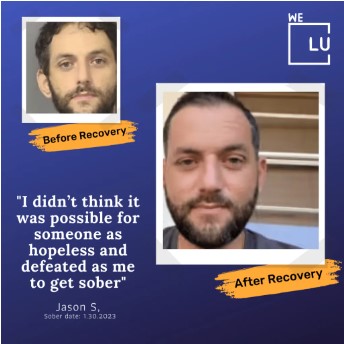
We Level Up Treatment Centers for Drug Alcohol Rehab Detox Behavioral Mental Health Dual Diagnosis TherapyWe Level Up Treatment Centers for Drug Alcohol Rehab Detox Behavioral Mental Health Dual Diagnosis TherapyWe Level Up Treatment Centers for Drug Alcohol Rehab Detox Behavioral Mental Health Dual Diagnosis Therapy

Hotline (844) 597-1011
Voluntarily testimonials from the We Level Up Treatment Center network vary. Not intended as a guaranteed treatment or outcome as each person's journey is unique.

Start a New Life

Begin with a free call to an addiction & behavioral health treatment advisor. Learn more about our dual-diagnosis programs. The We Level Up Treatment Center Network delivers recovery programs that vary by each treatment facility. Call to learn more.

  • Personalized Care
  • Caring Accountable Staff
  • World-class Amenities
  • Licensed & Accredited
  • Renowned w/ 100s 5-Star Reviews

We’ll Call You


Frequently Asked Questions

How is drug abuse different from drug addiction?

Drug abuse means using substances incorrectly. Addiction, or substance use disorder, is a long-term brain disease. It makes it hard for a person to control their drug use, even when it causes harm.

What causes drug abuse?

Factors include genetics, environment, trauma, mental health issues, peer pressure, and availability of substances. Often, it’s a combination of biological, psychological, and social influences.

Is prevention possible?

Yes. Prevention efforts can help reduce the risk of drug abuse.

Experience Transformative Recovery at We Level Up Treatment Centers.

See our authentic success stories. Get inspired. Get the help you deserve.
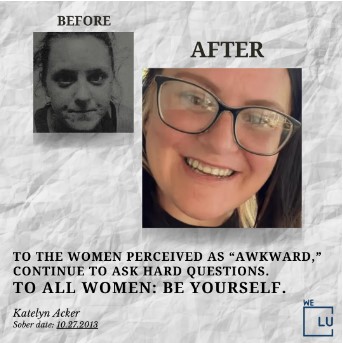
We Level Up Treatment Centers for Drug Alcohol Rehab Detox Behavioral Mental Health Dual Diagnosis TherapyWe Level Up Treatment Centers for Drug Alcohol Rehab Detox Behavioral Mental Health Dual Diagnosis TherapyWe Level Up Treatment Centers for Drug Alcohol Rehab Detox Behavioral Mental Health Dual Diagnosis Therapy

Hotline (844) 597-1011
Voluntarily testimonials from the We Level Up Treatment Center network vary. Not intended as a guaranteed treatment or outcome as each person's journey is unique.

Start a New Life

Begin with a free call to an addiction & behavioral health treatment advisor. Learn more about our dual-diagnosis programs. The We Level Up Treatment Center Network delivers recovery programs that vary by each treatment facility. Call to learn more.

  • Personalized Care
  • Caring Accountable Staff
  • World-class Amenities
  • Licensed & Accredited
  • Renowned w/ 100s 5-Star Reviews

We’ll Call You


Resources

Drug Abuse Cycle – Learn how the stages of the addiction cycle explain the patterns of drug abuse and relapse.

Helping Someone with Drug Abuse – A guide for families and friends on supporting a loved one struggling with drug abuse.

Am I Addicted? Drug Abuse Self-Assessment – Use this tool to evaluate signs and symptoms of drug abuse.

Drug Abuse Counseling – Explore how therapy and counseling help in overcoming drug abuse.

Family Impact of Drug Abuse – Understand how drug abuse affects the entire family system.

Source

[1] NIDA – Principles of Effective Treatment: https://www.drugabuse.gov/publications/drugfacts/treatment-approaches-drug-addiction

[2] SAMHSA – https://www.samhsa.gov//2017-nsduh-annual-national-report

Level Up Treatment Lawrenceville – Addiction » What Happens During Detox in a Substance Abuse Detox Center

Level Up Treatment Lawrenceville – Addiction » Drug Abuse Treatment

Dual Diagnosis Treatment Washington