

Meth withdrawal symptoms and treatment involve changes in the body and brain after stopping meth use suddenly. Common symptoms include tiredness, strong cravings, mood changes, and trouble sleeping during early recovery stages. Some people may feel anxiety, depression, irritability, and a lack of energy as the body adjusts slowly. These symptoms can feel strong, but they usually improve over time with proper care and support.
Treatment for meth withdrawal often includes medical supervision, counseling, and emotional support for safer recovery outcomes. Doctors may help manage symptoms and monitor health to keep the person stable during the detox process. Therapy can teach coping skills, reduce cravings, and support long-term behavior change and recovery success. With early treatment, people can heal safely and build healthier routines for daily life improvement.
Table of Contents
Get Help. Get Better. Get Your Life Back.
Searching for Accredited Drug and Alcohol Rehab Centers Near You?
Even if you have failed previously and relapsed, or are in the middle of a difficult crisis, we stand ready to support you. Our trusted behavioral health specialists will not give up on you. When you feel ready or just want someone to speak to about therapy alternatives to change your life call us. Even if we cannot assist you, we will lead you to wherever you can get support. There is no obligation. Call our hotline today.
(844) 597-1011What Is Meth?
Meth is a strong and illegal drug that affects the brain and body in harmful ways. It is also called methamphetamine and is not safe for medical or recreational use. This drug can change how a person thinks, feels, and behaves in daily life situations. Even small amounts of meth can cause serious health risks and dangerous effects quickly.
Meth makes the brain release large amounts of chemicals linked to energy and feelings of pleasure. This can create a short high that makes a person feel awake and very active. After this effect wears off, the body often feels very tired, weak, and drained. Repeated use can damage brain function and change how emotions are controlled over time.
Using meth can lead to serious health problems, addiction, and long-term mental health issues. People may lose sleep, lose weight, and experience strong mood changes or confusion often. It can also affect memory, focus, decision-making, and normal daily behavior patterns greatly. Long-term use can damage both physical health and emotional well-being in severe ways.
Meth use is unsafe and can negatively affect families, work, and everyday responsibilities quickly. Many people need medical help and support to stop using meth in a safe way. Treatment can help the brain and body heal slowly with proper care and guidance. Recovery is possible when people receive early help, support, and consistent professional treatment services.
According to the National Institute on Drug Abuse (NIDA), methamphetamine is a highly addictive stimulant that strongly affects the central nervous system and dopamine levels in the brain.

Signs You May Need Meth Withdrawal Treatment
Recognizing withdrawal symptoms early can help prevent relapse. Meth withdrawal can affect both mental and physical health.
Common signs include:
- Strong cravings for meth
- Extreme tiredness or low energy
- Depression or sadness
- Anxiety or restlessness
- Sleeping too much or too little
- Irritability or mood swings
- Trouble focusing or thinking clearly
These symptoms of crystal meth withdrawal may appear within hours or days after stopping use. If symptoms are severe or long-lasting, professional help is strongly recommended. For confidential support, call +(954) 475-6031 or email verifyadmissions@welevelup.com.
Methamphetamine Statistics
550 Million
Meth costs the United States $550 million in drug treatment programs each year.
Source: NIDA
16 Million
According to the 2017 National Survey on Drug Use and Health, 1.6 million people reported using Meth in the past year.
Source: NIDA
964.000 People
An estimated 964,000 people aged 12 and older qualified as having a Meth use disorder in 2017.
Source: NIDA

Get Your Life Back
Find Hope & Recovery. Get Safe Comfortable Detox, Addiction Rehab & Dual Diagnosis Trused Care.
7/365 Line (844) 597-1011Crystal Meth Withdrawal Symptoms
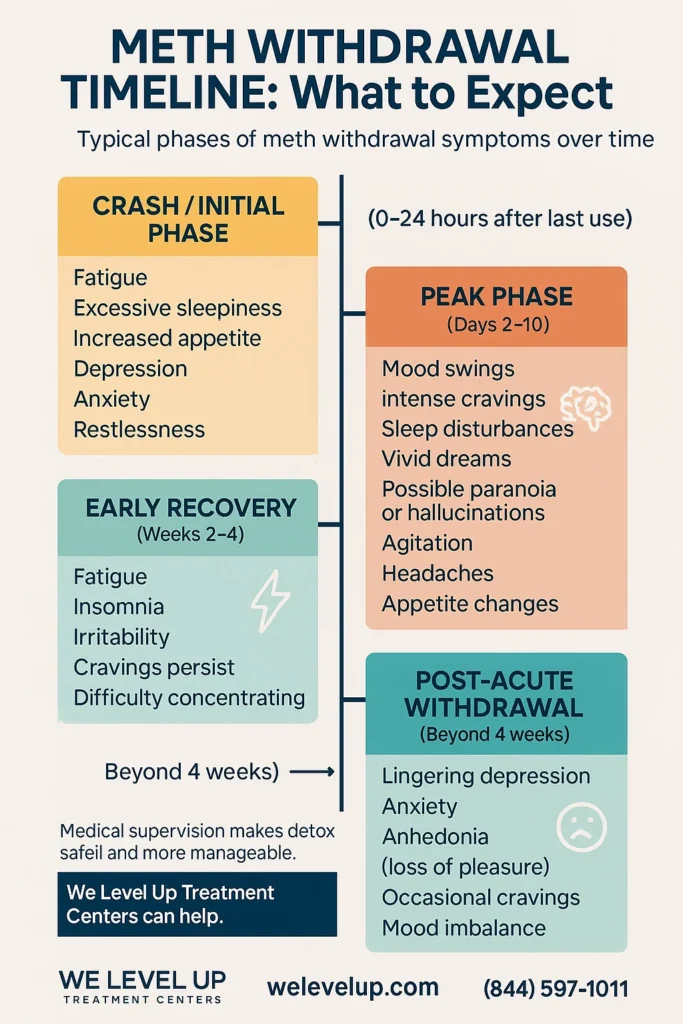
Crystal meth withdrawal can affect the body and brain after stopping use. A person may feel very tired, sad, or low in energy. Some people may also have strong cravings, mood changes, or trouble sleeping. These symptoms can feel strong and should be managed with medical support for safety.
How Long Do Meth Withdrawal Symptoms Last
Meth withdrawal symptoms do not last the same for everyone. The length can depend on health, how much was used, and how long it was used. Some symptoms may start soon after stopping and slowly improve over time. Medical care can help people stay safe and supported during recovery.
Why Choose We Level Up for Meth Withdrawal Treatment?
We Level Up provides caring support for people going through meth withdrawal and early recovery. Our team offers simple, clear guidance based on trusted medical research and safe treatment practices. We focus on helping each person feel supported, understood, and safe during recovery. Our goal is to make the healing process easier and more stable.
Our treatment includes medical care, counseling, and emotional support to help the brain and body recover. We use proven methods that support mood, sleep, energy, and daily functioning over time. Each treatment plan is designed for the person’s needs and recovery goals. We also help people build healthy habits for long-term wellness.
According to the National Institute of Mental Health (NIMH), recovery is stronger with combined medical and behavioral care. We Level Up follows these evidence-based approaches to support safe and lasting recovery. Our team helps people reduce symptoms, manage cravings, and rebuild daily stability. We are committed to helping people move toward a healthier and safer life. If you need help, you can call +(954) 475-6031 or email verifyadmissions@welevelup.com.
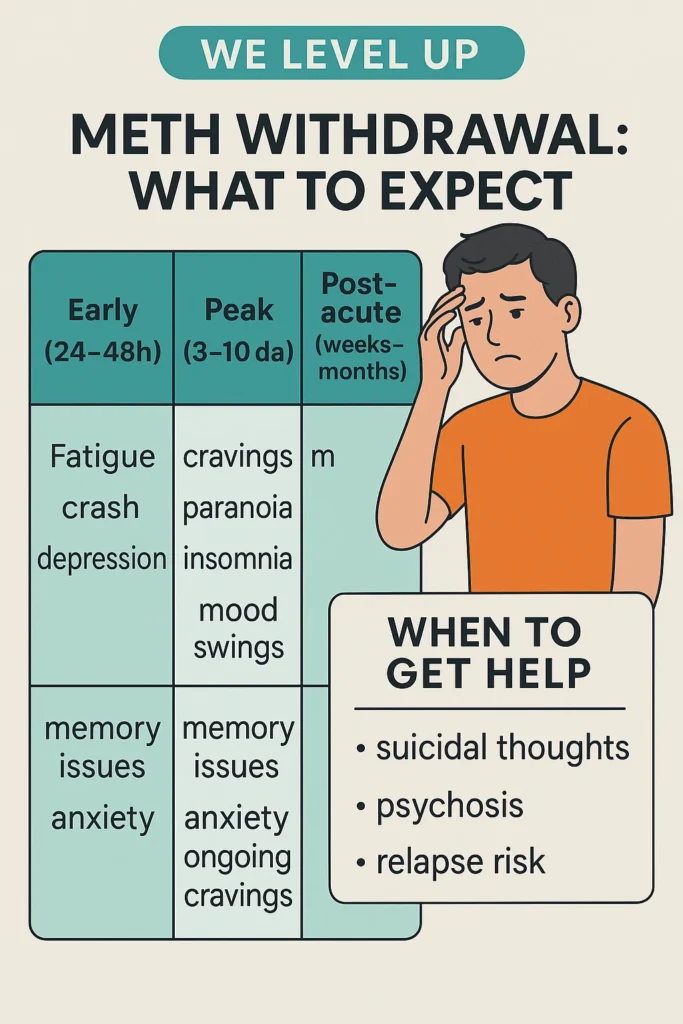
What to Expect During Meth Withdrawal Treatment?
When you start meth withdrawal treatment, a healthcare team will talk with you about your health and drug use. They may ask simple questions about how often meth was used and how you are feeling now. This helps them understand your needs and create a safe care plan. The goal is to support you in a calm and safe environment.
During early treatment, you may feel withdrawal symptoms like tiredness, mood changes, or strong cravings. Some people also feel sadness, anxiety, or trouble sleeping as the body adjusts. Doctors and nurses can help manage these symptoms and check your health often. This support helps keep you safe during the detox process.
You will also receive counseling and emotional support during treatment. These sessions teach healthy ways to handle stress, triggers, and cravings. You may learn new coping skills to help avoid returning to drug use. Over time, treatment helps you build a stronger and healthier daily life.
Benefits of Meth Withdrawal Treatment
Professional treatment provides many benefits for recovery:
- Safe detox and withdrawal management
- Reduced risk of relapse
- Improved mental health stability
- Better sleep and energy levels
- Emotional support and counseling
- Long-term recovery planning
Treatment also helps the brain recover from meth use and reduces withdrawal from meth symptoms over time. It also supports emotional healing, improves sleep quality, lowers cravings, and helps people rebuild healthy daily routines with steady progress and care.

First-class Facilities & Amenities
Trusted Integrated Addiction & Mental Health Rehabilitation Treatment
Rehab Centers TourEstablished Addiction Centers. Serene Private Facilities. Inpatient rehab programs vary.
Addiction Helpline (844) 597-1011Comprehensive recovery success experience, backed by a Team w/ History of:
15+
Years of Unified Experience
100s
5-Star Reviews Across Our Centers
10K
Recovery Success Stories Across Our Network
- Low Patient to Therapist Ratio
- Onsite Medical Detox Center
- Comprehensive Dual-Diagnosis Treatment
- Complimentary Family & Alumni Programs
- Alumni Coaching, Recovery & Personal Development Events
How We Level Up Turns Research Into Real Recovery
| Study | Treatment Implications | Insights for Patients |
|---|---|---|
| Acheson et al., 2022 – Meta-analysis View Study | Focus on non-pharmacological care (CBT, contingency management, structured support). Use medications only to relieve individual symptoms. | Patients should know there is no “magic pill”; recovery relies on therapy, support, and coping strategies. |
| Zorick et al., 2010 – Withdrawal symptoms in abstinent methamphetamine-dependent subjects View Resource | Ongoing therapy (CBT, contingency management) is needed beyond initial detox. Monitor for depression and relapse risk. | Even when mood improves, cravings can last weeks. Staying in treatment during this time reduces relapse risk. |
| Anxiety in Meth Withdrawal – Chen et al., 2017 Read Article | Early screening for anxiety is crucial. Provide supportive counseling and, when needed, short-term anti-anxiety medications. | Anxiety is common and temporary. Patients should know they are not alone and support can ease these feelings. |
| Controlled Amphetamine Withdrawal Trial – Newton et al., 2021 Read Study | Shows potential for medication-assisted approaches. More trials needed, but stimulant replacement may help in severe cases. | Cravings are part of the process. Some new therapies may help reduce them under medical care. |
| PWID Meth Withdrawal Study – Morin et al., 2021 Read Review | High-risk users need closer monitoring and access to residential or structured care. | Withdrawal can feel very painful. This is normal, not a sign of weakness. Professional help can make it safer and easier. |
Specialized, Accredited, 5-Star Reviewed, Evidence-based Addiction & Mental Health Programs. Complete Behavioral Health Inpatient Rehab, Detox plus Co-occuring Disorders Therapy.
CALL(844) 597-1011End the Addiction Pain. End the Emotional Rollercoaster. Get Your Life Back. Start Drug, Alcohol & Dual Diagnosis Mental Health Treatment Now. Get Free, No-obligation Guidance by Substance Abuse Specialists Who Understand Addiction & Mental Health Recovery & Know How to Help.
FAQs About Meth Withdrawal Symptoms
What are meth withdrawal symptoms and treatment options?
Meth withdrawal symptoms include tiredness, sadness, anxiety, and strong cravings. Some people also experience mood swings and sleep problems. Treatment options include medical care, therapy, and support programs. These help the body and brain heal safely. Doctors and counselors guide each step of recovery. This support lowers the risk of relapse. It also makes withdrawal from meth symptoms easier to manage. With help, people can slowly feel better and build a healthier life over time. Treatment may also include coping skills training, emotional support, and relapse prevention planning for long-term recovery success.
How long do meth withdrawal symptoms last?
How long meth withdrawal symptoms last depends on the person and how long meth was used. Most symptoms start within one day after stopping. They can last a few days or even weeks. Physical symptoms may improve faster, but cravings can last longer. Some people need ongoing support to stay stable. With treatment, recovery becomes easier and safer. Over time, the brain heals, and symptoms slowly become less severe and less frequent. Emotional symptoms may also last longer and require continued therapy and structured support for full recovery.
What are crystal meth withdrawal symptoms?
Crystal meth withdrawal symptoms include extreme tiredness, sadness, and strong cravings. Some people feel anxious, angry, or confused. Sleep may change a lot, with too much or too little rest. Mood swings are also common. These symptoms happen because the brain is adjusting after stopping meth use. The body needs time to recover. Support and treatment help reduce discomfort. With care, people can manage these symptoms and begin to feel more stable. Appetite changes and difficulty concentrating may also occur during early recovery stages.
What happens during withdrawal from meth symptoms?
During withdrawal from meth, the body and brain go through big changes. Energy levels drop quickly, and people feel very tired. Mood can feel low or unstable. Cravings for meth may become strong. Thinking may feel slow or unclear. These effects can feel hard at first. But they slowly improve with time. Treatment helps make this process safer. With support, people can move through withdrawal and start recovery step by step. Sleep patterns may also shift, and emotional sensitivity can increase during early healing stages.
Are withdrawal symptoms for meth dangerous?
Withdrawal symptoms for meth are usually not life-threatening. However, they can still feel very strong and uncomfortable. Some people may feel deep sadness or strong cravings. These feelings can increase the risk of relapse. That is why support is important. Treatment helps people stay safe during recovery. It also provides care for mental health. With help, symptoms become easier to manage. Recovery is safer when people are not going through it alone. Ongoing support can also help prevent relapse and improve long-term emotional stability.
Can meth withdrawal symptoms be treated at home?
Mild meth withdrawal symptoms may be managed at home in some cases. But medical care is often safer. At home, people may still feel strong cravings and mood changes. Without support, relapse risk can increase. Professional treatment gives medical help and emotional support. It also provides tools to stay drug-free. This makes recovery more stable. With proper care, people have a better chance of healing and avoiding returning to meth use. Support also helps manage sleep problems, stress, and anxiety during early recovery stages for better outcomes.
Why do meth withdrawal symptoms happen?
Meth withdrawal symptoms happen because the brain changes after drug use. Meth affects chemicals that control mood and energy. When meth stops, the brain needs time to adjust. This causes tiredness, sadness, and cravings. The body also feels the change. These symptoms are normal during recovery. They show the brain is healing. With treatment and support, the symptoms become easier to manage and slowly improve over time. The nervous system slowly restores balance, helping the person regain emotional control, focus, and healthier daily functioning with continued care.
Can meth withdrawal symptoms come back?
Yes, meth withdrawal symptoms can come back, especially cravings. Stress or triggers can make symptoms return. This is common during recovery. It does not mean the treatment failed. It means the brain still needs support. Therapy and aftercare help reduce this risk. People learn ways to handle stress and avoid triggers. With time, symptoms become less frequent. Support helps people stay strong and continue recovery safely and steadily. Ongoing recovery programs also help build long-term coping skills, improve emotional resilience, and reduce chances of relapse during difficult situations.
Search We Level Up Meth Withdrawal Symptoms Resources
How to Get Started?
Getting help for meth withdrawal symptoms and treatment is simple and confidential. You can contact We Level Up anytime, day or night. Our caring team will guide you step by step through the recovery process. We explain everything in clear and simple words so you feel safe and supported.
You are not alone, and help is always available. Recovery is possible with the right care and guidance. If you are struggling with withdrawal from meth symptoms, support is ready now. Call +(954) 475-6031 or email verifyadmissions@welevelup.com. Visit 1701 Green Rd, Suite C, Deerfield Beach, FL 33064.
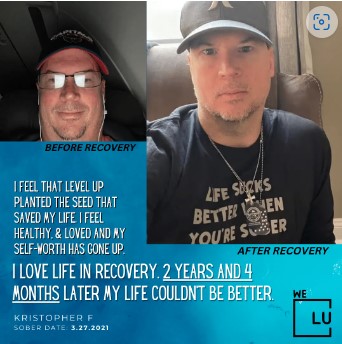
Experience Transformative Recovery at We Level Up Treatment Centers.
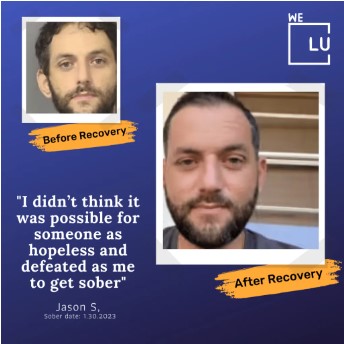
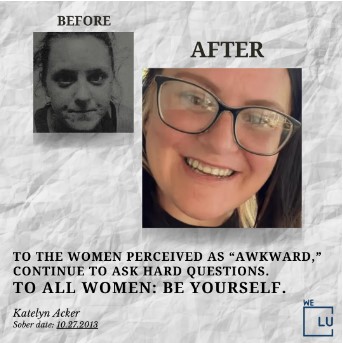
See our authentic success stories. Get inspired. Get the help you deserve.
Start a New Life
Begin with a free call to an addiction & behavioral health treatment advisor. Learn more about our dual-diagnosis programs. The We Level Up Treatment Center Network delivers recovery programs that vary by each treatment facility. Call to learn more.
- Personalized Care
- Caring Accountable Staff
- World-class Amenities
- Licensed & Accredited
- Renowned w/ 100s 5-Star Reviews
We’ll Call You