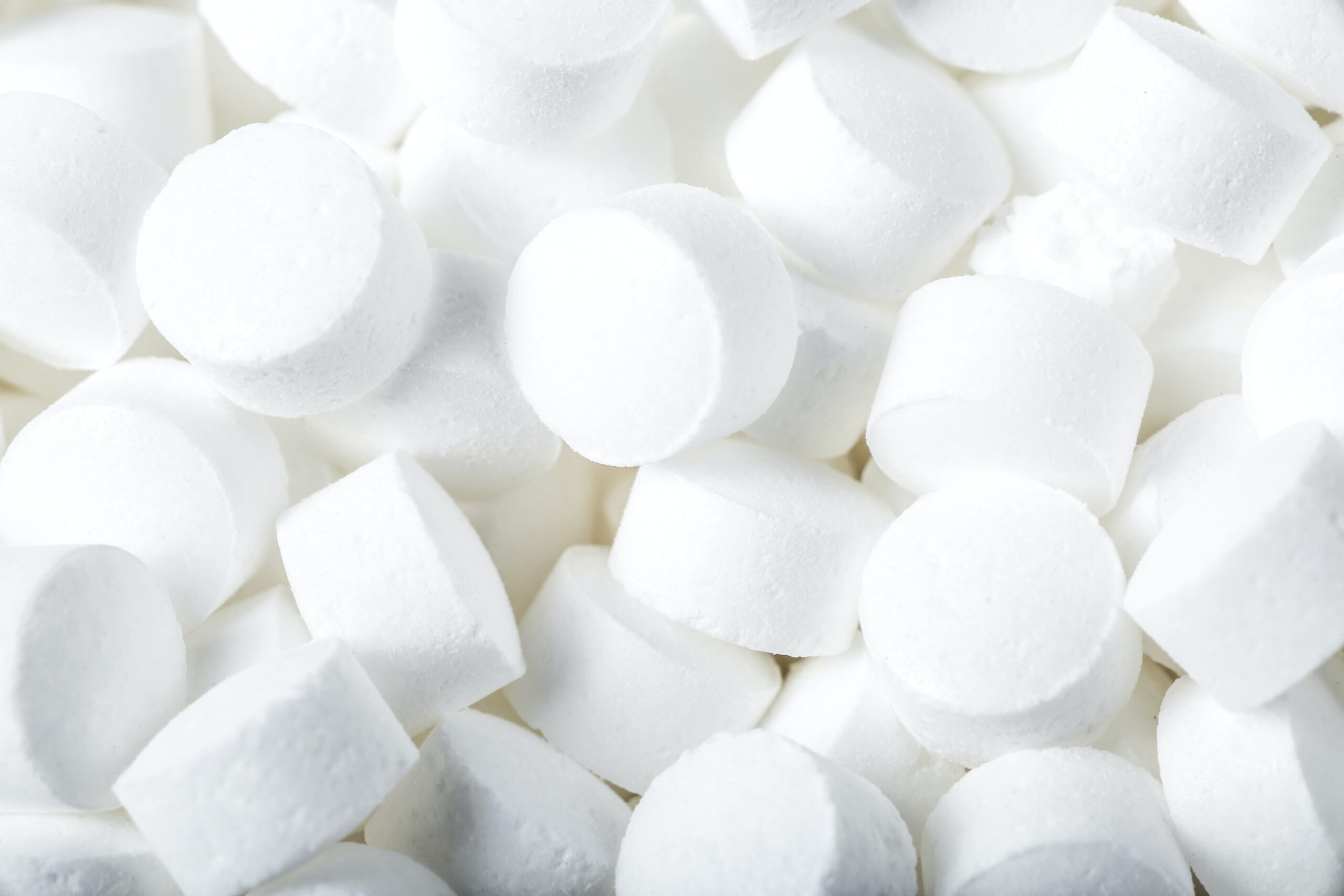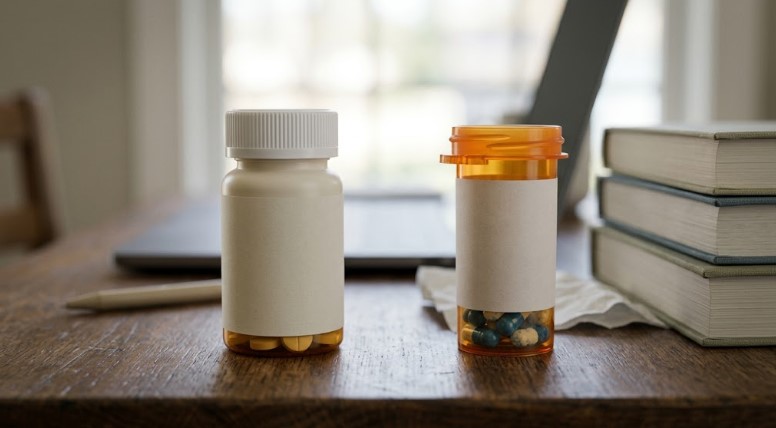
Many people ask, “What does fentanyl look like?” The answer is simple. Fentanyl may look like a powder, pill, patch, liquid, or colored tablet. Some fentanyl is made for medical use, while illegal fentanyl may be hidden in fake pills, powders, or other drugs without a person knowing.
This makes fentanyl very dangerous because sight alone cannot prove what a substance contains. A pill or powder may look like another drug but still contain fentanyl. Knowing the forms, overdose risks, and treatment options can help protect you or someone you love.
We Level Up can help with fentanyl addiction treatment and recovery support. The Joint Commission (TJC) and CARF accredit We Level Up for healthcare safety and quality.
- What Is Fentanyl?
- What Does Fentanyl Look Like?
- What Does Street Fentanyl Look Like?
- What Does Fentanyl Overdose Look Like?
- What Does a Fentanyl Addict Look Like?
- Signs You May Need Help for Fentanyl Use
- Why Choose We Level Up for Fentanyl Addiction Help?
- What to Expect During Fentanyl Addiction Treatment
- Benefits of Fentanyl Addiction Treatment
- FAQs About What Does Fentanyl Look Like
- How to Get Started
- Medical Disclaimer
What Is Fentanyl?
Fentanyl is a strong synthetic opioid. Doctors may use prescription fentanyl for severe pain in certain medical settings. But illegally made fentanyl is a major safety concern because it can be mixed into street drugs, fake pills, heroin, cocaine, and other substances.
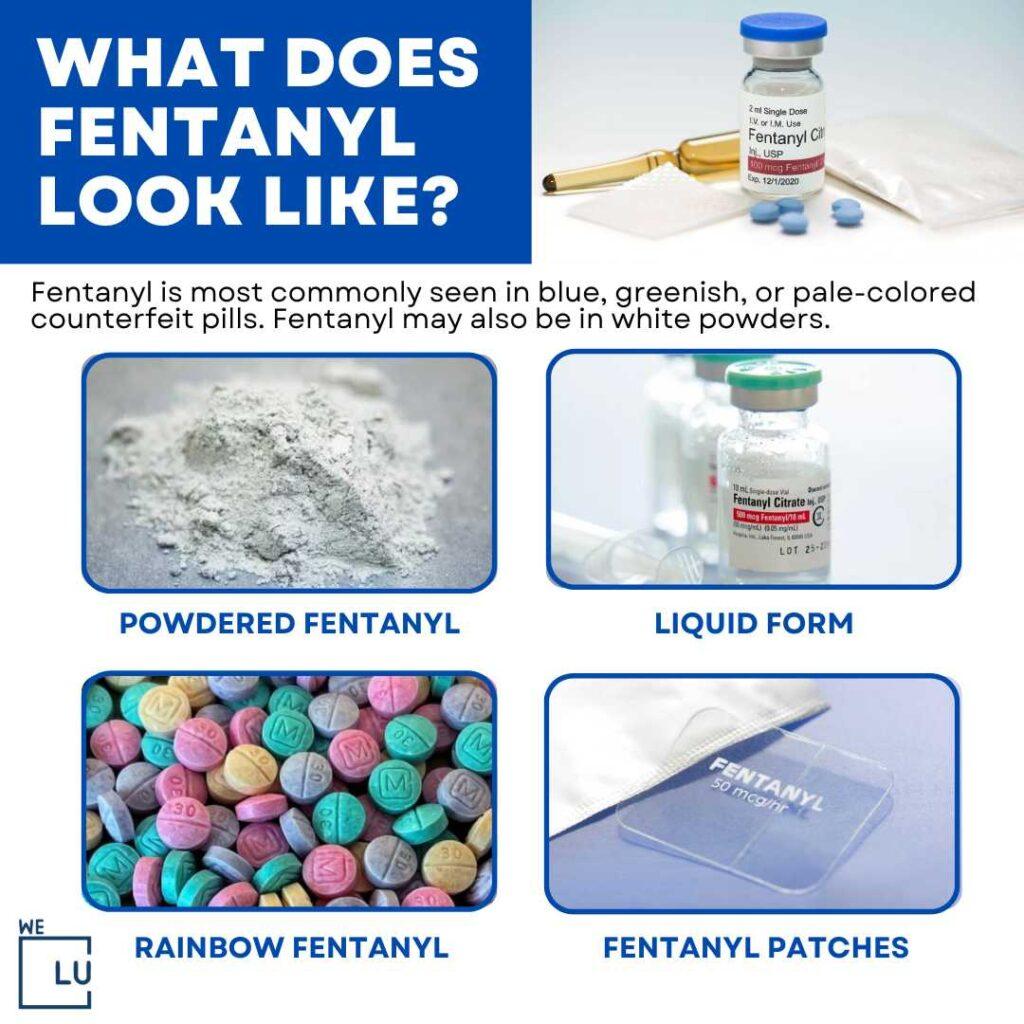
Many people search fentanyl what does it look like because they want to know if they can spot it by sight. The hard truth is that fentanyl cannot always be identified by looks alone. It may appear as a powder, pill, patch, liquid, or colored tablet.
The DEA has warned that fentanyl may appear in bright colors, sometimes called rainbow fentanyl, and may be found as pills, powder, or blocks. This makes it even harder for families to know what they are seeing without proper testing.
Professional treatment is important when fentanyl use is suspected, and fentanyl addiction treatment can help people start recovery more safely. Fentanyl can cause strong cravings, dependence, withdrawal symptoms, overdose, and relapse risk. Medical and clinical care can help people start recovery more safely.
What Does Fentanyl Look Like?
What does fentanyl look like depends on whether it is prescribed or illegally made. Prescription fentanyl may come as fentanyl patches, lozenges, tablets, sprays, or other forms used under medical care. Street fentanyl may look very different.
Illicit fentanyl may appear as:
- White, tan, or brown powder
- Fake prescription pills
- Small tablets
- Colored pills or powder
- Blotter paper
- Liquid in small containers
- Mixed into other drugs
The problem is that fentanyl may look like other drugs. Fake pills may be made to look like oxycodone, Xanax, Adderall, or other prescription drugs. A person may think they are taking one substance when it contains fentanyl.
This is why looking at a pill or powder is not enough to know if it is safe. Any street drug or pill not given by a licensed pharmacy can be risky.

What Does Street Fentanyl Look Like?
Many people ask, what does street fentanyl look like because they are worried about a pill, powder, or substance found at home. Street fentanyl can look plain, bright, chalky, powdery, or pressed into pills.
It may be sold alone or mixed with other drugs. It may also be hidden in counterfeit pills. These pills can look like real prescription medicine, but they may contain fentanyl or other dangerous substances. The DEA counterfeit pills fact sheet explains that fake pills may be made to look like legitimate prescription medications.
Street fentanyl can come in different colors. Some products may look like candy or sidewalk chalk. The DEA has warned that brightly colored fentanyl has appeared across the United States.
Because fentanyl can be hidden in other substances, it is not safe to rely on color, shape, smell, or taste. If you find a suspicious pill or powder, do not touch it with bare hands. Keep children and pets away, and contact local authorities if needed.

Get Your Life Back
Find Hope & Recovery. Get Safe Comfortable Detox, Addiction Rehab & Dual Diagnosis Trused Care.
7/365 Line (844) 597-1011What Does Fentanyl Overdose Look Like?
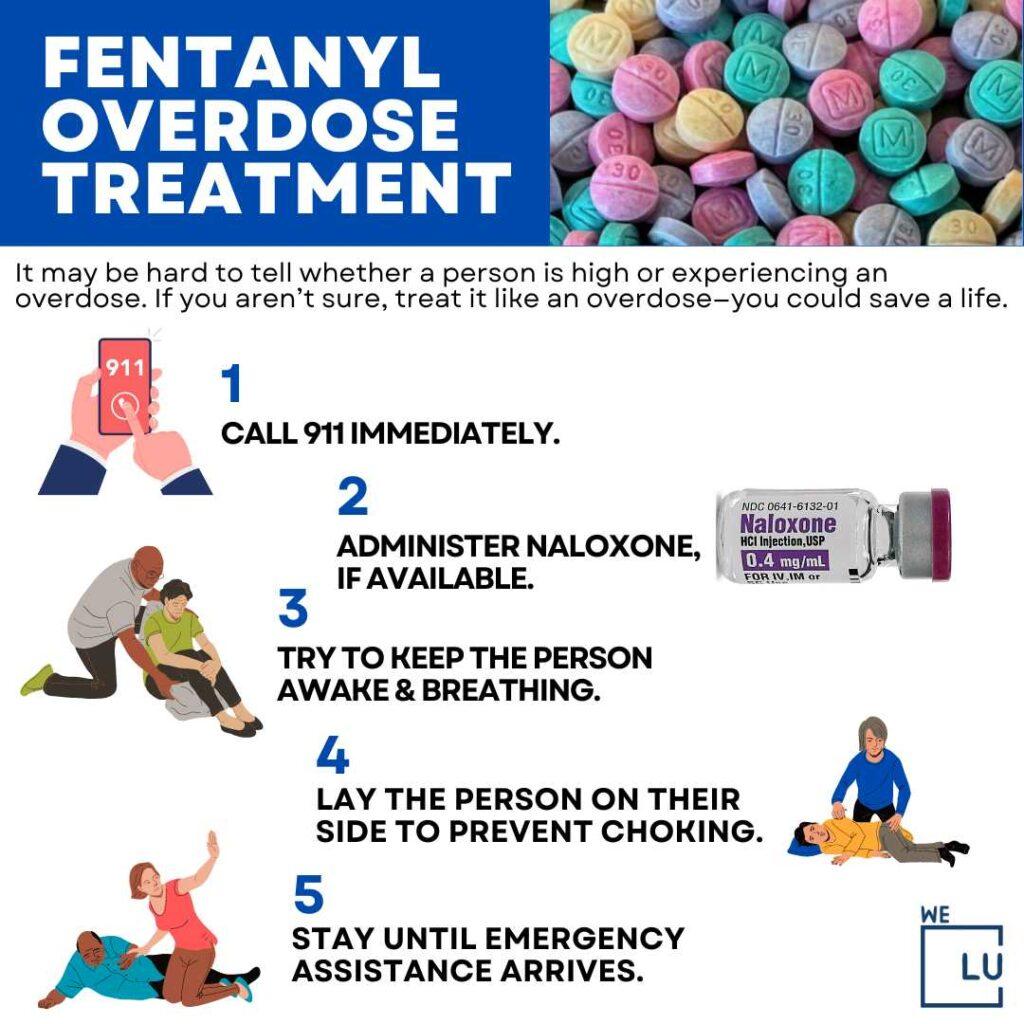
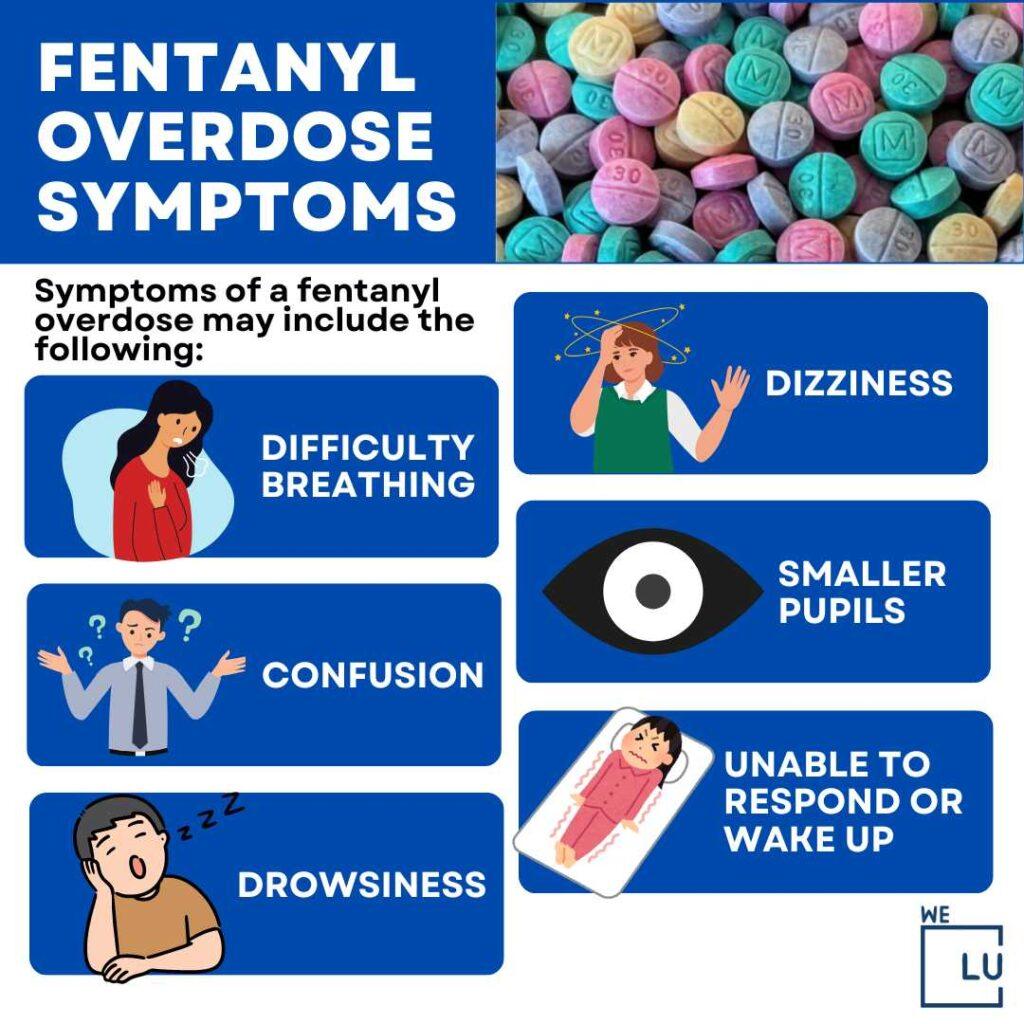
What does fentanyl overdose look like is one of the most important questions to know. A fentanyl overdose can happen fast. It can slow or stop breathing, which can become life-threatening.
Signs and effects of fentanyl overdose may include:
- Slow, weak, or stopped breathing
- Blue or gray lips or fingernails
- Very small pupils
- Limp body
- Vomiting or choking sounds
- Cold or clammy skin
- Extreme sleepiness
- Not waking up
Call 911 right away if you think someone is overdosing. Give naloxone if it is available. Naloxone is a medicine that can reverse an opioid overdose, including fentanyl overdose, when given in time. The CDC says naloxone is safe and can be given as a nasal spray or injection.
Stay with the person until help arrives. More than one dose of naloxone may be needed in some cases. Even if the person wakes up, they still need emergency care.
What Does a Fentanyl Addict Look Like?
People often ask, what does a fentanyl addict look like when they are worried about a loved one. This question is common, but it can also be misleading. Addiction does not have one “look.” A person with fentanyl addiction may be a parent, student, worker, veteran, friend, or partner.
Some people may look tired, withdrawn, or unwell. Others may look normal on the outside while struggling in private. It is better to look for behavior changes and safety risks rather than judging by appearance.
Possible signs of fentanyl addiction may include:
- Strong cravings for opioids
- Taking pills or powders from unsafe sources
- Needing more of the drug over time
- Falling asleep at odd times
- Pulling away from family or friends
- Mood changes or secrecy
- Missing work, school, or family duties
- Using despite serious harm
These signs do not mean someone is hopeless. They mean support may be needed. Addiction is treatable, and recovery can begin with the right care.
📞 Call (954) 475-6031 now for free and private help.
Signs You May Need Help for Fentanyl Use
Fentanyl use can become dangerous quickly. Some people use fentanyl on purpose. Others may take it without knowing because it was mixed into another substance.
You may need help if you or someone you love:
- Uses opioids from the street
- Takes pills not prescribed by a doctor
- Has had an overdose or near overdose
- Needs opioids to feel normal
- Feels sick without opioids
- Has cravings that feel hard to control
- Keeps using despite health, family, work, or legal problems
Withdrawal can make quitting feel very hard, but fentanyl detox support can help people manage symptoms with more safety. A person may feel body aches, nausea, anxiety, sweating, chills, sleep trouble, and strong cravings. Medical detox can help people get through withdrawal with more safety and support.
If someone has suicidal thoughts, severe withdrawal symptoms, or signs of overdose, call 911 or 988 right away.
Why Choose We Level Up for Fentanyl Addiction Help?
We Level Up Treatment Centers helps people who struggle with fentanyl use, opioid addiction, and mental health concerns. Fentanyl addiction can affect the brain, body, family, work, and emotional health. It often needs more than willpower alone.
Treatment may include medical detox, residential care, therapy, dual diagnosis support, group sessions, relapse prevention, and aftercare planning. Care is based on the person’s needs and safety risks. Many people who use fentanyl also have anxiety, depression, trauma, grief, or other mental health symptoms. Treating these concerns can help lower relapse risk.
People with opioid use and mental health symptoms may benefit from a dual diagnosis treatment center. We Level Up can also help families understand what is happening. Addiction affects loved ones too. Family education and support can help rebuild trust and improve communication over time.
📞 Call (954) 475-6031 now for free and private support.
What to Expect During Fentanyl Addiction Treatment
Treatment often starts with a full assessment. The care team asks about opioid use, other drug use, health history, mental health symptoms, withdrawal risk, and safety needs. This helps decide the safest level of care.
Medical Detox
Detox helps the body adjust after stopping fentanyl or other opioids. Withdrawal can feel painful and stressful, so medical support may help. Staff may monitor symptoms, sleep, mood, cravings, hydration, and safety. Detox is often the first step, but it is not the full treatment. Ongoing care is still needed after withdrawal improves.
Therapy and Mental Health Care
Therapy helps people understand why fentanyl use started and what keeps it going. Some people use opioids to cope with pain, trauma, stress, or depression. Others may have started with prescription opioids before moving to street drugs. Therapy can teach safer coping skills. It may include individual therapy, group therapy, family therapy, trauma-informed care, and relapse prevention.
Relapse Prevention
Relapse prevention helps people prepare for real life after treatment. Triggers may include stress, old friends, pain, grief, easy access to drugs, or untreated mental health symptoms.
A strong plan may include therapy, support groups, medication assisted treatment when appropriate, family support, and aftercare planning. Long-term recovery works best when people stay connected to help.
First-class Facilities & Amenities
Trusted Integrated Addiction & Mental Health Rehabilitation Treatment
Rehab Centers TourEstablished Addiction Centers. Serene Private Facilities. Inpatient rehab programs vary.
Addiction Helpline (844) 597-1011Comprehensive recovery success experience, backed by a Team w/ History of:
15+
Years of Unified Experience
100s
5-Star Reviews Across Our Centers
10K
Recovery Success Stories Across Our Network
- Low Patient to Therapist Ratio
- Onsite Medical Detox Center
- Comprehensive Dual-Diagnosis Treatment
- Complimentary Family & Alumni Programs
- Alumni Coaching, Recovery & Personal Development Events
Benefits of Fentanyl Addiction Treatment
Treatment can help people stop fentanyl use and build a safer life. It can also help with the deeper pain that may fuel addiction.
Benefits may include:
- Safer withdrawal support
- Help with cravings and relapse risk
- Mental health care
- Family support and education
- Therapy for trauma, grief, or stress
- Long-term recovery planning
Treatment is not about shame. It is about safety, healing, and learning how to live without fentanyl.
Specialized, Accredited, 5-Star Reviewed, Evidence-based Addiction & Mental Health Programs. Complete Behavioral Health Inpatient Rehab, Detox plus Co-occuring Disorders Therapy.
CALL(844) 597-1011End the Addiction Pain. End the Emotional Rollercoaster. Get Your Life Back. Start Drug, Alcohol & Dual Diagnosis Mental Health Treatment Now. Get Free, No-obligation Guidance by Substance Abuse Specialists Who Understand Addiction & Mental Health Recovery & Know How to Help.
FAQs About What Does Fentanyl Look Like
What does fentanyl look like?
Fentanyl look depends on the form. It may appear as a powder, pill, patch, liquid, or colored tablet. Street fentanyl can look like other drugs, so sight alone cannot prove what a substance is. Any pill or powder from an unsafe source can be dangerous.
What does Fentanyl look like in street drugs?
Fentanyl looks in street drugs can vary. It may look like white powder, fake prescription pills, colored tablets, or mixed drugs. Some fentanyl may be hidden in substances that look like cocaine, heroin, or pressed pills. This makes overdose risk higher.
What does fentanyl overdose look like?
Fentanyl overdose may include slow breathing, blue lips, limp body, tiny pupils, choking sounds, and not waking up. Call 911 right away if overdose is suspected. Give naloxone if available and stay with the person until help arrives.
What does street fentanyl look like?
It can be hard to answer because the look changes. It may look like powder, pills, colored blocks, or fake prescription medicine. Do not rely on appearance to judge safety. Street fentanyl can be hidden in many substances.
What does a fentanyl addict look like?
A person with fentanyl addiction may look tired or withdrawn, but they may also look normal. Look for behavior changes instead. Signs may include cravings, secrecy, withdrawal symptoms, risky drug use, and using despite harm.
How does We Level Up help with fentanyl abuse?
We Level Up can help when fentanyl use or overdose risk is a concern. Care may include detox support, residential treatment, therapy, dual diagnosis care, and relapse prevention. A clinical team can help decide what level of care may be safest. Support is private and focused on long-term recovery.
Get Help. Get Better. Get Your Life Back.
Searching for Accredited Drug and Alcohol Rehab Centers Near You?
Even if you have failed previously and relapsed, or are in the middle of a difficult crisis, we stand ready to support you. Our trusted behavioral health specialists will not give up on you. When you feel ready or just want someone to speak to about therapy alternatives to change your life call us. Even if we cannot assist you, we will lead you to wherever you can get support. There is no obligation. Call our hotline today.
(844) 597-1011How to Get Started
Finding fentanyl or suspecting fentanyl use can feel scary. You may worry about overdose, withdrawal, secrecy, or how to talk to your loved one. You do not have to handle it alone. We Level Up Treatment Centers can help you understand the next step with care and privacy. Treatment may include medical detox, therapy, residential care, dual diagnosis support, and relapse prevention planning.
📞 Call (954) 475-6031 for free and private help, or complete the insurance verification form to learn what care may be covered. One safe call can help start recovery.
Medical Disclaimer
This content is for education only. It must not replace medical advice. It should not be used for diagnosis or treatment.
Always ask a licensed healthcare provider if you have any medical concerns.
If you are having a medical emergency, call 911 right away.
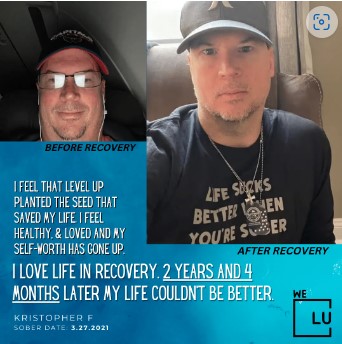
Experience Transformative Recovery at We Level Up Treatment Centers.
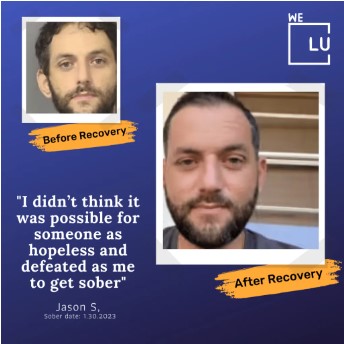
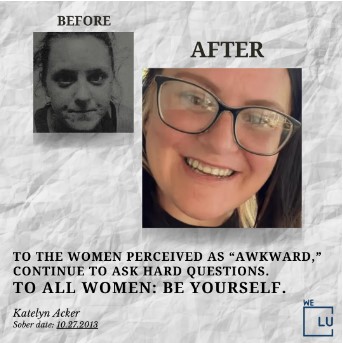
See our authentic success stories. Get inspired. Get the help you deserve.
Start a New Life
Begin with a free call to an addiction & behavioral health treatment advisor. Learn more about our dual-diagnosis programs. The We Level Up Treatment Center Network delivers recovery programs that vary by each treatment facility. Call to learn more.
- Personalized Care
- Caring Accountable Staff
- World-class Amenities
- Licensed & Accredited
- Renowned w/ 100s 5-Star Reviews
We’ll Call You