Cocaine and alcohol are often used together, but this mix can be very dangerous for health. Both substances affect the brain, heart, and body in different but harmful ways. When used together, they create stronger effects and increase the risk of serious medical problems. This combination can raise heart rate, increase blood pressure, and affect clear thinking daily.
Long-term cocaine and alcohol use may lead to addiction, mental health problems, and physical illness. Many people develop strong cravings and find it difficult to stop without professional treatment support. Recovery is possible with medical care, therapy, and ongoing guidance from trained addiction specialists. Early treatment can improve safety, restore health, and help people build a stable future.
Table of Contents

Get Your Life Back
Find Hope & Recovery. Get Safe Comfortable Detox, Addiction Rehab & Dual Diagnosis Trused Care.
7/365 Line (844) 597-1011What Are the Effects of Mixing Cocaine and Alcohol?
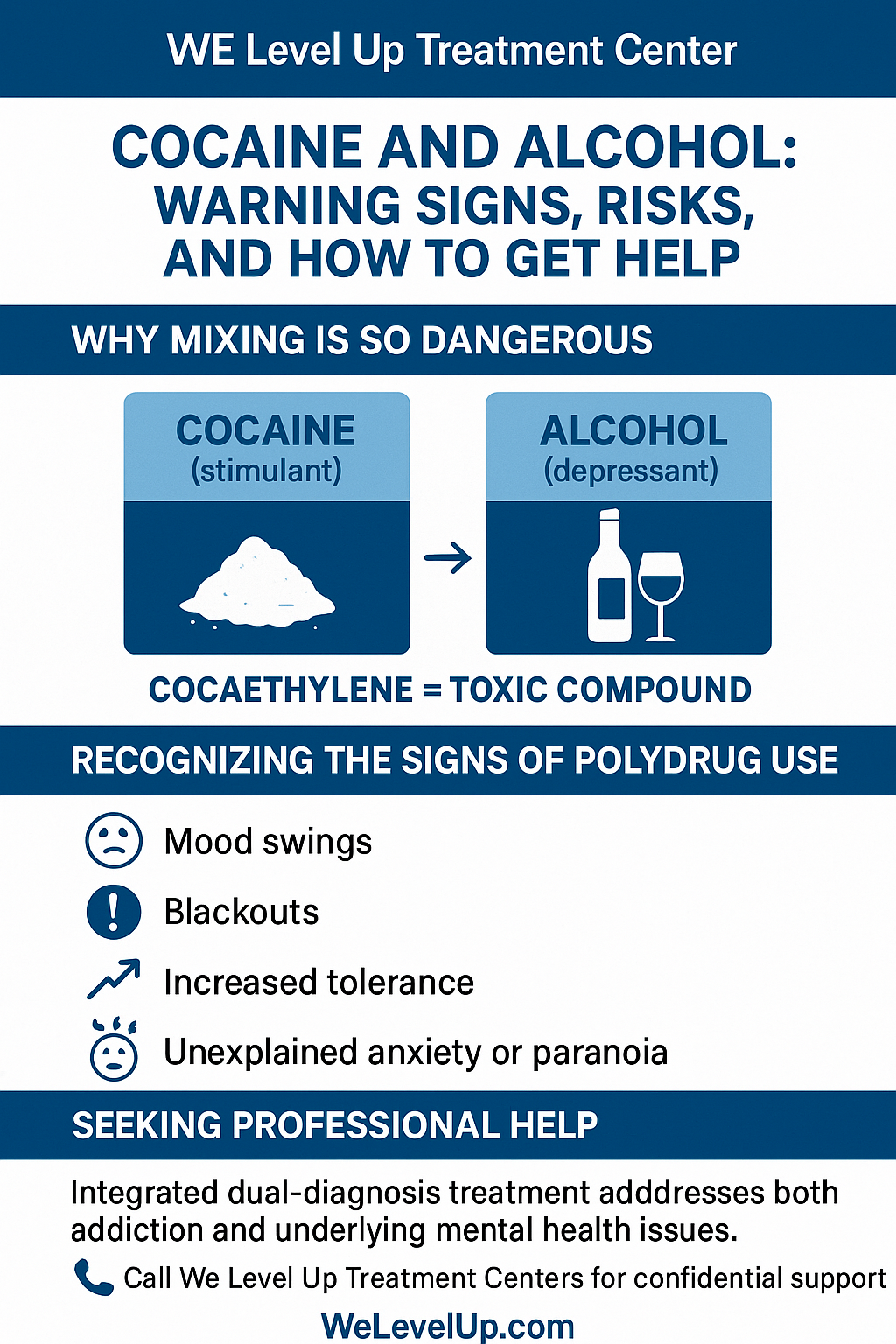
Mixing cocaine and alcohol can be very dangerous for the body and mind. Cocaine is a strong stimulant that speeds up the body. Alcohol is a depressant that slows the body down. When used together, they can create harmful effects that are hard to predict.
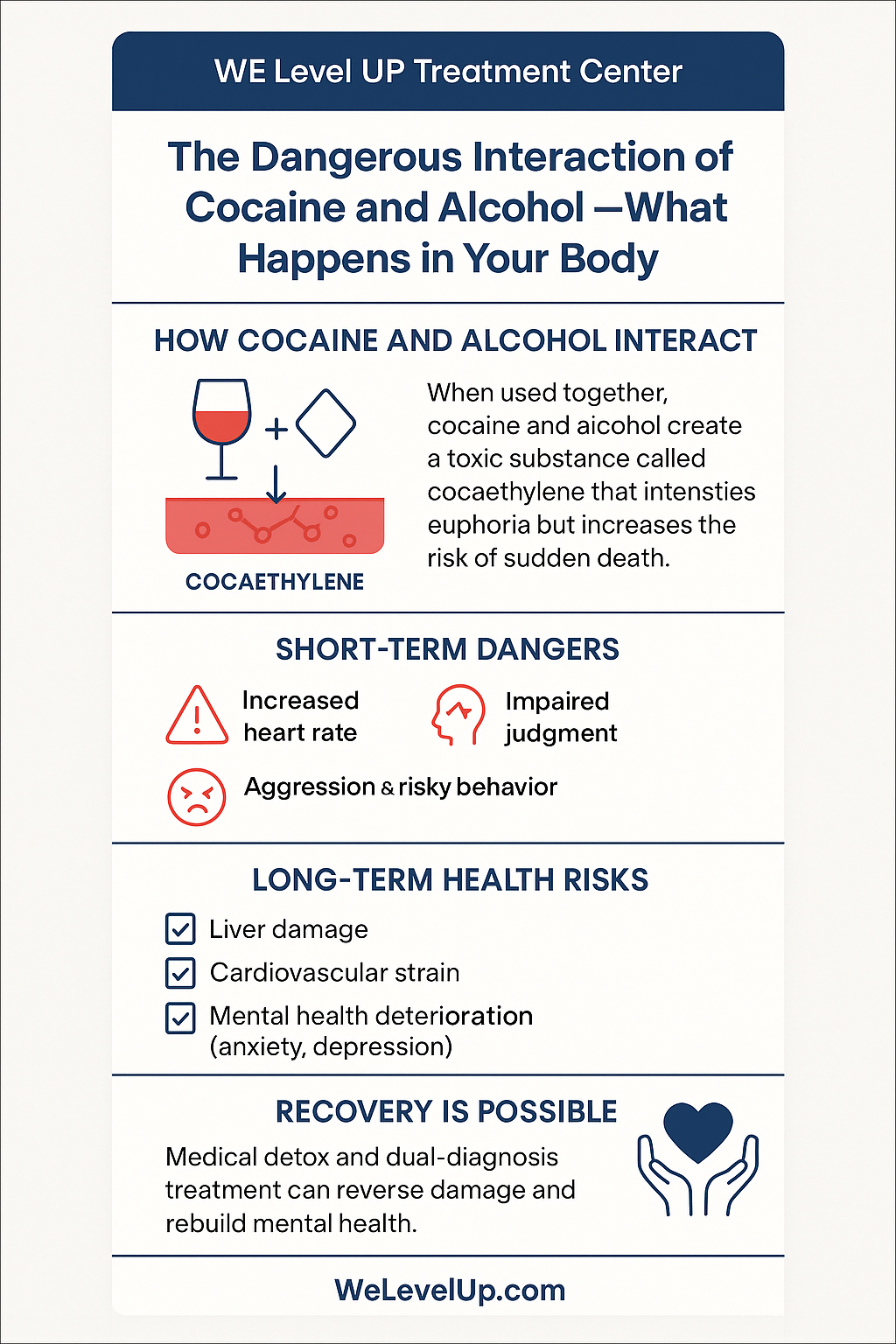
Some people may feel more energetic or confident at first, but this can quickly become risky. Mixing these substances may increase heart rate, blood pressure, and body temperature. People may also have poor judgment and take dangerous risks. Some may become angry, confused, or emotionally unstable.
In serious cases, mixing cocaine and alcohol can lead to chest pain, trouble breathing, overdose, or sudden death. This combination can also affect sleep, mood, and mental health. According to the National Institute of Mental Health (NIMH), substance misuse can change brain function and increase mental health problems over time. Long-term cocaine and alcohol use can harm many parts of the body.
It may damage the heart, liver, and brain. Some people may develop an addiction and feel unable to stop using these substances. Others may have cocaine and alcohol withdrawal symptoms when they try to quit. These symptoms can include anxiety, sadness, sleep problems, and strong cravings.
Mixing these substances also raises the risk of cocaine and alcohol overdose. In some cases, the body creates a dangerous chemical called cocaethylene when cocaine and alcohol are used together. This can increase the risk of heart problems and acute alcohol and cocaine poisoning. Professional treatment and medical support can help people recover safely.
Signs You May Need Cocaine and Alcohol Addiction Treatment
- Strong cravings for cocaine or alcohol
- Trouble stopping substance use
- Mood swings or angry behavior
- Problems at work, school, or home
- Sleeping too much or too little
- Using more substances over time
- Cocaine and alcohol withdrawal symptoms after stopping
These signs may point to growing dependence or misuse. Early treatment can reduce the risk of cocaine and alcohol overdose, addiction, and long-term health damage. If you or a loved one is struggling with cocaine and alcohol use, professional help is available. Call +(954) 475-6031 or email verifyadmissions@welevelup.com for confidential support, assessment, and treatment options. Early intervention can improve recovery outcomes and help restore physical, emotional, and mental well-being.
2.2 Million
In 2019, roughly 2.2 million people aged 12 or older in the US reported using cocaine.
Source: NCBI
15,883
The number of cocaine-related overdose deaths in the US increased from 5,417 in 2014 to 15,883 in 2019.
Source: NCBI
85.6%
In the US, about 85.6% of adults aged 18 or older reported drinking alcohol at some point in their lifetime as of 2019.
Source: NCBI
Get Help. Get Better. Get Your Life Back.
Searching for Accredited Drug and Alcohol Rehab Centers Near You?
Even if you have failed previously and relapsed, or are in the middle of a difficult crisis, we stand ready to support you. Our trusted behavioral health specialists will not give up on you. When you feel ready or just want someone to speak to about therapy alternatives to change your life call us. Even if we cannot assist you, we will lead you to wherever you can get support. There is no obligation. Call our hotline today.
(844) 597-1011Cocaine and Alcohol Overdose
A cocaine and alcohol overdose can become a life-threatening medical emergency. Warning signs may include chest pain, seizures, breathing problems, severe confusion, loss of consciousness, or an irregular heartbeat. Immediate medical care is needed to reduce the risk of serious complications or death.
Acute Alcohol and Cocaine Poisoning
Acute alcohol and cocaine poisoning happens when both substances are used together in amounts that overwhelm the body. This combination can create a toxic substance called cocaethylene in the liver, increasing stress on the heart and other organs. Symptoms may include severe agitation, high body temperature, chest pain, confusion, or unconsciousness.
Cocaine and Alcohol Withdrawal Symptoms
Cocaine and alcohol withdrawal symptoms can affect both physical and emotional health. Common symptoms include anxiety, depression, mood swings, fatigue, sleep problems, cravings, irritability, and difficulty concentrating. Medical support can help manage symptoms safely and improve recovery outcomes.
Cocaine and Alcohol Drug Test
A cocaine and alcohol drug test can detect recent substance use through urine, blood, saliva, or hair samples. Detection times vary based on the amount used, frequency of use, metabolism, age, and overall health. Testing may be used for medical evaluations, treatment programs, workplace screenings, or legal purposes.
Common Detection Times
- Alcohol (Blood): Up to 12 hours
- Alcohol (Urine): 12–48 hours; specialized tests may detect longer
- Alcohol (Hair): Up to 90 days
- Cocaine (Blood): Up to 48 hours
- Cocaine (Urine): 2–4 days; longer with heavy use
- Cocaine (Saliva): 1–2 days
- Cocaine (Hair): Up to 90 days
Factors Affecting Detection
- Type of drug test used
- Frequency of cocaine and alcohol use
- Amount consumed
- Body weight and metabolism
- Age and overall health
- Liver and kidney function
- Hydration levels
First-class Facilities & Amenities
Trusted Integrated Addiction & Mental Health Rehabilitation Treatment
Rehab Centers TourEstablished Addiction Centers. Serene Private Facilities. Inpatient rehab programs vary.
Addiction Helpline (844) 597-1011Comprehensive recovery success experience, backed by a Team w/ History of:
15+
Years of Unified Experience
100s
5-Star Reviews Across Our Centers
10K
Recovery Success Stories Across Our Network
- Low Patient to Therapist Ratio
- Onsite Medical Detox Center
- Comprehensive Dual-Diagnosis Treatment
- Complimentary Family & Alumni Programs
- Alumni Coaching, Recovery & Personal Development Events
Why Choose We Level Up for Cocaine and Alcohol Addiction Treatment?
We Level Up helps people with cocaine and alcohol addiction. The team knows recovery can feel hard and scary. Some people may feel sick, sad, or confused during treatment. Others may feel stress, fear, or strong cravings.
The staff gives care in a safe and calm place. Doctors, nurses, and counselors work together to help each person. They watch symptoms closely and help people feel safe. The goal is to help patients get healthy again and build a better life.
Every person is treated with care, respect, and support during recovery. Treatment plans are made for each person’s needs. Some people may need medical detox before therapy starts. Detox helps the body clear cocaine and alcohol safely.
Medical staff helps with withdrawal symptoms and discomfort. Therapy is also part of treatment. Patients talk about stress, emotions, and addiction problems. Counselors teach healthy coping skills and ways to avoid relapse. If you or a loved one needs help, call +(954) 475-6031 or email verifyadmissions@welevelup.com today.
What to Expect During Cocaine and Alcohol Addiction Treatment?
Treatment for cocaine and alcohol addiction often starts with a health check. Doctors ask about drug use, alcohol use, and health history. They also check mood, sleep, and daily habits. This helps the team understand the person’s needs.
Some people may need medical detox first. Detox helps remove cocaine and alcohol from the body safely. Nurses and doctors watch patients closely during this time. They help with withdrawal symptoms like shaking, stress, or trouble sleeping.
Care is given in a safe and calm place. The goal is to help the person feel stable and protected during early recovery. After detox, many people begin therapy and counseling. Patients talk with counselors about addiction and recovery.
They learn why substance use started and what triggers cravings. Therapy also teaches healthy ways to deal with stress and emotions. Some people join group therapy with others in recovery. Group support helps people feel less alone.
Recovery treatment also teaches relapse prevention skills. Patients learn how to avoid triggers and unhealthy habits. They practice healthy routines like better sleep, eating well, and stress control.
| Study | Treatment Implications | Insights for Patients |
|---|---|---|
| Cocaethylene: When Cocaine and Alcohol Are Taken Together (Pergolizzi et al., 2022) View Study | Mixing cocaine and alcohol creates a chemical called cocaethylene. This chemical stays in the body longer and increases heart and liver damage. Treatment should include cardiac monitoring, liver function testing, and education on the dangers of simultaneous use. | Combining cocaine and alcohol increases the risk of sudden death, heart attack, and liver damage. Always inform your healthcare provider if you have used both substances together. This helps ensure you get the safest and most effective care. |
| Effects of Concurrent Use of Alcohol and Cocaine (Pennings, Leccese, & Wolff, 2002) View Study | Found that the combination increases euphoria and toxicity due to cocaethylene formation. Treatment programs should address enhanced cravings and develop behavioral strategies such as CBT and contingency management to reduce relapse risk. | Just taking the medication is not enough. Going to therapy, support groups, or counseling can help lower the chance of relapse. It can also improve how you handle cravings or withdrawal. |
| Addiction Relapse Prevention (Guenzel & McChargue, StatPearls, 2023) View Resource | Emphasizes integrating therapy, medications, and long-term monitoring to prevent relapse. Early recognition of emotional and mental relapse stages enables timely intervention with CBT, motivational therapy, and medication support. | Mixing cocaine and alcohol may feel more intense but it’s much more dangerous. Being honest about your use helps your care team tailor safe detox and therapy plans. |
| Cocaine and Alcohol Interactions in Humans (Farré et al., 1997) View Study | Demonstrated significant increases in heart rate, blood pressure, and subjective “high” when alcohol was combined with cocaine. Treatment in detox or ER settings should include cardiovascular monitoring and rapid stabilization for polysubstance toxicity. | Even if you feel fine after using both, your heart may be under extreme stress. Always seek medical help after combined use early care can prevent complications. |
Benefits of Cocaine and Alcohol Addiction Treatment
Treatment provides many physical and emotional benefits:
- Reduced risk of overdose and poisoning
- Improved heart and brain health
- Better emotional stability
- Stronger decision-making skills
- Healthier relationships
- Long-term recovery support
Understanding acute alcohol and cocaine poisoning risks helps people see why treatment is important. Professional care can save lives and support long-term recovery.
Specialized, Accredited, 5-Star Reviewed, Evidence-based Addiction & Mental Health Programs. Complete Behavioral Health Inpatient Rehab, Detox plus Co-occuring Disorders Therapy.
CALL(844) 597-1011End the Addiction Pain. End the Emotional Rollercoaster. Get Your Life Back. Start Drug, Alcohol & Dual Diagnosis Mental Health Treatment Now. Get Free, No-obligation Guidance by Substance Abuse Specialists Who Understand Addiction & Mental Health Recovery & Know How to Help.
FAQs About Cocaine and Alcohol
What are the effects of cocaine and alcohol?
Cocaine and alcohol can hurt the body and mind. Cocaine speeds the body up, while alcohol slows it down. Using them together is very dangerous. A person may feel more awake at first, but serious problems can happen fast. The heart may beat too fast. Breathing problems and poor decisions may also happen. Long-term use can hurt the brain, liver, and heart. Some people may also become addicted. Medical help can support safe recovery and better health.
What is a cocaine and alcohol overdose?
A cocaine and alcohol overdose happens when too much cocaine and alcohol are used together. The body cannot handle the harmful effects. Signs may include chest pain, seizures, trouble breathing, or passing out. Some people may feel very hot, confused, or weak. This is a medical emergency. Quick treatment is very important. Without help, an overdose can lead to death or serious health damage. Emergency doctors and nurses can help keep the person safe and stable during treatment and recovery.
What are cocaine and alcohol withdrawal symptoms?
Cocaine and alcohol withdrawal symptoms can happen after stopping substance use. Some people may feel tired, sad, nervous, or angry. Others may have sleep problems, shaking, or strong cravings. Withdrawal may feel hard because these drugs affect the brain. Symptoms can last for days or longer in some cases. Medical care can help make withdrawal safer and easier. Therapy and support groups may also help people stay strong during recovery and avoid returning to substance use.
Can cocaine and alcohol be found in a drug test?
Yes, cocaine and alcohol can be found in drug tests. Tests may use blood, urine, hair, or saliva. Cocaine may stay in the body for several days. Alcohol usually leaves the body faster. Drug tests are often used at work, in hospitals, or in legal programs. Even if the drugs are gone from the body, health risks may still remain. Doctors may ask about drug use to help keep patients safe. Honest answers help improve care and treatment support.
What is acute alcohol and cocaine poisoning?
Acute alcohol and cocaine poisoning is a very dangerous health emergency. It happens when large amounts of both drugs are used together. The body may become very sick very quickly. Signs may include seizures, chest pain, confusion, or trouble breathing. Some people may faint or stop responding. The heart and brain can become badly harmed. Emergency care is needed right away. Fast medical help can save lives and lower the risk of serious long-term health problems from poisoning.
Can cocaine and alcohol addiction be treated?
Yes, cocaine and alcohol addiction can be treated with professional help. Some people may need medical detox first. Detox helps remove drugs and alcohol from the body safely. Therapy and counseling help people understand addiction and recovery. Group support can also help people feel less alone. Doctors and counselors teach healthy coping skills and relapse prevention. Recovery takes time, but many people get better with support. Long-term care may help people stay sober and build healthier daily habits.
Why is mixing cocaine and alcohol dangerous?
Mixing cocaine and alcohol is dangerous because both drugs affect the body in different ways. Cocaine speeds up the body, while alcohol slows it down. Together, they create stress on the heart and brain. A harmful chemical called cocaethylene may also form in the body. This can raise the risk of overdose and sudden death. People may also make unsafe choices while using these drugs. Medical treatment can help people stop using substances and recover more safely.
When should someone seek help for cocaine and alcohol use?
A person should seek help if cocaine and alcohol use start causing problems in daily life. Warning signs may include strong cravings, mood changes, sleep problems, or trouble at work or home. Some people may feel sick when they stop using substances. Others may keep using drugs even when harm happens. Early treatment is very important. Doctors and counselors can help people recover safely. Support programs may also help people build healthy habits and avoid relapse in the future.
Get FREE cocaine addiction treatment insurance check – https://welevelup.com/rehab-insurance/
Experience Transformative Recovery at We Level Up Treatment Centers.
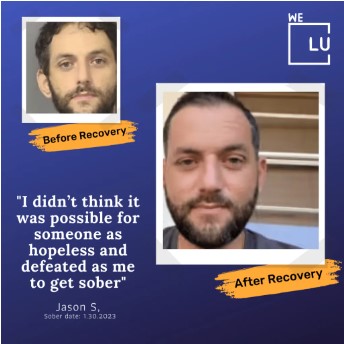
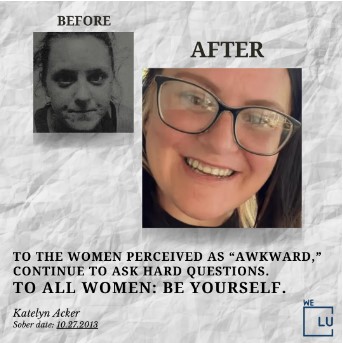
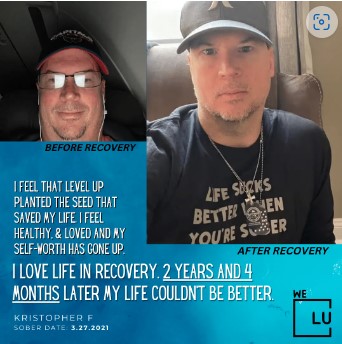
See our authentic success stories. Get inspired. Get the help you deserve.
Start a New Life
Begin with a free call to an addiction & behavioral health treatment advisor. Learn more about our dual-diagnosis programs. The We Level Up Treatment Center Network delivers recovery programs that vary by each treatment facility. Call to learn more.
- Personalized Care
- Caring Accountable Staff
- World-class Amenities
- Licensed & Accredited
- Renowned w/ 100s 5-Star Reviews
We’ll Call You
How to Get Started?
If cocaine and alcohol use are affecting health or daily life, help is available. Early treatment can prevent serious risks like overdose or poisoning. Medical and emotional support can make recovery safer and more stable. We Level Up offers confidential care and recovery planning. Call +(954) 475-6031 or email verifyadmissions@welevelup.com to begin treatment today. Recovery is possible with the right support and care.